Entries Tagged 'Crystal ball' ↓

Minority Report and the Xbox 360

Minority Report is an Oscar nominated, $100 million, Steven Spielberg film released in 2002. Starring Tom Cruise it is set in the future, in the year 2054. It’s future view was set by a panel of fifteen experts in 1999.  We can already look at this and see predictions they got right and those that they got wrong, such is the relentless march of technology.

One they got wrong was file transfer between computers on bits of plastic. Already (and it isn’t 2054) this is looking very dated as we have moved so rapidly to a networked world. Just looking at this film is a stark reminder of how rapidly we have become connected.

They got lots right. Biometrics using iris recognition. Use of remote, robot sensors in “combat” situations. Mobile phone earpieces. Advertising tailored to the individual. And gesture interfacing of computers, using motion sensors on the hand to intuitively control a computer through complex tasks with ease. A bit like the Nintendo Wii.

However the film’s producers were unusually prescient because the motion sensing gesture controller they predicted looks quite a bit like the leaked details of the upcoming Microsoft Newton device for the Xbox 360. Which rumours say will consist of two near identical devices worn on each hand. Just like in Minority Report.

Now this could be nature imitating art, or vice versa. It could be that the Newton device naturally evolved to be like Minority Report predicted. Or it could be that the good people at Microsoft saw Minority Report and thought “we can do that”.

Whichever way it was you can check out what you will (probably) be doing soon on your Microsoft Xbox 360 by renting the video of Minority Report.

Warning: This film contains a lot of violence. However because it is a film this only got it a 12 rating.


The Wii price cut

It is looking more and more like Nintendo may have no option to make the Wii cheaper at retail, despite what Satoru Iwata says. Here’s why:

  • It has been at the same price for a long time now, during which it has become a lot cheaper to make. Especially with the volumes they are churning out. And they were making a profit in every unit from the beginning. So there is plenty of room to drop the price.
  • They are ramping up production to 25 million units a year. Initially these will just meet the backlog of demand but once that is done they will need to use the price mechanism to shift them.
  • Their release schedule is looking very weak. Right now we have Super Smash Bros, Brawl, Mario Kart and Wii Fit. Then nothing mega and lots of shovelware. Compare that with the PS3 and 360.
  • GTA IV. This is going to transform the balance in the market strongly in favour of the HD consoles. The Wii is going to look increasingly last gen.
  • To make the most money out of the Wii back catalogue of games Nintendo need as many platforms out there as possible. At a lower price they will sell more Wiis and milk it on the software.
  • The Microsoft Xbox 360 price cuts now make the Wii look very expensive. You get a whole lot more for your money with the 360.

So when is this going to happen. Q3 08 is my best bet. But it could be a little later. It depends on what the market is telling them.

Revealed, the game of the future

 tron.jpg

Firstly, what will these games be played on? The answer is not a console as we now know them and not a PC. The main gaming device will be the humble high definition television, with the addition of a very powerful gesture interface. All the games, all the processing power and all the storage will reside in remote servers, it is the only way they can possibly work. They will be so vast and involve so much interaction that it would be impossible for them to reside in individual home platforms. Advances in the internet will make this work.

The game itself will be like entering the most amazing theme park with almost infinite possibilities. Here are some of the features:

  • A number of racing circuits including the full F1 season circuits. Where you can race in any vehicle ever made (and some that won’t be made) any time you want against the same vehicle or a variety of vehicles. Driven by other humans or by bots. Race a Caterham R500 against a Ferrari 312T, against a Ducati 999 against a Porsche 917 around the Nordschleife in the wet.
  • An airfield where you can go and fly any aeroplane ever made anywhere you want and in any way you want. Take an F22 to the Battle of Britain. 
  • A cinema where you can watch any film ever made any time you want.
  • Pitches and courts for every known ball game where any time you want you can play with whoever you want against whoever you want.
  • Lots of shops where you can buy an immense variety of both in game and real world items.
  • Your own apartment with amazing social networking tools a hundred times more powerful than FaceBook and MySpace combined. The apartment is uniquely furnished and decorated with items you have bought from the stores. There is a television on which you can watch any TV station in the world, or replay any television programme ever broadcast. And a radio that has the same level of abilities.
  • A holodeck where you can play an immense variety of games from a development of what we now call FPS, through RTS to MMOs and many other genres, some of which have yet to be invented. Everything will be possible. Many players will write their own games, or part of them, either alone or (mainly) in teams. The level of immersion and the suspension of disbelief will surpass the best Holywood capabilities. Interaction, connectivity and non linearity will prove their enormous superiority.
  • An amusement arcade with hundreds, maybe thousands of different arcade games for you to choose from. All the great classics from gaming history will be there. This will be casual gaming heaven where you can just drop by for a few moments fun, or an afternoon of classic arcade action.
  • A casino where you can play games of skill for money. This will be a major money earner for the game publisher.
  • An adult area, strictly for 18+. Where adult things happen.
  • A religious area with churches, mosques, synagogues, temples and every other kind of worship possible. Tree huggers, Jedis and witches welcome.
  • A self improvement area with schools and colleges. Enrol on a course to improve your language skills or get a world class tutor to explain to you the differences between the different schools of Greek philosophy. The Open University will be here as will hundreds of other learning institutions.
  • Nightclubs and discos where you can go and interact with other players. Win friends and influence people. Maybe find someone to visit the 18+ area with.
  • Internet and knowledge aggregators of every kind. You will have the sum of all human knowledge at your fingertips, ready to take and use elsewhere within the game, or even in the real world.
  • Advertising will be everywhere, just as it is in the real world. The big difference is that adverts can and will be interactive.
  • Police and courts. Where the laws of the game are upheld and justice is seen to be done.
  • And so much more, I am limited by my imagination. When this game happens it will contain the creativity of thousands and will surpass our wildest expectations.

In this scheme of things what we now know as the TV industry and the Film industry will become just small, subservient parts of the game industry. The game industry will be by far the biggest entertainment industry on earth and will be as big as industries such as automobiles. Eventually it could be bigger than the oil industry.

A game will no longer be something you buy and own. Piracy will be impossible. Payment will be by a combination of (possibly) monthly subscription and (definitely) micro payments for the facilities and services used. Certain gaming celebrities will be allowed to use it for free or be paid for being there. They will be part of the attraction of playing the game.

You will be able to dip into the game for a few minutes or spend your life in there. And you won’t just be playing it at home. Your mobile device (to call it a phone any more is patently silly when it does so many things) will also connect to the game. So you will be able to play anywhere.

So when is this going to happen? The answer is now. We are already some way along a pathway that will lead us to this. As the months, the years pass more of this is coming to fruition. You can see the milestones along the route with your own eyes.

And what will this game be called? Xbox Live is a very good bet, as are Steam and Sony Home. Outside possibilities include Second Life and WoW. Of course it could come the other way and be MySpace and FaceBook. Or it might even be called Google.

Here come the big hard drive Xbox 360s

 hard-drive.jpg

Microsoft currently offers three Xbox 360 models. The Arcade, with no hard drive. The Premium with a 20GB hard drive. And the Elite with a 120GB hard drive. This is all going to change, to much bigger drives, and there are four reasons why.

Firstly there is the business model of the hard drive manufacturers. They compete mainly not on price but instead on disk size. They are constantly driving up the capacity of their drives (by 40% a year compound) using technology whilst trying to keep prices constant. So the cheapest drive to buy is the one they are currently making most of. This will usually be cheaper than a smaller capacity drive. Just now top end hard drives for home and office PCs are one terabyte (1,000 GB) with 4 terabytes on the way, so they have left the Xbox 360 way behind. Interestingly a quick price search shows that 250 GB drives are currently cheaper than 120 GB drives. And as to the 20GB drive that Microsoft use in the Premium, in this industry that is pretty much a fossil. So it isn’t even going to cost money to give us bigger hard drives.

The second reason is the demise of HD DVD. This was the high capacity content delivery system for the Xbox 360. Now it has gone Microsoft say that they are not going to switch to BluRay, instead they are going to concentrate on downloading content. This is only bringing forward the inevitable. The problem with downloaded content is that you have to store it somewhere. And HD movies take up a lot of disk space. So huge hard drives are essential to get the machine to do what the customer wants it to do. The whole Microsoft business model for the Xbox 360 now depends on this.

The third reason is profit. The more storage space someone has the more content you can sell them. And there is vastly more profit to be made from selling the content of a hard drive than there is from selling the hard drive itself. Microsoft know that the bigger the hard drives the more profit they will make. This incentivises them to go for the biggest hard drives possible.

The fourth reason is competitive advantage. By switching to downloadable content instead of physical media for distribution Microsoft can be seen to be more advanced than Sony. Also far more customer friendly. You will be able to have the content you want when you want it. The PS3 currently comes in 40GB and 80 GB (NTSC only) models. By offering vastly bigger hard drives Microsoft can be seen to be offering a better product. And because the 360 hard drive is easily removable existing owners can easily upgrade to take advantage of the bigger drives. One advantage of the RROD episode is that Microsoft have learned how to transfer a customer’s content from one drive to another.

So there are compelling reasons for Microsoft to go as big as possible as soon as possible. The 120 GB model was introduced in August 2007 and already, when you look at the reasons above, it is looking small. The 20GB Premium model is difficult to justify.  So expect a realignment of the model range and their hard disk sizes this year. Also look for the Xbox 360 to have terabyte range hard drives within the next couple of years.

The next console generation #2 Handhelds

 spock-tricorder.jpg

If anything handhelds are more interesting than home consoles. They are undergoing rapid technical change, there are more companies involved and everything happens at a more rapid pace. Also the potential is far bigger, the Nintendo DS has sold more than the Nintendo Wii and the Sony PS3 and the Microsoft Xbox 360 all put together. Once again this is all supposition and conjecture.

Firstly the Sony PSP. This has been a success as a media player but this makes no real money for Sony. It has failed as a game machine due to piracy and so is a broken business model. Sony desperately need to bring out an all new replacement with a touch screen and no UMD. It may well come from their phone division, there have long been rumours of a PSPhone. Ultimately they will want a handheld that integrates with PS4 and with Sony Home. Of all the players Sony have the core competences to win. They are already in the phone business and the games business so it is mainly a matter of integrating existing expertise.

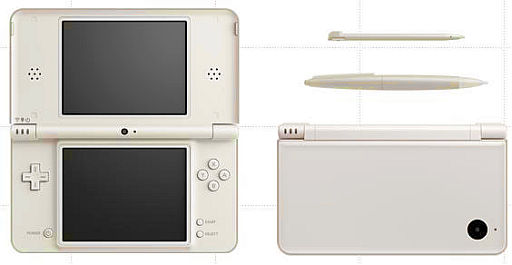
The Nintendo DS is on the way to being a broken business model. They are losing customers far faster to the R4 than they are gaining them through selling more machines. The new DS Ultralite model due this year will not fix this problem. They need a new machine with a different philosophy towards content. They know this, they have the expertise and they have the development funds. Expect the replacement for the DS to be a very special machine indeed.

Microsoft is following a well thought out grand strategy. Some people think that Zune is just an excellent me-too MP3 player. It is far more. Expect successive generations to evolve phone and gaming features. This will ultimately be an Xbox Live machine and will integrate even more with Xbox 3 so you can carry your home gaming experience with you. Microsoft have already admitted this by saying that XNA will work on Zune in the future.

With iPhone and iPod touch Apple has created excellent portable gaming machines, this has not happened by accident. We are headed for an age where recorded music is free, so Apple is looking for new profit generators for iTunes. We are currently at the beginning of a gold rush as the major publishers race to own space on this platform. With regular new generations of machines you can be sure that Apple will bring the gamer more and more to the forefront. It is where the money is.

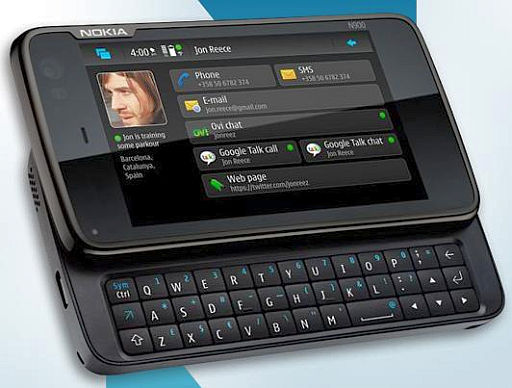
Then there is Nokia. By some measures this company is, on it’s own, bigger than the games industry. So in the handheld gaming market they could exercise enough muscle to blow the others away. If they wanted. And they seem to, they had their fingers very badly burned with nGage Mk1. Yet they have just come back for more with nGage Mk2. This time it is a software standard. And this time it will run on a lot of phones. If they wanted they could put it on more phones than the combined capacity of all the other players in this market put together. So potentially this could be the biggest. But then I thought that about nGage Mk1.

As you can see it is a complex situation and anything can happen. So it probably will.

What the experts predict

 witch.jpg

A group of experts was brought together at GDC this week to discuss what the future holds for video gaming. On the panel were:

  • Neil Young. General Manager, EA LA.
  • Phil Harrison. Head of worldwide studios, Sony.
  • Ralph Koster. Lead designer on Ultima Online and Star Wars Galaxies.
  • Peter Molyneux. Boss of Lionhead.
  • Chris Taylor. Dungeon Siege creator.
  • David Perry. Video Game consultant.

Their universal opinion was that the future lies online with server based games. As has been covered here several times. All you need at home is a connection, a TV and an interface. It makes gaming a lot cheaper because there is no physical product, no distribution chain and no expensive home hardware. The only weakness of this business model that they discussed was latency on the net which can affect action games.

They seemed to think that consoles as we know them are only an interim gaming solution and that already the web is far bigger and more important for gaming than consoles are. And that with the coming upgrades to Flash it would be the next big platform, though there still isn’t a working business model for Flash games.

 Here are some articles about the meeting covering it in far more detail and well worth reading:

The next console generation #1 Home consoles

 crystal-ball.jpg

OK, now the following is all supposition and guesswork, so don’t hang me for it in three years time. Also if you have any thoughts on this please add them as comments. This could be a fun debate. What I will do is take each of the three main home consoles in the order that I think that they will be replaced. I will write a quick paragraph about where they are up to this generation. Then a paragraph about what they may possibly do next.

First a massive supposition. Let’s regard the ideal life of a console as ten years with a new generation every five years. Giving the manufacturer a two model range at any one time.

The Nintendo Wii is really just a GameCube 1.5. It has become the fastest selling console of all time because of a brilliant gesture interface, because of some very clever software and mostly because of amazing marketing that has broadened the game playing demographic. Hardware wise it is very much last generation with no hard drive, no HD TV support and the weakest online offering of the three consoles. It was launched to the public in November 2006, so it is just 16 months old. It has probably sold over 20 million units.

Of all three manufacturers Nintendo has the most evolutionary approach to design. So I see their next console as being Wii 1.5. They will probably need to add a hard drive as the industry moves to a downloaded content business model and they will have to support HD TV. It could be given a new model name or just be called Super Wii (very likely) and will be relatively inexpensive to manufacture. It will be backwards compatible with the Wii to take advantage of all those amazing games and it will be announced within 18 months. The existing Wii model may well remain in production to give a two model range. It would be left as a $199 or even $149 entry level model.

The Microsoft Xbox 360 is not part of a two model range because Microsoft did not own the rights to the CPU and GPU in the original Xbox so could not drive costs down. The 360 was first of this console generation to market in November 2005 and has sold over 16 million units. It was designed with great care to be economic to manufacture and undergoes a complete internal redesign every year. Microsoft has learned their lesson and own the rights to the main chips.  When they integrate the CPU and GPU they will be able to sell it very cheaply indeed. $199 or even $149 for the base model, and still make a profit on each one sold. In fact when you look at the 360 it was almost designed to be the cheaper model in a two model range. It wouldn’t surprise me at all if this was Microsoft’s strategy. This machine has by far the best online support with Xbox Live, it is impossible to overstate how important this will be in the future of gaming.

Using our 5/10 year model the Xbox 3 is due in the shops in November 2010. But I think it will be earlier. Firstly because there will be room for it in a two model range and secondly because first mover advantage worked so well for Microsoft last time. It will have a sophisticated gesture interface. With this machine Microsoft has to make a major philosophical decision. Do they want users to store their content on a hard drive on the machine itself or on a remote server as favoured by Google? The remote server has the massive advantage of potentially going to a business model where you pay for what you play, not for ownership of the game. And the added advantage that the consoles can be manufactured more cheaply, which is useful in a retail price war. But maybe broadband won’t be fast enough for Microsoft to make this move with this generation, it is expected to be an adequate 60 Mbit/s by 2012, but that may be too late.

The Sony Playstation PS3 was launched in November 2006, over six years after the launch of the PS2, delayed by technology problems with it’s Cell CPU and BluRay disk drive. It forms part of a two model range with the PS2, which still sells very well. About 10 million PS3s have been sold worldwide despite it’s predecessor being the dominant console of it’s generation. This poor performance was caused by the very high retail price which was a consequence of all the new technology it used. Also it is difficult to develop games on which has been a major stumbling block in giving the customers the games that they want. And Sony showed some less than optimum marketing behaviour.

Playstation 4 should come in 2011 according to our model. I think that this will be the earliest that it will appear and that 2012 is more likely. This because the PS3 is still so undeveloped as a product in the market, it has a long way to go. Also Sony doesn’t have a lot of money to go sooner, a console launch can cost billions. And the year or two (or even three) delay after Xbox 3 allows them to use Moore’s Law to create something very special indeed.

So (and remember that this is rampant speculation) it will be Super Wii first followed fairly closely by Xbox 3 then a gap till PS4. All three machines will be even more webcentric, will be backwards compatible (maybe going back more than one generation), will have sophisticated gesture interfaces and will almost certainly be integrated with hand held consoles. According to Moore’s Law they could have four times the power of the current generation.