Entries Tagged 'Marketing Tips' ↓

Rewriting Game Journalism video

Everyone in game publishing and game journalism should watch this.

Marketing. Some people still don’t get it

Yesterday I was at the Best of British conference in London rubbing shoulders with the good and the great of the video game industry. And once again the stark message came over that there are some people who get it when it comes to marketing. And there are big swathes of the industry who don’t get it at all.

In the 1960s and 1970s consumer marketing was perfected by huge multinational companies that manufactured detergents for washing clothes. This is a commodity product, one detergent is much the same as another detergent. So the wise housewife will buy the one that does the job for the least money. But most housewives don’t, this is because they are victims of the marketing of the detergent manufacturers.

This form of marketing involves creating and building a brand by shouting at your potential customer. And shouting can take many forms. TV commercials, billboards and print advertising were especially popular. All that mattered was getting the brand message across. This was unbelievably inefficient and cost an absolute fortune. But the detergent companies didn’t mind because they were rolling in money. Every household needs to wash their clothes and housewives were willing to pay a hefty price premium just to buy into the brand. The other reason the detergent companies didn’t mind is because there was no alternative. It was shout at your customers or nothing. So it was a war of brand against brand (often owned by the same company) in a shouting war where the winner was the person who spent the most money.

Of course the methods, practices and techniques of the detergent wars were adopted by a wide range of other manufacturers selling an immense range of other products, even when it was patently inappropriate. And it is what a lot of the game industry, unbelievably, still does today. They needlessly throw very many millions away shouting at customers.

When it comes to consumer marketing (there are many other sorts) it is important to step back and look at what you are trying to do. Firstly you have to clearly identify who you are trying to reach, you are wasting your time trying to tell the Women’s Institute about a first person shooter. Then you have to work out the message that you want to get over to these people. Finally you need to investigate what is the most cost effective way of getting this message over to them. Now this may sound very simple and very obvious, but, unbelievably, most people spending money on marketing don’t do it.

Video games are not detergent. Video games are interesting and rouse emotions in people. This actually makes them very, very easy to market, because your customer wants to listen to what you have to say. There is no need whatsoever to shout.

Which brings us to the internet. The internet is any true marketeers dream. The ability to interact in real time with your entire global customer base is something that previous generations of marketeers could only dream about. It is as good as it can get. And the tools are free and easy to use. Wordpress, Facebook, Twitter, Reddit, YouTube.

So let’s look at what a game marketeer should be doing, rather than shouting at people like the dinosaurs do. The first thing to remember is that the most powerful marketing tool, by an immense margin, is word of mouth. So you want people talking about you. Then you need to actively engage with your customers and potential customers. And by engage I mean listen just as much as talk. You need to generate genuinely interesting marketing content. Blogs and videos are essential. And you need to keep on top of it, keep it fresh and continuously analyse what is happening. Easy, if you have a brain.

In this world the press release is more powerful than the advertisement, because the press release is telling people stuff that they want to know. Whereas advertisements are things that people want to ignore. Press releases tell a genuine story, they feed people’s appetite for news and they can be leveraged to reach vast audiences with key marketing messages.

So we have two distinct marketing philosophies. One the one hand the outdated, expensive detergent methodology still amazingly used by some. And the massively superior methodology of engaging with your customers which, refreshingly, more and more of the industry is gradually coming round to. The amazing thing isn’t just that engagement is better in every possible way to get the messages that you want over to the right people, it is also a whole lot cheaper.

How to manage fansites

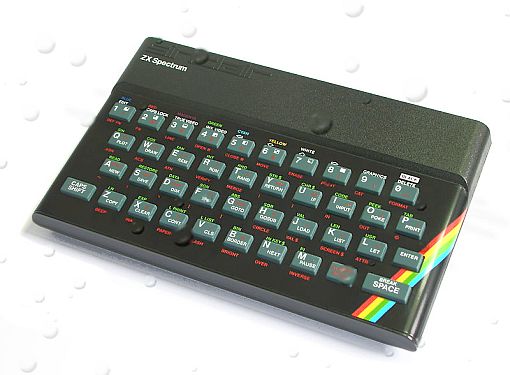
Sinclair Spectrum

In the old 8 bit days we had fanzines, badly printed A5 bundles of enthusiasm. And a breeding ground for journalistic talent. Now we have the web fansites, which are much easier to set up and keep running so there are far more of them than there ever were fanzines. This rampant proliferation has forced them to cover narrower ground, so whereas a fanzine could cover an entire gaming platform fansites tend to specialise, often to just one game.

The problem with fan sites is that they can tend to be anarchic and out of control. To be telling you (and the world) everything you should be doing about the game and generally slagging off your business. In fact many see that the more militant they are the more successful they will be. You could spend a fortune on solicitors trying to keep some semblance of order, and still fail.

The answer is to engage with these people. You want them inside your tent pissing out, not outside your tent pissing in. You will never be able to control them, they will always publish things that you don’t like, but you can make their behaviour a whole lot less unacceptable.

The simple technique is to reward good behaviour. With something like an accredited fansite scheme. They undertake to keep to a code of behaviour that isn’t too onerous but which cuts out the worst excesses. In exchange they get fansite toolkits of great assets, they get occasional access to key people and they get listed and linked on your website. A lot of carrot to keep them behaving. The whole relationship is managed by your community marketing team. You have a win win situation.

And remember that many fansites are a con trick. They are set up to get free games and goodies and to get the fanboy site owners closer to the publisher/developer. With the minimum amount of work they can get away with going into the site.  So there is a job that needs doing of sorting the wheat from the chaff, which is a dynamic thing as these sites often get rapidly worse or rapidly better.

What do game publishers do and is there any need for them?

zzoom, sinclair spectrum, imagine software

I was actually in at the very beginning of this in the late 70s and early 80s. Back then if you wrote a game you had to manufacture, market and distribute it yourself. You became a publisher because there was no other way to market. This is what happened at Bug Byte and Imagine in Liverpool, the owners of the companies were, initially, the guys that wrote the games. Once you were up and running, other game writers, who couldn’t be bothered with all the publishing work, came to you and asked if you would handle their stuff too. This was the beginnings of our industry.

So what do game publishers actually do?:

  • Provide finance for the entire industry. This is not just paying studios, in stages, to develop a game. It is also the publishing costs which can often be far, far more. For one top console game the total cost is now into the tens of millions, so this isn’t insignificant. However, some development studios make the big jump to self financing their work, then they own the IP and can choose how it is published.
  • Take the risk. This is a pretty big job, especially for current generation console games, most of which don’t make a profit. This is partly why many of the world’s biggest publishers are making losses just now whilst the industry booms.
  • Market the game. It is a simple fact that with zero marketing a game will have zero sales. The game industry is a very young and fast changing industry so much of its marketing is inefficient and over expensive. Which means that many publishers aren’t doing a good job here, another reason for their losses. However what marketing expertise there is in the industry resides mainly with the publishers.
  • Create and build brands. A lot of the industry for a long time just piggy backed other people’s brands, so had no equity in their IP. We used films, books and celebrities. And it wasn’t good. Now the industry is growing up and nurturing its own brands with some startling successes (GTA) and a lot of painful growing pains.
  • Physically manufacture, warehouse and distribute inventory. Logistics. This is a huge pain. Vast amounts of plastic and cardboard are used to move digital information around the world. The problems boggle minds. Just getting the timing of everything and the inventory levels right is impossible, it will always go wrong. So retailers are out of stock of one game whilst another game is remaindered in the discount bin.
  • Manage the whole industry. People only buy consoles to play games. The games are everything. And the publishers have total control over the games. So they have total control and power over the industry. So they decide what happens, how it happens and when. A big responsibility and, to be fair, they tend to try and act for what they perceive to be the good of the industry. We don’t have any significant Enrons yet.

The most important thing about the traditional game publishing business model is that there are enormous competitive advantages of scale. The bigger you are the easier it is to run your business, if you much smaller than the biggest players then you simply cannot compete. This is why we have seen so much publisher consolidation, the laws of economics mean there should only be a handful of global publishers. It is what happened to film and recorded music.

However events are not just conspiring against global publishers, they are conspiring against publishing per se.

  • The cost of making games is, in many cases, coming down. This is partly down to better tools, libraries and middleware. It is also down to the far smaller scale of product required for many platforms, including some of the big ones like XLA and XNA. Which means that we have returned to the age of the bedroom coder, or to loose affiliations of a few people working together on a project. This has become massive. There are now more games being developed this way than in formal studios.
  • With the above the risk has come right down. You make a game in your spare time, if it works you buy a fast car and a holiday, if it doesn’t you just shrug your shoulders and try again. Which is exactly what happened in the old 8 bit days. I know, I was there!
  • Platform proliferation. This has really crept up on us. About a decade ago there were two viable platforms, the Playstation and the PC. Now there are lots. Xbox 360, PS3 and Wii, each of which is multiple platforms because of the online offerings. Xbox 2,  PSP, DS, iPhone, Android, nGage and of course the PC, which is also now mutiple platforms with casual gaming, MMOs, portals, boxed games etc etc. A big global publisher just cannot do it all any more, they have to cherry pick.
  • Product proliferation. It used to be very simple, there were a handful of genres and it was easy to keep up and publish a stream of releases into each one. Now we have total fragmentation, an infinity of genres. Just look at the thousands of iPhone games to see how diverse and sometimes bizarre gaming has become. This has left the big global publishers dead in the water, they don’t understand what is going on and even if they did they are too slow witted and cumbersome to do anything about it.
  • Marketing has changed and much of it is now free or nearly free. The traditional big publisher marketing model of throwing millions at television advertising is outdated, inefficient and an immense waste of resources. But they continue because of inertia and because they know no better. These days we have something called the interweb and with no money (or very little) and a little time you can run a very effective global marketing campaign. And the smart people are. Popcap is a prime example.
  • Digital distribution. This is the big one. Without plastic and cardboard it is difficult for publishers to justify themselves. As we have seen with iPod, once you remove physical inventory most games come to market without a publisher. This leads to an explosion in creativity as tens of thousands of new games appear that a publisher would never have given the time of day to.
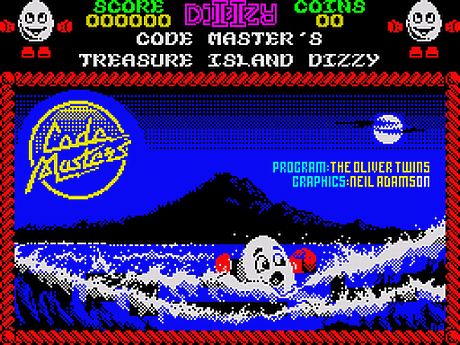
  • Brands. The publishers have actually been mostly very bad at creating and building brands. It is a new thing to most of them and they don’t know what they are doing a lot of the time and it shows. Individuals can build brands too. They often have in history. All it takes is an instinctive feel for the brand experience they are creating, the brand image they are presenting to the world and the brand values they need to maintain and they have cracked it. The Oliver Twins did this with Dizzy.

So, as you can see, the big global publishers look like a threatened species. Everything is conspiring against the reasons for their very existence. So expect another period of rapid change. Publishers who adapt quickly away from plastic and cardboard and who learn how to profit from genre and platform proliferation will survive. Those who hang on to the old business models of physical stock, AAA blockbusters and TV advertising will go the way of the Dodo.

Tiger Woods Wii, an Electronic Arts epiphany?

Electronic Arts fascinate any industry observer. Strip away World of Warcraft and they are probably still the world’s biggest game publisher. They publish more genres of games and on more platforms than anyone else. In John Riccitiello they have an intelligent boss who says, and often does, many good things. They publish some of the very best game studios in the world. But they have been extremely unprofitable for some time now. And they are an organisation in fundamental philosophical transition.

Old school Electronic Arts brought high profile IP licenses that someone else had built. Harry Potter, James Bond, Lord of the Rings (three British authors there), NFL, NBA, FIFA, Catwoman, etc. They then built an adequate, but nothing special, game and advertised it like crazy. Then they would make the minimum changes they could get away with and launch it as a sequel. Sometimes every year.

It was cynical and profitable but it was taking EA nowhere, they did not own the brands so they were not building value in the company. And they weren’t doing much for gaming.

New Electronic Arts creates original IP, which they own, they try and build quality too, by concentrating on Metacritic as an internal management yardstick. And they do interesting things. But there is a problem, the industry has moved on. In this console generation having a good game is no longer enough. Now you have to lead the genre. And that means building a brand, something that EA don’t have much practice of.

And so to Tiger Woods. This is the worst of old school EA cynicism.. They even gave it imaginative names, like Tiger Woods 2001, Tiger Woods 2003 and Tiger Woods 2005. It was a sausage factory producing distinctly average sausages. But all that has changed with Tiger Woods PGA Tour 10 for the Wii. They have obviously applied my rules for Wii development:

1) Don’t do shovelware. You are just damaging your brand(s).
2) Write Wii specific titles. Don’t port. You have to respect the interface difference.
3) Understand that most Wiis live in the lounge. And most other consoles live in the bedroom.
4) Polish, lots. Then polish some more.
5) Realise that you have to provide entertainment for the population at large. FPS titles are not a good idea.
6) You need to market completely differently. PR in women’s magazines will work a lot better than adverts in game magazines.
7) Talk to your wife/girlfriend. They understand the Wii better than you do.

And what they have created, using Wii MotionPlus, is the best golf video game ever. GameSpy said: “Tiger Woods 10 on the Wii is the definitive golf game. Beyond the high level of immersion from the Motion Plus controls, and the many months worth of entertaining game modes, this version welcomes the widest ever audience to a “sim” sports game. EA is leveraging the Wii perfectly.”

Electronic Arts have taken one of their tired old franchises and made it into a world beater. But they have missed a trick. They don’t need Tiger Woods any more. They could have called this John Riccitiello Golf and sold just as many. They could have built a brand that they own that they could manage and profit from for ever.

So whilst they have had an epiphany with regards to product they still have a long way to go to having the brand epiphany they need. When you own a genre with your own IP is when you have truly arrived. Call of Duty and Forza show the way.

And if Electronic Arts can show this much genius with MotionPlus just imagine what they will be doing with Natal.

Marketing your marketing

It maybe a little strange to some of you this, but when you do an activity, a press release, a news conference, a video, a conference speech, or whatever, that activity is in itself news. If you just do the marketing activity on its own you are short changing yourself. You can leverage it to get far more, and often far more useful, coverage. Especially in these days of news media fragmentation and the interweb.

Here is a little of what you can do:

  • Mention it on Twitter and on Facebook and Linkedin groups and use Facebook events. It is worth searching for and joining lots of useful groups.
  • Talk about it on your various forums. The forum for the game, the company forum and the internal staff forum.
  • Write about it on your various blogs.
  • Tell your list of approved fansites and blogs about it.
  • Newsletter your opt in lists.
  • Talk about it in your podcast.
  • Add comments to relevant blog posts. Use Technorati to find them.
  • If appropriate release a video about the event.
  • Tell the marketing press about your marketing.

As you can see this is all just work. It doesn’t cost anything.

App Store pricing


there is audio missing in this video 9:44-11:00

In the 1980s I was in charge of marketing at a couple of big game publishers. Imagine and Codemasters. The main market then was games for the Sinclair Spectrum. And Uncle Clive did not run a platform holder business model, he just sold machines. So the game market was a total free for all. And if you had the right skills a game could be written quickly and cheaply. So the barriers to entry in this business were very low. Which meant that there was a massive amount of competition.

In economics there is something called price elasticity of supply, which says that if there is a big supply of something the price will come down. We see this at the supermarket as different fruits and vegetables come into season. And we saw it with Sinclair Spectrum games. Eventually they came down to just £1.99 which, considering that physical product had to be manufactured, was a phenomenally low price. Also the Spectrum suffered from a huge amount of piracy, both professional counterfeiting and schoolboy duplicating, which was a further driver towards low prices.

One really brilliant effect of the Spectrum free for all was product differentiation. To be different to the competitors people would try anything that had a small chance of working. This led to an explosion in creativity and much of what we know as gaming today is descended from ideas that first surfaced then. For instance John Gibson and David Lawson at Imagine invented the Real Time Strategy genre with the game Stonkers. Certainly there was vastly more variety in Spectrum games than there is in PS3 games today.

And yet in a sea of budget £1.99 games it was still possible to succeed selling at far higher prices (at the time called full price games). Games like Daley Thompson’s Decathalon, Rambo and Miami Vice. These games were not necessarily better than the budget equivalents. But they were brands. And customers were buying more than just the game, they were buying into the brand experience, for which they were prepared to pay a multiple of the budget game price.

The same happens with the grease that women put on their faces. Scientist say that there is little or no difference between the cheapest and the most expensive. It is just grease. Yet the price difference is phenomenal. From just a few pounds for half a litre to £50 or more for a tiny pot of the stuff from the main prestige brands and many hundreds of pounds for a small pot of the most expensive stuff. And millions of women willingly spend their hard earned money on the stuff. Simply to have the brand experience. In fact they are buying 90+% brand and less than 10% product.

Now the Sinclair Spectrum days are with us again with the Apple App Store. It is not just me that thinks this, Neil Young is CEO of ngmoco, he experienced the Spectrum market first hand and he thinks that App Store is the same. So we have the same explosion in creativity and we have the same collapse in prices, this time to 99c because there is no physical product to pay for. The collapse in prices is exacerbated because so many Apps are self published and the author/publisher tends to be very unsophisticated about marketing. They think that price is the only way to compete and they know nothing about building a brand. Or, if they know about brands, that advertising is the only way to build one.

What is happening on the Apple App Store is going to become the standard for the industry. The other platforms are being forced to move to the App Store business model. Even major established consoles like the Sony PSP. So the flowering of creativity and downwards pressure on price will be across the board.

Which will lead to an explosion in proper marketing in the game industry. Some people think that game marketing is buying lots of advertising, preferably on television. This is part of why AAA boxed console games are so expensive. The people who do this are marketing dinosaurs. Proper marketing is a far broader and more subtle craft. We will need a lot of it if we want people to pay more than 99c for a game. And we should be starting by nurturing the concept of celebrity within the industry.