“Oh no” I can hear you say, an article about education. Boring. Yet it should be one of the most exciting things you can read about. It is the education industry and their heritage that have made it boring. And if it is boring for us then just imagine how boring it must be for the victims of our current system. Let’s face it, standing a teacher in front of a class must be one of the most inefficient methods of imparting knowledge ever invented.
We are massive consumers of education. We start in formal education as toddlers and emerge in our 20s. Often none the wiser. And we learn far more out of school than we do in school. Then we have vocational training, usually continuously in our fast changing world. Plus our hobbies and interests that can often involve absorbing more knowledge than a degree course. Which all means that education is a massive industry. Far bigger than the recreational game industry is going to be for the foreseeable future. Which is very nice for us because gaming is perfectly suited to education. Far more so than the current classroom/teacher system. Our one on one, challenge-reward mechanism is the most perfect way yet of imparting knowledge.
I have watched our industry try to get into education for thirty years. And failing, continually. Because we try to do learning using games. We try and fit in with the old, inefficient teacher led systems. But we have had successes when we don’t try to fit in. Dr Kawashima’s Brain Training, for instance. And these successes come when there isn’t a teacher in sight, because they are true game based learning. And teachers and true game based education are incompatible. You cannot have them both at the same time.
Teachers, at best, think that games are chocolate coated broccoli. A way of dressing up knowledge to make it palatable. They are wrong. Gaming is the optimum delivery system for giving the human mind knowledge. Because it is one on one interactive, because it creates exactly the right challenges at exactly the right time, because it can readily mix text with sound with pictures with videos, because it rewards the student properly at exactly the right time, because it is connected to the sum of all human knowledge, because it is non linear thus presenting knowledge in a more natural way, because it progresses the student at exactly the right pace and because it is connected to countless other people.
With proper game based learning it is very simple to keep a track of every student’s progress. But more than that it is very easy to see their strengths and weaknesses in all their complexity. The aptitudes of every single student will be plain to see. Which would lead to everyone having the optimum further education and making the right career choices for their abilities. Which would be a massive improvement on the current hit and miss methodology. So students wouldn’t just learn more, with better understanding and more quickly. They would also be learning the right things for them and for their life ahead.
It isn’t just goodbye to classrooms and teachers. It is also goodbye to exams and school inspectors. Because any student’s knowledge and capabilities would be there to see in real time on the system. In fact exams are a very bad thing as they hold the majority of students back until everyone has mastered the syllabus to a given point. With game based learning you are going to have a lot of people educated past degree level by the time they are 18.
But the people who stand to gain most are those with “learning difficulties” who just cannot get all the attention they need with current learning methods. With game based learning they will have one on one learning that will push their aptitudes and capabilities to the limit resulting in much more fulfilling lives.
So what are we going to do with all the teachers? Teach them to stack shelves in Tescos? Nope, there is something far more important for them to do and that is to prepare children for their futures in the real world. Not by teaching, but by mentoring. By guiding every single student, one on one, so each one can get the best out of our society and our society can get the best out of each student.
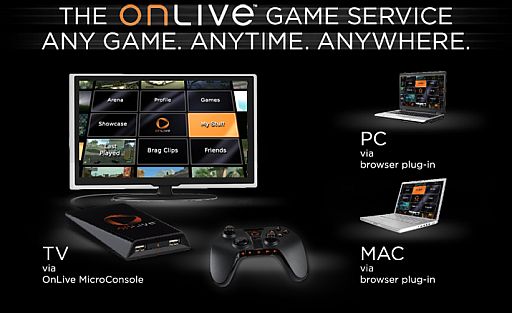
Some educationalists who have a grasp of this seem to think that you still need a physical school. That each student has their own workstation. They call it “podularisation”. And they are wrong. All a student needs is a device connected to the interweb. A home computer, a netbook or even a smartphone. Yes, that’s right, smartphones replacing teachers. And OnLive technology, or something similar, could be harnessed beautifully to deliver it all.
The next thing that is going to shock is that much education will end up being free. Once it is all written and on a server the incremental cost for each extra student is zero. And as we have seen with so many things on the interweb there is an inevitable constant downwards price pressure till zero is reached. This will open up and democratise learning like never before. It will be more influential than the invention of the printing press. Anyone, anywhere in the world will be able to consume whatever education they want any time they want, delivered to them in the optimum manner for them to absorb. This will massively advance the whole of humanity.
I would like to thank Nolan Bushnell and all the other speakers at the Game Based Learning 2009 conference for stimulating my thoughts on this subject.
Research says that PC is the top gaming platform. With a billion units installed worldwide of which a quarter are used for gaming, producing $11 billion of turnover last year. The PC is an open platform, so without the cold dead hand of the console companies it is a hotbed of innovation. In business models as well as content. So the PC continues to lead the market whilst the rest just follow. And OnLive could be the catalyst for millions of gamers to move from consoles to PCs.
Qualcomm back new platform holder Zeebo, targeted at developing countries. With revenues of $11 billion Qualcomm may well need to bet the company on this one if it is to reach critical mass. And the three existing home console platforms will obviously react competitively. So the industry just got even more interesting. The Zeebo will retail at $200 and has very strong anti piracy measures, essential in these markets were very little software is actually bought.
Nokia give up on nGage. Or that is what it looks like as they don’t include it in the N73, N93 or N93i smartphones. And in a further blow Nokia are not including nGage in their Ovi store. This is just unbelievable. For the nGage standard to grow and prosper it needs to be on as many phones as possible. You won’t see Apple making an iPhone that doesn’t play games.
David Perry announces cloud gaming, server based thin client game service to compete with OnLive. A bit like standing at a bus stop, none come for ages then they all come at once. The writing is very clearly on the wall here that the industry is undergoing a paradigm shift. Those who adapt will survive but lots of the older gaming technologies and delivery systems will be in trouble. And you read it first here.
There is the potential here for a community of Facebook proportions because thousands of players will be in the same server at the same time. For the same reasons a game can be released to a global audience instantly and all updates and expansions will be distributed equally instantly. So you are always playing the latest games and the latest versions of games.
Another nice thing is that this could be made to work on smartphones. So you would have a seamless gaming experience. PC, television and mobile phone. Gaming of the highest order would be there on demand anytime anywhere complete with a big and active community. This is exactly what I was expecting technology and enterprise to deliver.
And it is goodbye to piracy. All those people who steal games instead of paying for them will have to go and steal something else instead. Motor cars maybe. Which means that all the people who put their work and lives into creating games will be rewarded properly for their labours. And which makes the whole industry a far more sensible place to invest.
Of course the genie is out of the bottle now. This vision has been taken on board by a vast public. So if OnLive doesn’t succeed then someone else will. And Nintendo, Sony, Microsoft and Steam are all going to have to radically change their business models and their technology if they are not to be left behind.
In this industry we always live in interesting times!
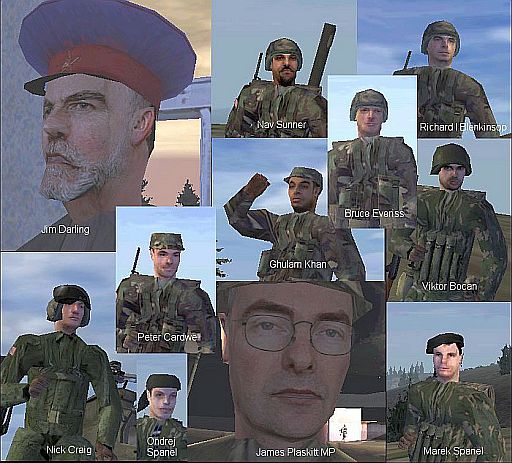
I have possibly mentioned before about the real world people (including myself) who lent their likenesses to characters within the worldwide number one game Operation Flashpoint in 2001. This garnered us significant publicity as our local MP, James Plaskitt agreed to be in the game when visiting me at Codemasters. A successful marketing ploy. Now someone has kindly sent me a link to a montage of the faces used.
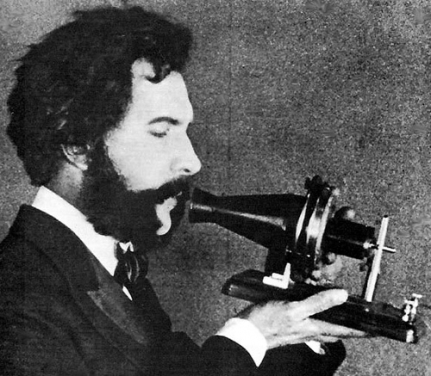
There is no way that Alexander Graham Bell could have predicted that his humble invention, the telephone, would grow to become the most important and significant device used by virtually every human on earth. In recent years they have grown a portfolio of powers and capabilities which, if one were to actually stop and think about it for a second, are staggering. Not only do they give you the ability to communicate from any point to any other point and access to nearly the sum of all human knowledge, they also have some amazing party tricks. Like anywhere I am on the face of planet earth I can use my phone to record events as a movie (in full colour and with sound) and within just a few seconds I can make that movie available to the whole world’s population. Yet most people most of the time just use them to speak and text to friends and relatives.
And there seems to be no limit to man’s ingenuity with what these devices will do. Just now GPS is being added to more and more phones. So everything that they do can be location specific. Every photograph and video can be tagged with its exact location. And searches and requests can be tailored to only give information of specific relevance to that location. Like where is the nearest sushi bar and give me directions to get there. GPS can be incorporated into games in countless ways so expect to see some great innovation from our industry here.
At the moment telephones seem to be polarising into two sorts of devices with a third imminent. The first is the small, maximum portability and convenience, voice and text centric “standard” phone. The thing that most of us carry. The engineers still cram in features like cameras and MP3, but they cannot compromise the size of the package. The second kind of device comes when you throw away the size limitation (within reason) in order to incorporate a whole raft of features, mainly geared towards the internet. These are called smartphones and are currently a hotbed area of technology growth. In fact I have never in my life seen any area of technology develop at such a pace.
The imminent device is a little larger still, with even greater capabilities. Something like netbook meets iPhone. With a gesture interface and the potential to do everything. The manufacturers need the will to start making these and consumers need to adapt to them, but the potential utility of such tablet like devices is such that their introduction must now be inevitable.
For the moment, however, it is smartphones that interest us. Suddenly, out of nowhere, there is a plethora of devices that make good business models for game developers. And they are developing at a frightening pace where something six months old can easily be obsolete. The driver for this forced, hotbed evolution is the commercial and technology war between some of the world’s best and brightest companies. We have Google against Apple against Microsoft against Nokia against RIM.
If I were in the market right now I would want a Google Android device. The combination of features and benefits puts it at the top of the heap. Unfortunately Google, for all their technical brilliance, are very bad at marketing. So Apple, who are absolutely brilliant at marketing, continue to outperform with their inferior iPhone. But such is the intensity of this war that Apple are playing catch up with a downloadable upgrade for existing iPhone users that brings in 100 (yes 100) new features. Interestingly for us this includes subscription based services. Which means that the World of Warcraft killer that everyone has been waiting for could very well be a mobile phone game.
For such a new device on the market the smartphone is exceeding the wildest prediction with its success (much as the netbook also is). Apple AppStore now has 25,000 different downloadable applications and has had 800 million downloads. And just to remind you the AppStore didn’t even exist on July 9th 2008!! And another reminder, this blog saw it coming a long time in advance. And whilst Apple have the fastest growing smartphone standard they still only have about 10% of the market, which puts them behind Nokia, RIM and Microsoft.
Android has more potential in that it is already better and it is open source (unlike the proprietary Apple) so could very well be taken up by the big Chinese, Korean and Taiwanese handset manufacturers. The potential is out there to put far more handsets into users pockets than Apple can possible compete with. The only caveat, as I pointed out earlier, is Google’s historically inept marketing. Android is currently running fifth in the market but will ramp up quickly as handsets come out, especially the Vodafone Magic.
Then there is Microsoft. So far they have been rubbish in this area from a gaming perspective. Playing catch up and never even trying to establish any sort of technology or marketing lead. But they have the potential to steamroller over everyone. The Zune is a great bit of kit but, relatively, it is a commercial failure. What gives Microsoft the capacity to come out of their corner fighting is Xbox Live, a mobile version of this would give AppStore more than a run for the money. And if I know this then so does Microsoft. Meanwhile they are still third overall in the smartphone market with 12.5% of handsets, so they have something to build on.
Nokia were the first into this space with Symbian and they have a lot of experience of powering a market with rapid technology change. They have driven off and defeated old mobile technology competitors like Sony Ericsson and Motorola. And they are big. Nokia has over 128,000 employees who turnover over 50 billion Euros a year making 5 billion a year in profit. All from telecomms. Yet they failed spectacularly with nGage V1 and nGage V2 is not setting the world on fire. But don’t, whatever you do, write them off yet. They will fight back big style, they have no option if they want to survive. So expect a lot of big announcements from Keilaniemi. Their market share of smartphones is sliding rapidly but they are still the number one with 47%, which is more than twice that of their nearest competitor.
Now for Sony. Some people think that I don’t like Sony. They are wrong I have, and still do, consistently buy Sony devices. In fact as recently as a couple of weeks ago I made my latest Sony acquisition. But as an observer and analyst I am duty bound to say it how it is when it comes to Sony. And Sir Howard Stringer has publicly said a lot of the same things that I have. Which brings us to the total disaster that is Sony and smartphones. Sony should be the market leaders here. Uniquely they had all the elements in place. The PSP, the Sony Ericsson phone brand, everything that is Playstation and world class content and manufacturing. But they have failed abysmally and excruciatingly. They are nowhere and there are no signs of them doing anything serious about getting anywhere, despite constant rumours of a PSP phone. The disaster that is Sony smartphones is synonymous of the disaster that is Sony.
Also in Japan we have Nintendo who are riding a bubble of success with their Wii and DS, which use old and cheap technology in clever ways to appeal to massive audiences. But they are being left too far behind. The DS is a creaky old fashioned device when you hold it up against an Android or a iPhone and the consumers of the world can see this. Nintendo have a huge amount of catching up to do and at the speed the market is moving at they need to do it very soon. They could rapidly become has beens if they don’t.
So it doesn’t take a genius to realise that all these companies and standards won’t succeed. That there will be winners and losers. And these companies are run by some very smart people. Which means that I can see some pre-emptive consolidation. Why spend a fortune going to war with someone when you can very easily just buy them or merge with them? The stakes are so immense and the technology so fast moving that this makes a huge amount of sense. So here are a couple for you to think about.
Apple (highly profitable) should buy Sony (currently making massive losses). This is such a brilliant fit at so many levels that you wonder why it hasn’t already happened. Apple would bring their software and sexy design to Sony products. And in return Apple would become a world class consumer electronics company overnight. The only fly in the ointment is that Apple is such a one man company and Steve Jobs is currently ill. But still this is the consolidation that I would like to see. It would shake the whole world of consumer electronics down to the foundations. And the Playstation brand would grow wings again.
The second buyout should be Nintendo buying RIM. Once again a perfect fit. RIM have great technology but are way behind when it comes to the consumer side. Nintendo have the consumer side bolted and could use RIM technology to leapfrog right into the middle of the smartphone fray. This would make so much sense for both companies. Just send me the normal percentage for the idea when you do it.
So we are at or near the beginning of two revolutions. Smartphones and netbooks. Each, on its own, is far bigger than the home console revolution was. If you are involved in the gaming industry these are the places to put your money and energy. But the entry costs are so low that you need to differentiate your software offerings even more. Which makes marketing yet more important and critical on the road to success.
European Parliament supports PEGI and ELSPA support the European Parliament. And the Byron review favoured BBFC instead. Yet the F in BBFC stands for Film, just as the F in BAFTA stands for Film. And games are nothing like film. Film is an old medium in decline. We are the best medium with the technical advantages of interactivity, connectivity and non linearity. We are the future and they are the past. We really don’t need their institutions on our back and we have the power to create and use our own.
Top Rockstar personnel receive $18 million in Take Two stock. For a three year deal. Well they certainly earn it if you look historically but you have to wonder how much the GTA franchise has left in it going forward. And you have to wonder how much Take Two stock is going to be worth in the future. AAA boxed console games are a dwindling proportion of all gaming, let’s see how the franchise and Take Two adapt.
Electronics Boutique in America leak details of Playstation PS3 price drop. Too little too late or a masterstroke to dominate at the peak of the cycle? Only time will tell. One thing is for sure and that is the fact that Microsoft will win any price war hands down. The Xbox 360 is far more elegant and cheap to make and Microsoft still have enough cash in the bank to buy a medium sized country.
iGoogle to get gaming themes, in upcoming GDC announcement. To me this looks like the tip of an upcoming Google gaming iceberg. But what they actually do will be very unpredictable because those big brains at Google work in often obtuse ways. And they have a significant fail behind them with Lively. Google now own so many key bits of the interweb firmament that there are a myriad of gaming possibilities open to them. And with gaming exploding like it is you would expect them to explore quite a few of these possibilities. But to really succeed Google need to put their marketing on a serious footing.
I thought it was about time just to helicopter a bit and look at some of the principles of marketing video games. An overall view of this art/science.
The first thing to understand is that with zero marketing a game will achieve precisely zero sales, no matter how good it is. Once you have told someone about a game you have started marketing it. In fact word of mouth is an immensely powerful marketing tool, especially amongst some demographics, such as school children. And it is a tool that marketeers try and propagate using techniques such as viral marketing and online community marketing.
This is how Google’s greatest strength has become its greatest weakness. Basically they started off with the best search engine in the world. And, by sheer product excellence and word of mouth, it became massive by far the most successful product on earth in its genre. But all the marketing was happening without Google themselves putting much effort into it. So when Google came up with other products they did not succeed to anywhere near the same extent. Because Google don’t have the necessary marketing culture. They expect products to succeed by their own, just like their original search did. This is one of the reasons that Google Lively failed, nobody knew what it was and what it was supposed to do, it was a marketing failure far more than it was a product failure.
The next thing to understand is that the more marketing you have for a product the more you will sell. Until you reach the law of diminishing returns. This is great for games because, after you have paid for development, most games cost very little for each additional unit of sale. So as long as you are spending 99 cents or preferably less for each incremental dollar of sale you are ahead. Once you realise this you can see that most games are under marketed. Of course the big problem comes with console games where you are paying a big license fee to the platform holder. This massively increases your incremental cost per extra unit of sales. Giving you a business model where there is far less freedom to market and where it is very easy to get badly bitten.
Another thing that is important to understand about marketing is that there are a huge number of tools available to the marketeer. TV advertising works completely differently to radio advertising and both of those work completely differently to specialist press advertising. And advertising is just one small aspect of marketing. Having the right visual imagery, good assets, creativity and the right attitude towards your customers are all vitally important. These you can utilise in your PR, videos, websites, virals, direct mail, communities, merchandise, competitions and a myriad of other tools. Taken together these are known as the marketing mix.
The power of different elements of the marketing mix changes over time, with what you are marketing and with the nature of your creativity and marketing content. Twenty years ago television was king with print just behind. Now both of these appear to be in terminal decline. Ten years ago online video was nothing, now it is immensely important. Some marketeers live in the past and don’t adapt to these changes which means that they under perform and waste money. Certainly the extent that certain global games publishers continue to throw money at television seems inept.
As a little side track here is what is wrong with advertising games on television:
Adverts are largely ignored. During advertising breaks people channel surf, get another beer, go to the loo or chat amongst themselves. So you don’t get the viewers that you are paying for.
There is now widespread advertisement skipping technology. So people just never get the opportunity to see your advert.
A lot of the demographic targeting of TV programmes is fairly random. So you can be spending a lot of money to tell grandmothers about your first person shooter.
Gamers tend to play games instead of watching television. So they have voted with their feet to not see your advert.
The problem is that some people are instructed to burn their way through big budgets and they lack the imagination or hard work to spend it in better ways than television. I knew a game marketing person who was obsessed with movie advertising, he also was throwing money away for reasons very similar to the television reasons.
Back on track the number one most important element of any marketing is creativity. You are trying to get some (often complex) features and benefits over to a certain group of people. Most often these people don’t know that they need to receive these ideas. In fact they might even be wanting to reject your ideas. Try telling a Playstation fanatic that an Xbox 360 is a better console. And these people are being bombarded with many thousands of marketing messages every day. So how do you get yours through? With creativity. If what you do is different enough it will attract far more attention. But also it has a slightly higher probability of failure which is why too many marketeers do boring, safe, money wasting, “me too” marketing. They are cowards who would rather waste their employers money than take a little risk.
Now a bit more on targeting. You really have to know who you are trying to reach and you also have to truly understand the message you are trying to reach them with. “We are great” and “Buy this” are not always the best messages to be using! The message and the audience are fundamental to getting the best results for your effort. But have an open mind. The video game industry held itself back for years by targeting a certain small demographic. It was only when Nintendo had the brilliance to realise that a wider demographic could be entertained interactively that the rest of the industry saw the error of their ways. And some still haven’t.
Which brings us nicely to market research and analysts. These are excellent if you approach them with your brain switched on. Firstly market research is telling you history. And if you are a good marketeer you will be trying to change the future. Then there are the analysts. It is best to treat these as being wrong most of the time. Fo example they have all certainly got both the Wii and the PS3 wrong repeatedly in this generation. The good thing about reading the output of analysts is that they bring different thinking to the table. And the more different ways you can think about problems the better. Just don’t believe their predictions.
There is one whole aspect of game marketing where the whole industry is pretty useless. And that is using people. The great public out there would far rather know about other people than they would about anything else. We have the massive cult of celebrity to prove this. Yet the games industry marketeers insist in talking about things instead of talking about people. A lesson other IP marketeers in industries like film and popular music learned to avoid many decades ago. If you make your chief game designer famous then the press will be far more interested in his latest haircut than how many FPS his latest game is running at. As an industry we will get there one day, but our under performance in this area is doing us no favours.
And remember that having amazing marketing knowledge and experience is not enough. You need to bring enthusiasm, commitment and sheer hard graft to everything you do. And you need to carry your team and all the other stakeholders with you. When a whole development team have put huge chunks of themselves and their lives into creating something then the marketeer is honour bound to ensure that he does everything in his power to ensure that it has the highest chance of success in the market.