Entries Tagged 'Crystal ball' ↓

The future of books

We must have a ton of paper in our house in the form of books. Some great literature, my wife’s degree materials, the libraries for my hobbies such as SCUBA diving and wine, a mountain of travel books and so on. Pulped trees are an enormously inefficient method to store and transport all this information. If it was transferred to silicon or to rotating memory I could carry the whole lot around in my pocket.

Which brings us to the current explosion in the use of electronic books. Most notably the Amazon Kindle (which holds 1,500 or 3,500 books) and the Sony Reader (which can store up to 13,000 books). These devices rely upon ultra low energy electronics, especially in their “paper” displays which only use a tiny fraction of the power of a traditional LCD display. And they work just like books, the content is the same and it is presented in the same manner. So they are making the old fashioned books made from trees obsolete.

These electronic books are an interim technology. Soon we are moving, en masse, to having electronic tablet devices in our lives. These tablets are a combination of netbook and smartphone. They are “always on” devices and they are Swiss army knife devices, designed to do as many tasks as possible that we might need in our lives. Watch television or a movie, surf the interweb, do some office or school work, talk to a friend, shoot some video, listen to some music and so much more.

Electronic tablets are only possible because of the introduction of new OLED display technology that uses very little power and which put the source of the display very near the front surface of the screen. So they can be made to work just like the “paper” in the current electronic books. So being a book reader will be yet another task that tablets will be used for.

Of course once people are using tablets for books a whole new world of possibilities opens up. A revolution in fact. Books can become interactive, non linear and connected. In fact books can start to take on many of the characteristics of a video game. And this will inevitably happen, slowly at first, but the possibilities are too great for it not to. It is just more of the ongoing convergence between new media and old media. And what applies to books applies to magazines and newspapers too, in fact anything that was historically printed on pulped trees.

Lack of games under development

There is increasing anecdotal evidence and deductions from news items indicate that there is currently a big slowdown in games under development worldwide. Development staff are being laid off in quite a few studios. Yet the industry at retail is bigger than it ever was before and is booming like crazy, so what is going on?

A lot of it has to do with the console cycle. Each console has about 5 years life as the premier platform from a manufacturer then a further 5ish years life as the second string platform to the replacement premier platform. When a console is new to the market it is sold at a premium price to early adopters. This is a good time for game publishers to experiment with new products, it is easier to get new ideas and IPs accepted early in the cycle to a more geeky customer base. The blockbuster titles are held back till there is a big enough installed base to get the volume of sales needed, so they tend to arrive around the middle of the 5 year cycle. Then when the console becomes cheap, after 3 or 4 years, we get more family and children’s titles.

So in this generation most of the blockbusters are pretty much done and dusted. And the experimentation phase is well over.

Another major factor in the market is the catalogue of titles available for each console. You only need so many racing games, so many FPSs, etc. In other words there is little point developing games when there are plenty of similar games for the same platform out there. And we have reached this stage on the current platforms.

What about the non console platforms? Well the PC, DS and PSP are ripe with piracy so most publishers tend to largely avoid them for retail games, they have broken business models. The PC is still good for casual games and MMOs, but the competition in both these areas is now extremely intense. Which brings us to the iPhone, which just has too big a catalogue now to be a sensible target platform unless you have a very strong USP and good marketing.

So what the industry needs is the next generation of console platforms. And they are due, the Microsoft Xbox 360 is coming up to four years in the market. But it will be different this time, all three new machines will almost certainly be backwards compatible with this generation, they will just be scaled Super versions of what we have now. So all the current generation games will run on them, which vastly reduces the impetus for new titles. More doom and gloom.

So what is going to get development booming again? The answer is gesture interfaces, like Microsoft’s Natal. And 3D displays. Both of these massively enhance the gaming experience, they bring new levels of immersion and new possibilities. They may well each create bigger booms than the release of the next generation platforms does because they bring so much more to the table.

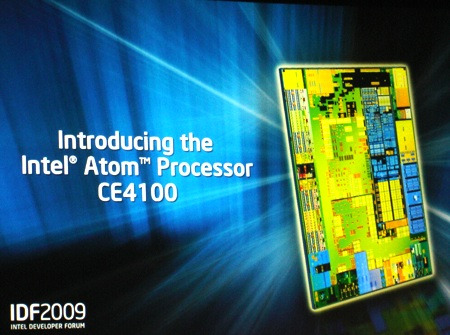
Intel Atom CE4100, the future of gaming

Intel Atom CE4100

I have written about this before, how soon consoles and PCs will not be needed to play games because televisions will be smart enough to do the job on their own.

The Atom CE4100 is what is known as a “System on a Chip” (SoC). So adding just this one extra chip to any media device (a set top box or the television itself) puts a whole computer system inside it. One effect of this is to bring the internet to your television. And with the internet comes games. Another effect will be to hasten the demise of DVD and Blueray players, why store bits of plastic and cardboard in your house when everything ever recorded is available for instant streaming?

The humble television is about to undergo a revolution. The current LCD devices are just an interim technology, they are large and flat but they are over complex, use excessive energy and have poor picture quality. OLED technology, which is just hitting the market, is vastly simpler, uses a fraction of the energy and gives a far better picture. Because they can be manufactured by lithography they will become very cheap, they are also ideal for making 3D displays.

The low power usage of OLED (and of the Atom CE4100 and future such devices) mean that TVs will become truly portable, they will merge with the tablet netbook into one device. Also the low cost means there will be several televisions per person. Moving pictures will be everywhere in our lives.

For gaming this will accelerate our move onto the cloud. Not only will paper and cardboard distribution disappear, the dedicated gaming platforms will also go. Because every television will be a gaming platform, connected to the internet and with significant processing power of its own.

Interfaces will be interesting. Small screens can be the interface themselves by physical movement of the whole screen, as with an iPhone, a bit larger and we get into touch screen territory and big screens will use something like Natal.

Another way to look at what is happening is device integration. The television, computer, telephone, game console, camera etc etc are integrating into one device that will do everything.

The Great Flu

This is like looking at the future through a chink in the door, I have said before that classrooms are a very inefficient way of learning, that gaming is several times better and that teachers as we now know them will become obsolete. The military, who are not as bound in by political correctness as our school systems, have already implemented much training by gaming with great results.

The Great Flu teaches each person interactively, in an interesting way, and at their own pace. Using the game reward system to ensure that the message gets home. And anyone learning by playing this game is learning from world class experts. It is evolutions of The Great Flu that will create an educational gaming industry that will be far bigger than the purely recreational gaming industry.

Here is what the publishers have to say:

In this game the player has to manage a worldwide outbreak of a new influenza virus, before it turns into a pandemic. In cooperation with one of the worlds leading virologists Dr. Ab Osterhaus from the Erasmus MC in Rotterdam, Ranj is developing a serious health game with the goal to increase the awareness and the level of knowledge about viruses and the complex way viruses spread and evolve.

Will video gaming become the main form of human exercise?

This is a very sensible and valid subject for discussion. Unlike books and films, which are purely sedentary, games require input. With the introduction and vast popularity of gesture interfaces, led by the Wii, the scale and nature of possible game inputs has changed drastically. Sometimes requiring substantial effort.

We have Wii Sports as being one of the best selling video games of this generation. Equally striking has been the uptake of the balance board and Wii Fit. And all the “me too” shovelware from myriad lemming publishers trying to cash in.

And it is not just the Wii. Games like Guitar Hero and Dance Dance Revolution have brought much physical activity to other consoles.

Of course the gesture interface genie is well and truly out of the lamp now with Microsoft and Sony following Nintendo’s lead, in Microsoft’s case with a greatly technically superior proposition. So the future of gaming is well and truly the gesture interface. Which is a good thing as it is more natural for users and vastly more immersive, which is the holy grail of what we do.

So games will take more effort. There will be games that are specifically designed to do so. But all games will, by the very nature of the interface, go in this direction. Games will be simulating real (and unreal) world environments and real world physical  activities. Tomb Raider will reward athleticism.

Meanwhile in the real world children are wrapped in cotton wool and not allowed out, because it is well known that there is a paedophile hiding behind every lamp post. So children are getting less and less exercise and so childhood obesity in the West isn’t just common, it is prevalent.

This means that if junior spends two hours a day playing games on his/her gesture interface then it is going to be their main form of exercise for the day. Add to that busy parents using gaming as a catharsis for all the woes in their lives, young professionals using gaming instead of the gym and pensioners using it to increase both their life quality and life expectancy and we have a lot of people getting their exercise from video games.

So there is a very real chance that in the West, at least, video gaming will become the main source of exercise. Which is ironic when you see video gaming being demonised by idiots for exactly the opposite.

What do game publishers do and is there any need for them?

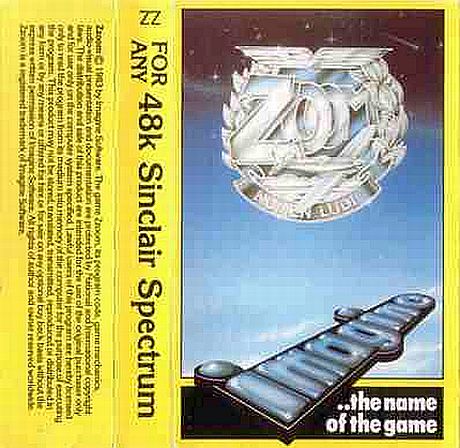
zzoom, sinclair spectrum, imagine software

I was actually in at the very beginning of this in the late 70s and early 80s. Back then if you wrote a game you had to manufacture, market and distribute it yourself. You became a publisher because there was no other way to market. This is what happened at Bug Byte and Imagine in Liverpool, the owners of the companies were, initially, the guys that wrote the games. Once you were up and running, other game writers, who couldn’t be bothered with all the publishing work, came to you and asked if you would handle their stuff too. This was the beginnings of our industry.

So what do game publishers actually do?:

  • Provide finance for the entire industry. This is not just paying studios, in stages, to develop a game. It is also the publishing costs which can often be far, far more. For one top console game the total cost is now into the tens of millions, so this isn’t insignificant. However, some development studios make the big jump to self financing their work, then they own the IP and can choose how it is published.
  • Take the risk. This is a pretty big job, especially for current generation console games, most of which don’t make a profit. This is partly why many of the world’s biggest publishers are making losses just now whilst the industry booms.
  • Market the game. It is a simple fact that with zero marketing a game will have zero sales. The game industry is a very young and fast changing industry so much of its marketing is inefficient and over expensive. Which means that many publishers aren’t doing a good job here, another reason for their losses. However what marketing expertise there is in the industry resides mainly with the publishers.
  • Create and build brands. A lot of the industry for a long time just piggy backed other people’s brands, so had no equity in their IP. We used films, books and celebrities. And it wasn’t good. Now the industry is growing up and nurturing its own brands with some startling successes (GTA) and a lot of painful growing pains.
  • Physically manufacture, warehouse and distribute inventory. Logistics. This is a huge pain. Vast amounts of plastic and cardboard are used to move digital information around the world. The problems boggle minds. Just getting the timing of everything and the inventory levels right is impossible, it will always go wrong. So retailers are out of stock of one game whilst another game is remaindered in the discount bin.
  • Manage the whole industry. People only buy consoles to play games. The games are everything. And the publishers have total control over the games. So they have total control and power over the industry. So they decide what happens, how it happens and when. A big responsibility and, to be fair, they tend to try and act for what they perceive to be the good of the industry. We don’t have any significant Enrons yet.

The most important thing about the traditional game publishing business model is that there are enormous competitive advantages of scale. The bigger you are the easier it is to run your business, if you much smaller than the biggest players then you simply cannot compete. This is why we have seen so much publisher consolidation, the laws of economics mean there should only be a handful of global publishers. It is what happened to film and recorded music.

However events are not just conspiring against global publishers, they are conspiring against publishing per se.

  • The cost of making games is, in many cases, coming down. This is partly down to better tools, libraries and middleware. It is also down to the far smaller scale of product required for many platforms, including some of the big ones like XLA and XNA. Which means that we have returned to the age of the bedroom coder, or to loose affiliations of a few people working together on a project. This has become massive. There are now more games being developed this way than in formal studios.
  • With the above the risk has come right down. You make a game in your spare time, if it works you buy a fast car and a holiday, if it doesn’t you just shrug your shoulders and try again. Which is exactly what happened in the old 8 bit days. I know, I was there!
  • Platform proliferation. This has really crept up on us. About a decade ago there were two viable platforms, the Playstation and the PC. Now there are lots. Xbox 360, PS3 and Wii, each of which is multiple platforms because of the online offerings. Xbox 2,  PSP, DS, iPhone, Android, nGage and of course the PC, which is also now mutiple platforms with casual gaming, MMOs, portals, boxed games etc etc. A big global publisher just cannot do it all any more, they have to cherry pick.
  • Product proliferation. It used to be very simple, there were a handful of genres and it was easy to keep up and publish a stream of releases into each one. Now we have total fragmentation, an infinity of genres. Just look at the thousands of iPhone games to see how diverse and sometimes bizarre gaming has become. This has left the big global publishers dead in the water, they don’t understand what is going on and even if they did they are too slow witted and cumbersome to do anything about it.
  • Marketing has changed and much of it is now free or nearly free. The traditional big publisher marketing model of throwing millions at television advertising is outdated, inefficient and an immense waste of resources. But they continue because of inertia and because they know no better. These days we have something called the interweb and with no money (or very little) and a little time you can run a very effective global marketing campaign. And the smart people are. Popcap is a prime example.
  • Digital distribution. This is the big one. Without plastic and cardboard it is difficult for publishers to justify themselves. As we have seen with iPod, once you remove physical inventory most games come to market without a publisher. This leads to an explosion in creativity as tens of thousands of new games appear that a publisher would never have given the time of day to.
  • Brands. The publishers have actually been mostly very bad at creating and building brands. It is a new thing to most of them and they don’t know what they are doing a lot of the time and it shows. Individuals can build brands too. They often have in history. All it takes is an instinctive feel for the brand experience they are creating, the brand image they are presenting to the world and the brand values they need to maintain and they have cracked it. The Oliver Twins did this with Dizzy.

So, as you can see, the big global publishers look like a threatened species. Everything is conspiring against the reasons for their very existence. So expect another period of rapid change. Publishers who adapt quickly away from plastic and cardboard and who learn how to profit from genre and platform proliferation will survive. Those who hang on to the old business models of physical stock, AAA blockbusters and TV advertising will go the way of the Dodo.

Playstation PS4 to beat the Xbox 720 to market?

In an extensive interview John Carmack, co-founder of id Software had a lot to say about the next generation home consoles.

Like this site he is a fan of using online instead of plastic and cardboard to ship inventory: “I think that Xbox Live… the advent of that and the App Store with the iPhone are wonderful signs of the future of digital distribution. I think there’s a decent chance that one of the next gen consoles will be without optical media… the uptake rates of people who have broadband connects surprised everyone this generation. It’s higher than what the core publishers and even the first party people expected.”

As the title of this article says, he thinks that Sony will launch first: “The whole jockeying for who’s going to release the first next gen console is very interesting and pretty divorced from the technical side of things. Whether Sony wants to jump the gun to prevent the same sort of 360 lag from happening to them again seems likely. As developers, we would really like to see this generation stretch as long as possible. We’d like to see it be quite a few more years before the next gen console comes out, but I suspect one will end up shipping something earlier rather than later.”

And he knows what will be inside these machines: “We do have a very good sense of where the technology is going because we talk to NVIDIA, we talk to Intel, we talk to ATI/AMD and they’re all pursuing variations on massive multi-core processor integration. There’s lots of interesting things about that, about how we need to think about things on the game development side to take advantage of that.”

All good stuff, and there is loads more in the videos.

My thoughts are that the PS4 and Xbox 720 will just be the application of Moore’s Law to the current consoles. So they will be about 8 times more powerful and 100% backwards compatible. They will have 2 to 4 Gbytes of memory and terabyte class hard drives. Obviously they will all come with gesture interfaces and there is a very high likelihood that they will incorporate 3D technology.

As ever it is fun speculating.

Many thanks to Digital Foundary at Eurogamer for their transcriptions.

online poker
SuperSignupBonus