Entries Tagged 'Anecdotal musing' ↓

Will lightning strike twice at Apple?

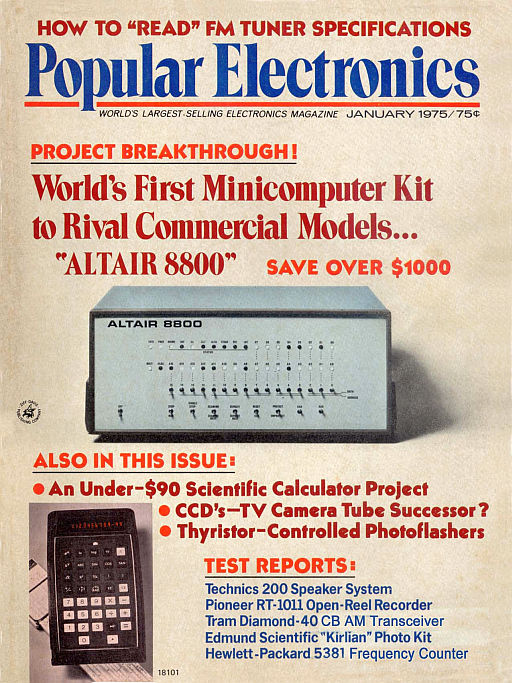
I opened one of the first computer stores, Microdigital in Liverpool, in 1978. So I was in a good position to see the rise of Apple to dominate the personal computer (PC) market. I even visited Apple in Cupertino in California and was offered the UK distributorship. So this put me in the front row as they built up to own the market, then threw it all away.

Apple computers were well made, came with excellent documentation and were easy to use. All of which was not necessarily true of the competition. Apples were also expensive but were worth the extra. They became a bit of a cult, a fashion item, as well.

The big strength of Apple computers was that the software and the hardware came from the same company, so they worked. The resultant dominance in the early 80s was such that other PCs might as well not have existed. Apple had a virtual monopoly. Then along came Microsoft’s MSDOS and changed the rules. Here was a standardised operating system (and consequential applications) that would run on machines from many hardware manufacturers. So the hardware manufacturers had to compete against each other on price and features. And it was war.

The result of this war was the survival of the fittest, rapid evolution that improved the breed. And Apple was left well behind looking underpowered and overpriced, they could not even vaguely get near competing with the MSDOS machines. So Apple’s market share collapsed and they fell back to serving niche markets such as pre publishing. In just a couple of years they went from near monopoly to sideshow.

And history could very well be repeating itself. Substitute Personal Computer with Smartphone. And substitute MSDOS with Android. Otherwise it is the same. Apple dominate the consumer smartphone market with the iPhone. The hardware and the software come from the same company and it works. It is a fashion item, a bit of a cult. Android, however, is available to all hardware manufacturers. Most of them are developing models that use it. So they will have to compete against each other on price and features. It will be war with rapid evolution improving the breed. Already the Samsung i7500 looks better featured than an iPhone.

Some may think that the tens of thousands of applications on the App Store make the iPhone entrenched. But remember that these were put together in a little over a year, so Android can do the same in a year. Just as Apple’s dominance of PC application software was quickly overcome when the MSDOS computers arrived on the scene in big numbers.

Of course Steve Jobs and Apple, having been there before, may have the answer this time. They need to entrench their position, which they are doing by going to multiple air time providers in each territory and by going to new territories. But Android will be doing all this too. They need to very rapidly advance their hardware technology. There is plenty of room to do this, the iPhone has a rubbish camera and no OLED screen, for instance. And the iPhone operating system has lots of room for improvement. But Android will be doing all this too.

Apple are moving on from the iPhone with a tablet device and probably a home console. Maybe this is their strategy. Don’t compete, move on.

The one saving grace that Apple have here is their brilliant marketing. In fact, to me, Apple are a marketing company first and a technology company second. Compare and contrast that with Google who have a trail of great products that have failed due to poor, almost non existent, marketing. But Android is different because it doesn’t need Google marketing, it will be marketed by all the handset manufacturers and air time providers. Companies like Vodafone, Sony Ericsson, Sprint Nextel, Samsung, Motorola, LG, Toshiba and Garmin. Formidable, isn’t it?

Now for the gaming perspective. The iPhone and App Store have produced the biggest flowering of gaming creativity in history. In terms of range of products they have left every other platform behind. However the business model employed here is easily copied. So we are moving into a new age where the iPhone game publishers will maximise their profitability by going multi format. Develop for Android, iPhone, PSP, DS and possibly PC simultaneously and reap the marketing benefits. It makes sense.

Imagine, Ocean, historic early game industry videos

Obviously I know the people in these videos. Sadly a few of them are now dead, which is the first thing that comes to my mind when I see them, past colleagues who are no more.

The first part, unfortunately, has no sound. And the Google video link they give does not work. A big pity. The second and third parts have sound.

Edited to say, here it is in one full video with sound.

Microdigital in Liverpool

Liverpool Seafront, Liver Building

I trained as an accountant for six year with Moreland and Partners in Liverpool, then ran a computerised book keeping company they had set up. This made me aware of the upcoming revolution of home computers. So I begged and borrowed till I had enough money to open Microdigital, one of the first ever computer stores, in Brunswick Street Liverpool, in July 1978.

To start with there wasn’t much to sell really. The Nascom 1 home computer gradually came on stream. A Z80 home computer kit with 2K of RAM for £200 (a lot of money in those days) with over a thousand solder joints. Obviously most customers couldn’t get theirs working so I hired an engineer and set up a set price repair service. Pretty soon faulty Nascoms were raining on us from all over Britain.

Another kit we sold was the Science of Cambridge MK14, Sir Clive Sinclair’s first home computer.

Then the Apple 2 arrived. About £1200 with 20K of Ram and a cassette interface. £425 for a disk drive when it appeared. But a proper usable computer at last.

We made a lot of money from selling books, they all came from America then. I was eventually buying them by the ton from an American wholesaler and selling them by mail order all over the world.

Two big bulk commodities made us a lot of money. The first was short run audio cassettes, the standard storage for home computers for nearly a decade. I had these manufactured by the tens of thousands. We even had a special carton manufactured for shipping them out in tens. The second were 16K x1 DRAM chips, which I bought in odd batches from the manufacturers and sold to a world hungry for memory.

To quench our thirst for knowledge we had all the books, we also got all the American magazines as soon as they came out. And the relevant academics for Liverpool University sometimes seemed to be living in the shop.  But there was a shortage of knowledge for our customers so we set up a magazine, Liverpool Software Gazette, to try and plug it.

I went to America quite a lot, by necessity, as they were ahead of us in the home computer revolution. On one visit to Apple, still then a relatively small company, they offered me the UK dealership! I also went to the American computer stores and came across the first commercial home computer games. These were for the Apple and consisted of a cassette or disk in a polythene bag with a piece of paper with the instructions on. All completely homebrew.

I brought the games (and much else) back from America which, with everything else we were doing, made Microdigital the centre of excellence for home computing. People made long trips just to visit us, from all over Europe as well as the UK. And people wanted to work for us, so we were able to pick good people. People who then gained a lot of knowledge from the environment. Here are just a few of them:

Paul Fullwood. Went on to be VP Head of Studios at Hasbro and Microprose, Professor of Video Game Techn0logy at Abertay University and is now SVP Business Development at Heatwave Interactive.

Mark Butler. Went to Bug Byte, one of the very first video games companies. Then co-founded Imagine Software.

Tim Best. Went to Imagine Software, Mirrorsoft and System 3. Tragically he died recently.

Roy Stringer went on to gain global recognition and many awards in the development of new media. Another who died tragically early,  he is remembered in the Roy Stringer lectures, which this year was given by Lord Putnam.

Andrew Sinclair. Went on to Imagine, Ocean and US Gold. Then lectured at Liverpool John Moores University. Now owns Bullwinkle Enterprises, an IT company that designs and develops servers and software for an open environment.

Carl Phillips, left to join Microsoft when they first set up in the UK.

Graham Jones. Left for a world in senior management in the IT industry.

Eugene Evans. Went to Bug Byte, then Imagine and Viacom. Now Senior Director of Marketing, EA | Mythic Entertainment.

There are more, but my memory is hazy. As you can see it was a talent incubator, we were all young so worked and played pretty hard. What we did put Liverpool on the map of the home computer and then the video game industries. They were the best of times and so much happened that a book could quite easily be written about it. I get interviewed by students working on thesis and dissertations about the early industry, so all is not lost.

What do game publishers do and is there any need for them?

zzoom, sinclair spectrum, imagine software

I was actually in at the very beginning of this in the late 70s and early 80s. Back then if you wrote a game you had to manufacture, market and distribute it yourself. You became a publisher because there was no other way to market. This is what happened at Bug Byte and Imagine in Liverpool, the owners of the companies were, initially, the guys that wrote the games. Once you were up and running, other game writers, who couldn’t be bothered with all the publishing work, came to you and asked if you would handle their stuff too. This was the beginnings of our industry.

So what do game publishers actually do?:

  • Provide finance for the entire industry. This is not just paying studios, in stages, to develop a game. It is also the publishing costs which can often be far, far more. For one top console game the total cost is now into the tens of millions, so this isn’t insignificant. However, some development studios make the big jump to self financing their work, then they own the IP and can choose how it is published.
  • Take the risk. This is a pretty big job, especially for current generation console games, most of which don’t make a profit. This is partly why many of the world’s biggest publishers are making losses just now whilst the industry booms.
  • Market the game. It is a simple fact that with zero marketing a game will have zero sales. The game industry is a very young and fast changing industry so much of its marketing is inefficient and over expensive. Which means that many publishers aren’t doing a good job here, another reason for their losses. However what marketing expertise there is in the industry resides mainly with the publishers.
  • Create and build brands. A lot of the industry for a long time just piggy backed other people’s brands, so had no equity in their IP. We used films, books and celebrities. And it wasn’t good. Now the industry is growing up and nurturing its own brands with some startling successes (GTA) and a lot of painful growing pains.
  • Physically manufacture, warehouse and distribute inventory. Logistics. This is a huge pain. Vast amounts of plastic and cardboard are used to move digital information around the world. The problems boggle minds. Just getting the timing of everything and the inventory levels right is impossible, it will always go wrong. So retailers are out of stock of one game whilst another game is remaindered in the discount bin.
  • Manage the whole industry. People only buy consoles to play games. The games are everything. And the publishers have total control over the games. So they have total control and power over the industry. So they decide what happens, how it happens and when. A big responsibility and, to be fair, they tend to try and act for what they perceive to be the good of the industry. We don’t have any significant Enrons yet.

The most important thing about the traditional game publishing business model is that there are enormous competitive advantages of scale. The bigger you are the easier it is to run your business, if you much smaller than the biggest players then you simply cannot compete. This is why we have seen so much publisher consolidation, the laws of economics mean there should only be a handful of global publishers. It is what happened to film and recorded music.

However events are not just conspiring against global publishers, they are conspiring against publishing per se.

  • The cost of making games is, in many cases, coming down. This is partly down to better tools, libraries and middleware. It is also down to the far smaller scale of product required for many platforms, including some of the big ones like XLA and XNA. Which means that we have returned to the age of the bedroom coder, or to loose affiliations of a few people working together on a project. This has become massive. There are now more games being developed this way than in formal studios.
  • With the above the risk has come right down. You make a game in your spare time, if it works you buy a fast car and a holiday, if it doesn’t you just shrug your shoulders and try again. Which is exactly what happened in the old 8 bit days. I know, I was there!
  • Platform proliferation. This has really crept up on us. About a decade ago there were two viable platforms, the Playstation and the PC. Now there are lots. Xbox 360, PS3 and Wii, each of which is multiple platforms because of the online offerings. Xbox 2,  PSP, DS, iPhone, Android, nGage and of course the PC, which is also now mutiple platforms with casual gaming, MMOs, portals, boxed games etc etc. A big global publisher just cannot do it all any more, they have to cherry pick.
  • Product proliferation. It used to be very simple, there were a handful of genres and it was easy to keep up and publish a stream of releases into each one. Now we have total fragmentation, an infinity of genres. Just look at the thousands of iPhone games to see how diverse and sometimes bizarre gaming has become. This has left the big global publishers dead in the water, they don’t understand what is going on and even if they did they are too slow witted and cumbersome to do anything about it.
  • Marketing has changed and much of it is now free or nearly free. The traditional big publisher marketing model of throwing millions at television advertising is outdated, inefficient and an immense waste of resources. But they continue because of inertia and because they know no better. These days we have something called the interweb and with no money (or very little) and a little time you can run a very effective global marketing campaign. And the smart people are. Popcap is a prime example.
  • Digital distribution. This is the big one. Without plastic and cardboard it is difficult for publishers to justify themselves. As we have seen with iPod, once you remove physical inventory most games come to market without a publisher. This leads to an explosion in creativity as tens of thousands of new games appear that a publisher would never have given the time of day to.
  • Brands. The publishers have actually been mostly very bad at creating and building brands. It is a new thing to most of them and they don’t know what they are doing a lot of the time and it shows. Individuals can build brands too. They often have in history. All it takes is an instinctive feel for the brand experience they are creating, the brand image they are presenting to the world and the brand values they need to maintain and they have cracked it. The Oliver Twins did this with Dizzy.

So, as you can see, the big global publishers look like a threatened species. Everything is conspiring against the reasons for their very existence. So expect another period of rapid change. Publishers who adapt quickly away from plastic and cardboard and who learn how to profit from genre and platform proliferation will survive. Those who hang on to the old business models of physical stock, AAA blockbusters and TV advertising will go the way of the Dodo.

About good management

The Office, US version, season 4

When I was younger a lot of my friends went to work in their family companies. Their parents often insisted that they start at the bottom and learn every job in the company so that when they took over they would have a full understanding of how everything works.

An extension of this is the manager who is expected to be able to do every job in his department better than the people who are doing it. This is absolute, complete and utter stupidity. It is a managers job to manage, not to do the jobs of his staff. A good manager always selects the best person possible for any job. And that person will always be better than the manager at that job. This is the route to success, only recruit people better than yourself.

Of course there is the exact opposite, the route to failure and something I have often seen in the game industry. This is where you have a weak manager who feels insecure, so never employs people who he perceives could be a threat to his own position. So he ends up with a company or a department full of distinctly average, under performing people. You would be amazed just how often this happens, I could give real world examples that I have witnessed first hand!

App Store pricing


there is audio missing in this video 9:44-11:00

In the 1980s I was in charge of marketing at a couple of big game publishers. Imagine and Codemasters. The main market then was games for the Sinclair Spectrum. And Uncle Clive did not run a platform holder business model, he just sold machines. So the game market was a total free for all. And if you had the right skills a game could be written quickly and cheaply. So the barriers to entry in this business were very low. Which meant that there was a massive amount of competition.

In economics there is something called price elasticity of supply, which says that if there is a big supply of something the price will come down. We see this at the supermarket as different fruits and vegetables come into season. And we saw it with Sinclair Spectrum games. Eventually they came down to just £1.99 which, considering that physical product had to be manufactured, was a phenomenally low price. Also the Spectrum suffered from a huge amount of piracy, both professional counterfeiting and schoolboy duplicating, which was a further driver towards low prices.

One really brilliant effect of the Spectrum free for all was product differentiation. To be different to the competitors people would try anything that had a small chance of working. This led to an explosion in creativity and much of what we know as gaming today is descended from ideas that first surfaced then. For instance John Gibson and David Lawson at Imagine invented the Real Time Strategy genre with the game Stonkers. Certainly there was vastly more variety in Spectrum games than there is in PS3 games today.

And yet in a sea of budget £1.99 games it was still possible to succeed selling at far higher prices (at the time called full price games). Games like Daley Thompson’s Decathalon, Rambo and Miami Vice. These games were not necessarily better than the budget equivalents. But they were brands. And customers were buying more than just the game, they were buying into the brand experience, for which they were prepared to pay a multiple of the budget game price.

The same happens with the grease that women put on their faces. Scientist say that there is little or no difference between the cheapest and the most expensive. It is just grease. Yet the price difference is phenomenal. From just a few pounds for half a litre to £50 or more for a tiny pot of the stuff from the main prestige brands and many hundreds of pounds for a small pot of the most expensive stuff. And millions of women willingly spend their hard earned money on the stuff. Simply to have the brand experience. In fact they are buying 90+% brand and less than 10% product.

Now the Sinclair Spectrum days are with us again with the Apple App Store. It is not just me that thinks this, Neil Young is CEO of ngmoco, he experienced the Spectrum market first hand and he thinks that App Store is the same. So we have the same explosion in creativity and we have the same collapse in prices, this time to 99c because there is no physical product to pay for. The collapse in prices is exacerbated because so many Apps are self published and the author/publisher tends to be very unsophisticated about marketing. They think that price is the only way to compete and they know nothing about building a brand. Or, if they know about brands, that advertising is the only way to build one.

What is happening on the Apple App Store is going to become the standard for the industry. The other platforms are being forced to move to the App Store business model. Even major established consoles like the Sony PSP. So the flowering of creativity and downwards pressure on price will be across the board.

Which will lead to an explosion in proper marketing in the game industry. Some people think that game marketing is buying lots of advertising, preferably on television. This is part of why AAA boxed console games are so expensive. The people who do this are marketing dinosaurs. Proper marketing is a far broader and more subtle craft. We will need a lot of it if we want people to pay more than 99c for a game. And we should be starting by nurturing the concept of celebrity within the industry.

The decline of licenses in video games

At Codemasters, just a few year ago, most successful games contained some sort of license: MTV Music, Colin McRae Rally, LMA Manager, DTM and TOCA Racing, Micro Machines, American/Pop Idol, Pete Sampras Tennis, World Championship Snooker, Brian Lara Cricket etc etc. It was a formula and it worked but Codemasters was not building much equity in its own brands whilst it was paying a lot to build other people’s brands.

Jim Darling, the company chairman, had an interesting take on this, he thought that all these brands should have been paying us for the exposure they were receiving. And he had a point, more people worldwide probably knew of Colin McRae from the games than they did from his rallying (which is actually a niche motorsport).

So it is interesting that Codemasters (with the exception of the high risk F1 game) have moved away from these licenses. Colin McRae is morphing into Dirt and TOCA into Grid, for instance, brands that Codemasters owns/will own and can build equity in.

And it is not just Codemasters that has done this. It is a massive industry trend. Electronic Arts for instance was once license central with Harry Potter, James Bond, Lords of the Rings and a whole raft of other licenses as their bread and butter. Now they have moved to publishing their own IP and making their own brands. This is industry wide as any examination of the charts, compared with just a few years ago, will tell you.

Now some of this is the big global film companies getting into gaming and so pulling back the licenses for their own use. Some of it is conscious decisions by managers to build equity in their businesses by owning and building brands. And some of it is the fact that the game industry is big and strong enough now not to need to ride on anyones coat-tails. Especially the coat-tails of old media which is in rapid decline.

The big problem for the industry is that this switch really is a different business model and there is much to learn about building and managing brands. So marketing becomes a lot more sophisticated with the need to communicate core brand values to the consuming public. This business model transition has caught some publishers out, which is one of the main reasons we are seeing publisher losses at the peak of the cycle. But in the long term it confers massive advantages to the whole industry. We are growing up.