Entries from January 2008 ↓

What will 2008 bring to video gaming? #2, Other Platforms

 farmers-almanac.jpg

Firstly the iPod and iPhone. Apple can see a lot of money here and are working to create a major gaming platform. Earlier iPods lacked the horsepower but the iPhone and iPod Touch correct that fault. Because of the iTunes distribution system this platform could be ramped up very quickly indeed to an already well established user base. This could well be the biggest growth area in gaming this year.

Nokia meanwhile continue to mess up their nGage platform. In 2003 Nokia had the potential to create the most popular gaming platform on earth and instead they made just about every mistake that was available to them. It was embarrassing. They are trying yet another tactic this year. It could work for them, but the evidence of history is not on their side. A pity because we are headed towards a universal pocket device and Nintendo Nokia could have owned the market. Yet they squandered first mover advantage.

The PC has matured into an interesting gaming platform. For boxed games at retail it has been in a downwards slide for some years. But for MMOs, casual gaming and for Steam it has grown massively. Also the effective banning of online gambling in the USA has forced companies to put their resources into online for money skill games. This will grow a lot during 2008. The companies with a gambling background will make a lot of money from this, showing up the lack of vision of traditional game publishers.

MMOs have grown under the effect of World of Warcraft which brought strong social networking to the genre. Other MMOs have learned this lesson and we will see the results of this during the year. Also non subscription business models will increase. Habbo Hotel is a powerful role model. As for genre we must be reaching the time when something other than swords and sorcery will work. It is overdue.

Steam is hugely important to the whole future of gaming. It must make Valve worth billions of dollars. The addition of social networking at the end of last year was a genius masterstroke. For serious hardcore gaming Steam is rapidly becoming the only show in town. It is a great example of what a team of very clever people can achieve.

Another group of gaming platforms that will show very strong growth this year are the social networking sites. MySpace and Facebook are now both open to third party developers. Their huge user base guarantees that games have a great potential. It is a pity that so many developers can see no further than data mining. Combining online for money skill games with social networking userbases could be a license to print a vast amount of money.

Mobile phone gaming will continue to be a niche due to the fragmentation of platforms and carriers. However the potential is massive. They are ubiquitous. The current complex business model could well die out as much stronger business models run by the platform manufacturers come along. Apple and Nokia are the obvious ones, but look out for Sony, Microsoft and Nintendo entering this space.

There are loads of other gaming platforms from in flight seat back entertainment to SCUBA diving computers. They all sit in their respective niches and make business for those that service them.

What will 2008 bring to video gaming? #1 Sony, Microsoft and Nintendo.

 nostradamus.jpg

Happy new year. And back to work! As is traditional at this time of year I will try and give some pointers to what I think may happen over the next twelve months. Firstly let’s look at the current situation. According to VG Chartz there are now 8.71 million Sony PS3s sold to end users, whilst the Microsoft Xbox 360 has sold nearly twice as many at 16.02 million, but has been overtaken by the Nintendo Wii with 19.45 million. All three of these are dwarfed by ownership of the Nintendo DS which has 64.92million happy owners, far more than the three previous machines combined. The PSP continues to sell with 29.79 million but most of these are used as media players, not as gaming machines.

Sony PS3 sales were given a big kick by the price reduction, despite the lack of AAA exclusives on the machine. This year sees massive system sellers such as Metal Gear Solid 4 and LittleBigPlanet which at long last will give the PS3 credibility and make it a worthwhile purchase. The delayed Playstation Home has the potential to be huge. Unlike Xbox Live this is geared up very much to be an online social networking community and we all know how big they can become. Sony should recover their position a lot during 2008, they need to with the amount of money this is costing them.

Microsoft have already pulled off what may well be the biggest marketing coup of 2008. Grand Theft Auto IV on the 360 is going to have a lot of exclusive downloadable content that the PS3 won’t have. Considering that this will certainly be the biggest game of the year this exclusive content will swing a lot of buying decisions over to 360. Other than this Microsoft have more games coming out for the 360 than Sony has for the PS3 and a lot of room to use the price mechanism to maintain their market position.

The Nintendo Wii could very well be a bubble that is already bursting. Or it could build on the existing solid base to become an entertainment phenomenon. Wii Fit will keep the impetus going through Q1&2 whilst Animal Crossing will be massive in Q4. These alone will probably be insufficient so Nintendo need some AAA third party titles. Nintendo like to upgrade their hardware so we could see an enhanced Wii with, for instance, a hard drive. Also a more powerful HD console must be on the way.

The DS for Nintendo threatens to become a ubiquitous device like the Walkman was for Sony. This year should see another upgrade with bigger screens. Nintendo are perfectly placed to make a telephone version (with a partner like, say, NEC?) which could deal a huge blow to both Nokia and Apple.

What is certain is that this generation is still in it’s infancy. There are still over 130 million owners of last generation consoles who have yet to upgrade (mainly PS2 owners waiting to see if the PS3 will be worth buying). If you add in the constant growth of the market and the popularising effect of the Wii then there could easily be a market for a further 200 million home consoles in this generation. Four and a half times more than have been sold to date.

A big factor this generation will be multiple machine ownership. To a far higher level than in previous generations. This is because there are so many must have games that are platform exclusives. This means that the real war between Microsoft and Sony will increasingly be fought between Xbox Live and Playstation Home. So expect both companies to put a lot of effort into these online platforms.

A big tactic this generation has been to stratify each console into a product range and to bundle games with consoles to give higher perceived value (something that was overdone in the days of the Commodore Amiga and Atari ST). Expect this to be continued this year with top end versions of the 360 and PS3 featuring large hard drives and enticing bundles of AAA games.

That is a very quick overview. It is impossibly to say who will do best out of the three. This generation of consoles is spectacularly good at making analyst’s predictions look stupid. One major change that has emerged is that Microsoft are now a player at the top table in the console industry. Just watching how they use this new found position will be fascinating.

Have we got it wrong with graphics?

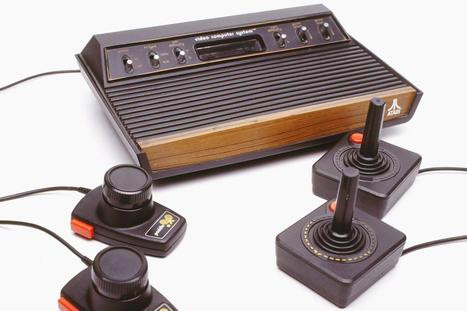
atari-vcs-2600.jpg

When I was working at Codemasters in the mid eighties Richard Darling was considered to be a gaming god with a string of number one titles at Mastertronic and then Codemasters to his name. So it was really interesting that the game machine he had at home was a dated Atari VCS 2600 console when he could easily have used a far more powerful and modern machine like a Commodore Amiga or Atari ST instead. The reason he gave was that gameplay was the most important thing, not graphics. And that the VCS 2600 had finely crafted and polished games in which the gameplay was paramount.

This is a debate that has cropped up again and again over the years. Always the platform makers give us ever higher graphics capabilities. And nearly always game developers throw ever increasing resources at utilising those graphics capabilities to the maximum. What a game looks like has become the most important thing.

Yet talk to serious gamers about their favourite games. Often you hear the names of titles like Elite, Goldeneye and Super Mario 64. Games with quite miserable graphics compared with more modern offerings.

And this seems to be something that Nintendo understand better than Sony and Microsoft, which has given them a massive competetive advantage. Basically Nintendo did not go HDTV with the Wii whilst their competitors did with their latest consoles. This looks relatively sensible as the vast majority of homes do not have HDTV and the adoption rate will be relatively slow because non HD TVs do a perfectly good job.

The advantages to Nintendo are firstly that it makes their console cheaper to manufacture. This means that they can sell the base console at a profit whilst their competitors have to subsidise the retail price. It also gives Nintendo far more room to manoevre when it comes to using the price mechanism to take on that competition. The second advantage is that games are a lot easier, quicker and cheaper to develop. In fact they are more comparable with PS2 games in this area. This, obviously, has a massive effect on what appears on the game shop shelf and when it appears. Quite simply it should be far easier for a publisher to make a profit on Wii, which explains why so much development resource has been directed at it.