Entries from January 2010 ↓
January 30th, 2010 — News analysis and background

At the gym yesterday the TV news in the changing room carried an item about Advent Computer Training going bust. One of the guys there said that he had been a victim of this company. He said a high pressure salesman had come to his house and promised him a highly paid career and that they would help him find a job. So he signed up to a finance agreement with Barclays for £5,000. When the course arrived it was no good for him and he gave up on it. But he still has to pay off the £5,000 to Barclays with several years of monthly payments. Even with Advent bust he will still owe that money.
It appears that what finished Advent off was Barclays stopping the supply of such student loans. In their words: “Barclays Bank are the main student funding partner and we have worked with them closely for several years. Just before Christmas Barclays informed us that they were pulling out of the student training sector with effect from 31st January 2010.”
So you can see what was happening here. Barclays were giving out loans to students and then handing the money over to the company. The company should have held that money in trust and only used it as the course progressed. But they didn’t. Obviously it was being spent, going somewhere, almost immediately. So when the supply of new money dried up there was nothing left to finance the training that the students had paid up for. Within weeks the company was bust.
I don’t like this business model. Why should the provider of a service (in this case training) be paid in advance with a lump sum for several years of that training? Universities and colleges don’t do this.
In my opinion using a finance company, like Barclays, is also pernicious. The student’s relationship for their course is with the training company, yet their relationship for paying for the course is with the finance company. This is not good.
You can see why Barclays may have got out. Even if the course is brilliant there are still going to be a percentage of people who have bought the wrong thing. And they are caught in a trap with years of monthly payments ahead of them. So they won’t be happy bunnies and, inevitably, they will take out some of their ire against the company they are paying the money to. Barclays don’t need this flack.
And remember that these courses are targeted at the young, the weak, the vulnerable. They are for people who are under educated and want to improve themselves. These people stand no chance against a highly trained high pressure salesman. Many of them become victims, they receive nothing yet have to pay out large payments every month for years. You can read about such victims here, and here.
Don’t these people realise that there are better ways to get an education? The Open University for instance. These guys don’t use high pressure salesmen, don’t use finance companies, have world class course material, give qualifications that are universally recognised, have first class training staff, don’t demand several year’s financial commitment up front and yet only cost a fraction of what some commercial trainers charge.They even hand out financial support to lots of students!
The Open University say: “Want to get a qualification that will help you develop or change your career? Learn a subject in depth? The Open University – voted top for student satisfaction for three years running – could provide the flexibility, the qualifications and the top-class teaching you’re after. For most courses you don’t need any previous qualifications. And with our world-leading blend of supported open learning and innovative course materials, you’ll get an exceptional learning experience.”
For example here is a course that provides an introduction to computing and human-computer interaction, including gesture interfaces such as the Wii Remote. It costs just £400. And it counts towards a degree.
Finally, here is some Advent marketing blurb:
Advent Training is Different.
At Advent, we not only provide excellent IT training courses, but we also offer specialist careers advice and support to help our students get a job in IT.
We understand how the industry works and we know what employers are looking for. We constantly research IT jobs in the UK to make sure our courses are up to date, providing you with the skills you need to get a job in IT.
Support Every Step of the Way.
Our certified trainers work closely with you to monitor your progress, making sure you move forward to the next stage only once you are absolutely ready. No-one is left to fend for themselves and everyone works at their own pace.
We also give every student comprehensive study guides, practical advice on exam preparation / technique and unlimited email and phone support throughout their course.
Whats more, our unique, introductory modules provide essential background information to enable you to understand more about computer skills in the IT environment and to be able to talk with confidence at interview or in a job situation.
Advent Training’s technical expertise is recognised through Microsoft’s Certified Partner accreditation.
January 29th, 2010 — Practical information, The platform holders

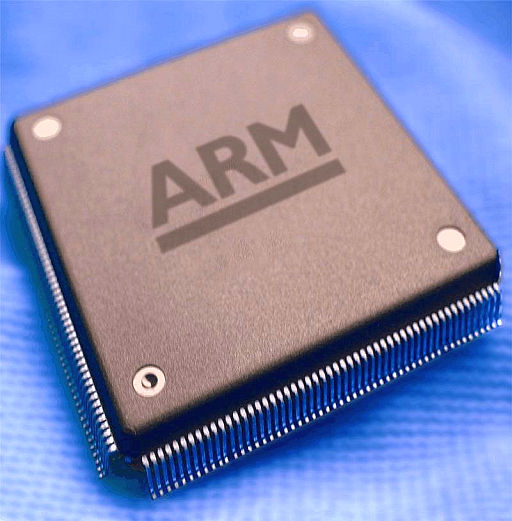
You may never have heard of ARM microprocessors, but you use many of them every day. They are in virtually every mobile phone and every PDA made, there are lots of them in every car, running systems like airbags, fuel injection and ABS, in fact they are embedded in most of the world’s electronic devices. Many billion of them are made every year, 90 are made every second.
And they are one of the cornerstones of the technology that makes video gaming possible. They are in the Sony PSP and the Nintendo DS, they power the iPod Touch and the iPhone and they control many of the world’s hard drives and internet routers.
ARM is an acronym, with another acronym inside it.
A stood for Acorn, a British manufacturer of home computers between 1978 and 1998. Successful models include the Electron, BBC Micro, Archimedes and the Atom. The earlier machines used 8 bit 6502 processors, but when Acorn wanted to create a graphics user interface the 6502 was not powerful enough. They discovered that a class of students in America had designed their own processor, this emboldened Acorn to do likewise. It was largely designed by an engineer called Sophie Wilson and was made as simple as possible for a 32 bit processor with just 30,000 transistors. And in 1987 it went into the Acorn Archimedes.
In 1990 the A changed from representing Acorn to representing Advanced when the processor was farmed off into a separate, new company, Advanced RISC Machines Ltd, jointly owned by Acorn, Apple and VLSI technology. When they went public in 1998 they changed their name to ARM Holdings because they thought that the investing public would not put money in a company with RISC in its name!
R stands for RISC, as I have already said. RISC is itself an acronym, it stands for Reduced Instruction Set Computer. This does what it says on the tin. If you reduce the number of different instructions that a microprocessor can execute then it can execute them more quickly. This can be a big difference as each instruction takes less clock cycles (mainly just one cycle with the ARM). Also the processor will be a lot simpler, so will be cheaper to make and use less power. The downside is that you need to use more instructions in your software than with conventional microprocessors.
M stands for Machine, which is what a microprocessor is. But you need different powered machines for different jobs, so now ARM create a whole range of these machines (over 580 different processor designs) to perform everything from the simplest task to being the main processor in a portable computer.
ARM don’t actually make the chips, they license the designs out to most of the world’s chip manufacturers, over 200 separate companies make them. These people in turn use the ARM designs in a myriad of different ways, often embedding the ARM processor on a chip with lots of other components. In fact today it is not uncommon for all the components of a computer to be on the one chip, this also has an acronym, SOC, or System On a Chip.
An example of an embedded ARM is the Wii, which has one embedded in the Hollywood graphics chip, this works with the main (non ARM) Broadway processor, controlling input and output. The hidden, embedded nature of this ARM was what made the Wii system so hard to crack.
An example of an SOC is the Apple A4 chip in the new iPad tablet computer. This one chip contains an ARM Cortex-A9 processor and an ARM Mali 50-Series graphics controller with all the electronics they need to make up a complete system.
One feature of ARM chips that has made them so popular is their very low power consumption. They give the most processing power possible for a given amount of electricity. Part of this come from their fundamentally simple and elegant designs, they contain less components than the alternative solutions to getting the job done. Part comes from the fabrication techniques and actual silicon technology. And part comes from very clever power management. The speed at which different parts of the chip work is controlled to be as slow as possible commensurate with getting the job done. From flat out to total stop. This efficiency brings secondary savings when heatsinks and cooling fans aren’t required. Overall it makes them the processor of choice for any portable device.
ARM is a British company, based in Cambridge and with offices all around the world. They turn over about £300 million a year and employ nearly 2,000 people.
January 28th, 2010 — Uncategorized

Steve Jobs pours ridicule on netbooks, saying: “They’re slow, they have low quality displays … They’re not better at laptops than anything, they’re just cheaper”. Well I have news for him, after the launch of his iPad I think that my Acer Aspire One netbook is a better ownership proposition. Which is not what I was expecting.
So where have Apple gone wrong?:
- Apple have a marketing strategy with iPod/iPhone of planned obsolescence, like Detroit carmakers in the 1950s and 1960s. The product line is updated regularly with features held back to make the next model more appealing. So many customers upgrade every year. This strategy is no longer valid because of Android. Apple need to maximise their benefits and features to stay ahead in the race. They haven’t done so and will be outperformed on price and specification by a myriad of competitors.
- No OLED display, presumably this will be in next year’s model. Instead they have gone for IPS (In Plane Switching) LCD. This technology gives a wide viewing angle and good colours, however it switches very slowly producing motion blur which is not good for games. Also, compared with OLED, it uses a lot of electricity, resulting in a short battery life.
- Not a proper competitor for Kindle. Amazon must be very happy today. The Kindle’s E Ink display technology is vastly more readable than any LCD. And Kindle will run for a week on a charge whilst the iPad only lasts 10 hours.
- The iPad has no camera. What were Apple thinking about? This is an unbelievable omission which severely curtails the usefulness of the device.
- Processing power. The iPad uses an ARM processor. The netbooks that Jobs derides can have ARM processors too. Or Intel’s rapidly developing Atom. So the iPad has no significant horsepower advantage.
- No removable battery. This is naughty of Apple, these batteries have a finite life, so eventually need replacing. You have to send your machine back to Apple for this to be done. Which is costly and inconvenient. Also I have different sized batteries for my netbook for different situations and can change between them in seconds.
- The name. iPad. This is already the butt of massive derision all over the net. I am sure that there are many excellent jokes to come. What were they thinking of?
- No multitasking. My netbook will do this. This is a very significant weakness.
- No Adobe Flash. Huge chunks of the internet run on Flash and iPad can’t see it. Presumably Apple do this to protect their App Store revenue. My netbook runs Flash.
- No Skype. Another massive omission and, once again my netbook can do what the iPad can’t.
- No USB or Firewire ports. Seriously. My netbook has three USB ports. Once again Apple are seriously limiting what their customers can do with their machine.
- Storage capacity is limited to a maximum 64GB flash drive. When netbooks often have far bigger hard drives and as many USB memory sticks as the user wants.
Not looking good is it? So what has the iPad got going for it?:
- Apple fanboys and Apple marketing. This is cult like. Lots of people will buy anything they stick the Apple logo on.
- Fantastic user interface. Apple really do lead the world at this and have taken it several steps further with the iPad. This gives the device fantastic touch and feel.
- Price. For once Apple have a realistic price structure. They need it with the competition this machine is going to have. But remember that an iPhone costs just $180 to manufacture and the iPad will cost a similar amount.
- The App Store. 140,000 applications. On the iPad existing apps run in a small window or scaled, so there isn’t much advantage over an iPhone. But the huge catalogue still represents a huge amount of capabilities for the device. iPad specific applications will obviously benefit from using the bigger screen properly.
- Money. Apple have enough cash in the bank to buy several small nations. They can throw this at the iPad project till it works.
My Acer Aspire One is still the better device for me and my requirements. It has a mechanical keyboard and a big enough hard drive, it runs Windows XP and Firefox customised for my needs. I can use nearly 30 years worth of heritage software including all the established industry standards. Apple have failed to come up with something that competes with such a netbook.
January 27th, 2010 — News analysis and background

At 6PM GMT today Steve Jobs will announce the iSlate (or whatever they are going to call it) at the Yerba Buena Centre for the Arts in San Francisco, in one of the most anticipated product launches in history. Jobs himself seems pretty nonchalant: “The new products we are planning to release this year are very strong, starting this week with a major new product we are very excited about.”
Here is some of what is being speculated:
- It will have a very highly developed gesture interface using multi touch. Possibly a big capability jump in this area. Apple have been leaders with the man/machine interface for 30 years now, here is another opportunity to stun the world.
- Backwards iPhone compatibility. So it will have access to 130,000ish existing apps from day one. Which means it will hit the ground running.
- High level of utility as a gaming machine. It is known that game publishers such as Electronic Arts are part of the project. To have platform specific game content at or near launch. Which shows that Apple have learned what customers want from the iPhone AppStore.
- It looks like it will also be an electronic book (and magazines, newspapers etc) reader, using OLED screen technology. Apple have been doing lots of deals for this sort of content. So they are going after Kindle, it can be no coincidence that Amazon have just launched a Kindle SDK and are going to open a Kindle application store. iSlate Vs Kindle could be a big upcoming battle.
- It will also stream television and play movies. So Apple really are going for a Swiss penknife device.
- 3D. Well it is all the fashion and it is technically possible (I wrote about this last July). If they really have done this then it will give 3D in consumer devices a bigger impetus than even Avatar has done.
- It will sell in huge quantities. Analysts reckon on 4 to 6 million units this year. And there are rumours of manufacturing capacity shortages in the sorts of display it will use because of Apple’s huge orders.
- Image recognition. We know from Microsoft’s Natal that there have been big strides in bringing this technology to consumers. It is a software thing and if Microsoft can do it, then why not Apple?
Presumably it will also do inter stellar travel and make the tea. The level of expectation is at a fever pitch and the air is thick with rumours. If it does what people expect then it will become a black market item from day one, selling secondhand at a massive premium on eBay. Some people just have to be seen with the latest toy.
And where does this leave Google and Android? Still catching up very quickly is the answer. Android will see very many devices this year from many of the world’s biggest consumer electronic companies. Google are in this for the win, their survival strategy depends upon it as the internet becomes mostly mobile. Apple are trying to put clear blue water between themselves and Android but they are just one manufacturer against many. Apple will need to innovate like crazy just to maintain position.
And where does this leave Microsoft with Zune and Windows Mobile? Trailing badly and losing position by the day is the answer. This is one boat that Microsoft have well and truly missed. They have failed to see that smartphones will become the main form of computing. This is as big a mistake for them as when they failed to understand the internet, losing major markets to competitors. It will take massive investment and stunning product announcements to even play catch up here.
So this looks like being a very big day in the history of computing and the history of gaming. Soon there will be over a billion new smartphones being made every year. They will become the main computing device on earth. They will become a commodity. iSlate is a step by Apple to keep themselves ahead of and above the commodity market. But they are starting a technology race that they have to win every year.
January 26th, 2010 — News analysis and background

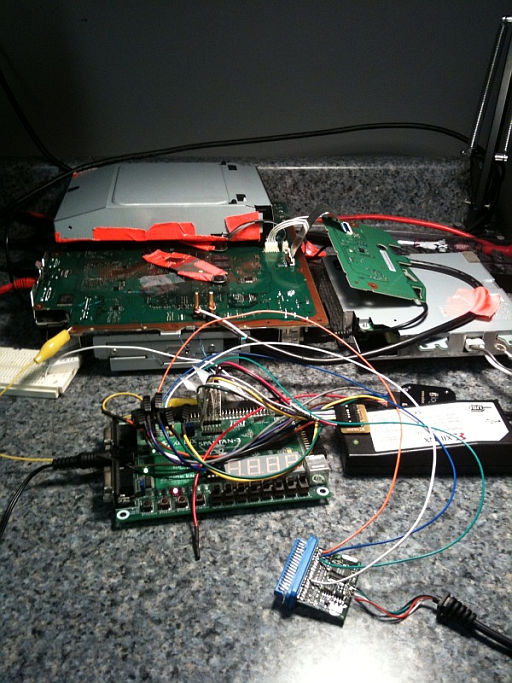
George Hotz is a very well known American hacker, famous for being the first to break the security of the iPhone. Now he has told the BBC that he has cracked the Sony Playstation PS3 and that he will post the details of how to do this on the interweb. You can read about his progress on his blog.
There are lots of ifs here. If what he says is true, if he releases details out into the wild, if it can be easily replicated by others, if it is used for widespread game stealing and if Sony don’t come up with an effective counter. If all these ifs line up then Sony are in enormous trouble. The PS3 is just over three years into what should be a ten year life. So the loss in sales revenue from games will add up many hundreds of millions of dollars. A billion dollar reduction in revenue is not impossible. Not news that any company wants to hear.
The main protection on Sony consoles has come from the media. Playstation 1 used CD-Rom, Playstation 2 used DVD and Playstation 3 uses Bluray. Each of these media standards was very new when the consoles were launched so blank media and burners were very very expensive. Over the life of a console the blank media costs tumble, burners become cheaply and readily available and the thieves get up the learning curve of how to crack the machines.
I was at Codemasters when Playstation 1 game theft reached critical mass. We very suddenly went from being able to make a good living from PS1 games to making a loss on every one. There wasn’t platform proliferation then, the PS1 was the main show in town. So it hit us very badly. The thieving caused 20% of the workforce to lose their jobs. I was there through all the trauma that this involved. Fortunately the company survived, largely because of a PC game called Operation Flashpoint that went to number one in every country with a chart. But time were bleak until the Playstation 2 got up to a big enough user base to provide us with a regular living once again.
Things would not be so bad for publishers these days if the Playstation 3 really is cracked. Now there are lots of platforms and lots of business models. The industry just moves resources away from platforms that are badly effected by stealing to ones that are less affected. So the thieves shoot themselves in the foot as much less money is spent developing games for their machine.
Of course the Microsoft Xbox 360 and the Nintendo Wii are also cracked. With the 360 Microsoft have the simple solution of kicking modified machines off their Live service. This is a very effective deterrent as Live is one of the main reasons for owning a 360. The Wii being cracked is less of a problem because of the casual nature of their user demographic who are less likely to be bothered with trying to steal. And Nintendo make latest release games look for known platform modifications and then refuse to play if the machine is not kosher.
Of course Sony also can and will come up with a strategy to counter cracked machines. But obviously the degree of success they achieve has yet to be seen.
Once again we are seeing that the public cannot be trusted with physical ownership of games. If they can steal without getting caught then there are tens of millions of people who are happy to do so. They have no morals. Gaming is going to move increasingly into the cloud. MMOs and most casual gaming are already there. What are now console games will increasingly follow.
January 25th, 2010 — News analysis and background

On my recent visits to video game stores I was unsurprised to see that the secondhand game section is now just as big as the new game section. This must make the blood of every game developer and publisher boil because they are getting no income from these sales, despite having done all the work to create the games. Add to this the massive bit torrent stealing of games, which can reach over 90% of all users on some platforms and you can see that there has to be another way.
Eight or nine years ago at Codemasters I came up with the Registered Player Service, an idea to tie each copy of a game down to an individual user and then to provide downloadable content (DLC) as an incentive for participation. So only if we, the publisher, had received a person’s money, did they get the full experience. If they had a pirated or secondhand copy then they only got a basic game. Because of politics at Codemasters this idea was never implemented.
So you can imagine how pleased I am that at long last this idea is being implemented. By BioWare, and they are calling it the Cerberus network. They have added the refinement that someone with a pirated or secondhand copy can still get the content, by paying a fee, currently $15. This is probably pretty close to the incremental nett profit BioWare would make from selling a legitimate copy of the game, so it cancels out the financial effects of both secondhand sales and game theft.
The first game this is being done with is Mass Effect 2, out tomorrow. Legitimate game owners and players must be very pleased, here is an anti piracy measure that doesn’t punish them and which forces everyone to contribute to the cost of making the game if they want the full experience.
From a marketing point of view this requires the philosophy shift to treat owners of the game as a community, not just as a number of consumers, the benefits for everyone are enormous. It is certainly something that needs to be brought to the Apple AppStore (and the many similar such models) if developers want to be adequately paid for their work.
January 22nd, 2010 — Opinion

There is no doubt whatsoever that downloading and playing a game that should have been paid for is theft. The perpetrator is benefiting from another person’s labour that has a commercial price which has not been paid. The fact that with digital content you do not need any materials to manufacture a copy is totally irrelevant. It is still theft and the people who download games without paying are thieves.
And it is theft on a grand scale. The current orgy of online IP theft is the biggest outbreak of mass stealing in the history of humanity. Tens of millions of people are stealing because they think they can’t be caught.
Earlier this month I wrote this article about $304,149,300 stolen from Activision, the reaction has been quite amazing. This article in TechDirt criticises me and takes the tone that it is perfectly acceptable to steal games. This is a professional journalist biting the hand that feeds him. Does he not realise that the people who spend their lives working on games need to be paid? And has he not seen the damage that game theft has repeatedly done to the games industry?
Here are some of the pathetic comments that people made to the TechDirt article:
I download games because I want to know if its worth spending money to own the game. Give us more demos and I’ll download less! (maybe)
Amen! I can’t wait until these overpaid nancy boys quit whining and realize that their customers are no longer going to tolerate a company stealing money by providing little value for a high price. Then again, they have politicians in their pockets, so why should they? I say, fire all the top executives that have made any mention of ‘stomping out piracy’ and elect all new politicians (preferably younger than 60) into office. Next, we need to formulate some teaching tools that a kindergartner could follow so that the remaining executives can understand the current technologies.
I downloaded MW2 out of spite alone. I specifically did so because they chose not to support dedicated servers. Meanwhile, it’s a lot easier for my downloaded copy to play on the dedicated servers that people made on their own, than it is if I were to buy a legit copy.
This is the problem now, developers make a game for every platform, and dont change it much from the console version for the PC – instead of taking advantage of the power and better capabilities of the PC. Its not worth the time to even bother if its a direct console port.
If the marketers decided to treat their customers respectfully, offering a product that was actually worth full price on the PC, or offered it at the price it was actually worth, they wouldn’t have a “piracy” problem.
The problem is that while piracy can be traced partly to the “blackbeard” torrent users who just want something for nothing, it can also be traced to attitudes and decisions of the company that released the IP.
And then there were the comments that people made to the original article on here:
Sorry Bruce, but they dug their own grave on this one and you need to get off your soapbox and try to find the REAL reason piracy exists.
You sir are confused.
Nothing has been stolen.
The original is still there .
Nothing is stolen.
If it was the police would be involved…….
………We all tread on thin ice so we cannot point fingers.
Let he that has not ,throw the first stone.
nobody, i thought so.
COD:MW2 isnt too great anyway. Yes it is a good game,if you can overlook the pathetically short single player mode, and the ridiculous regenerating health system (why does everything have to be dumbed down
nowadays?), and invincible allies…………
Further, saying that it’s stealing because somebody’s enjoyed the fruits of others’ labor without paying is questionable. You want to go down that road? How about not watching the commercials for a television program? Every time you get up to go to the bathroom or skip past them on your DVR, YOU ARE THEN ALSO STEALING. I suggest you call the authorities and turn yourself in.
I have pasted my dictionary’s definition of the word “theft”. Note that “every part” bit, as long as the copyright holder still has access to their work then it has not been thieved.
Damn pirates. If it weren’t for them, maybe MW2 wouldn’t have bombed at retail?
If customers are treated with respect, they’ll purchase your content. If you treat them with contempt, they won’t.
I’ve sworn to myself that I’ll never, ever buy an Activision title, ever again. (Barring, of course, any and all Blizzard-Activision titles, because Blizzard is 100% deserving of my support). That (put whatever expletive you want here) CEO of Activision disses the gaming community as a whole; it’s only fair that he suffers the consequences. Not to mention MW2 is WAY overpriced, and if that CEO would’ve had his way entirely, it would’ve probably been twice as expensive. Same goes for Spore, simply because their draconic DRM “protection” is a slap in the face to people who bought the game, and it’s not even that well-made.
the trouble is, due to the combined ease and inexpence of both fast downloading, and mass digital data storage, piracy has become so easy and prevailant that it’s an easy target for companies to blame when looking for an excuse to explain away their lack of sales, or for justifying their extortionate prices.
I love this bit, Bruce “Explain their low morality to them and the harm they do….”
Can we do the same thing to ‘investment’ bankers, realtors, solicitors, accountants, big Pharm,……
There is more, but you get the idea. The thieves use a range of excuses to justify their stealing to themselves. And there is a big lesson for the industry. The thieves are barbarians at the gate, looking for any opportunity to destroy everything we have built, the proof is in the quotes above. Any lack of vigilance and they will be through the gate, destroying all before them, as they have so many times before. Against this you need to make your business model as tight as possible against these thieves. Be proactive against them. And always remember that you may have to abandon a well established platform tomorrow because the thieves have destroyed it as a viable target for games.