Entries from October 2008 ↓
October 31st, 2008 — News analysis and background
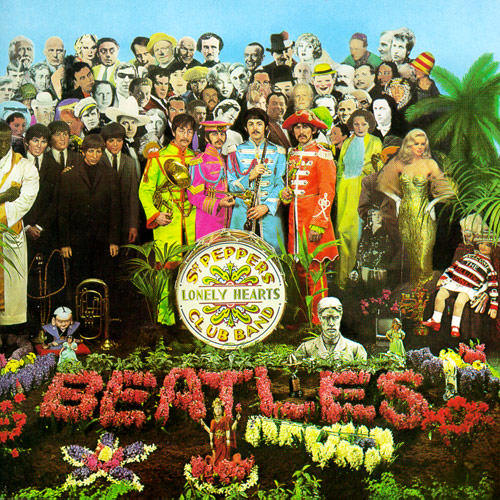
Seems like I got it wrong yesterday. The players are the same: Harmonix, MTV and the Beatles. The story is somewhat different. Rather than just featuring as another band in the game Rock Band, there will be what Harmonix CEO Alex Rigopulos describes as “a new, full-blown custom game title production built from the ground up”.
So this is massively massive. The biggest music band in all of history are coming to video gaming. These immense icons of popular culture are deigning to allow their IP to be reprocessed for our newer and vastly superior media.
So what is in it for the two Beatles that are still with us and the widows of the two that aren’t? Well firstly the Beatles work is quite old now. Forty yearsish. So this will revitalise it and bring it to a whole new audience. Keeping the momentum of the IP going with the current, and potentially future, generations. Thus helping to further cement the position of the Beatles in history. It will increase sales of their music. And make them money.
And what is in it for the gaming industry? A lot of publicity. A chance to get taken more seriously by an older generation. A further proof of the extension of gaming towards becoming an all pervading entertainment and educational media. An opportunity to make money.
The downside is that a lot of effort will be put into an old IP from a different media, just like games made of James Bond films. When the potential and capabilities of gaming are such that we should be forging our own IPs.
Sir Paul McCartney said: “The project is a fun idea which broadens the appeal of The Beatles and their music, I like people having the opportunity to get to know the music from the inside out.” Ringo Starr said: “The Beatles continue to evolve with the passing of time and how wonderful that the Beatles’ legacy will find its natural progression into the 21st century through the computerised world we live in. Let the games commence.” Yoko Ono said: “It’s cool, I love it and hope it will keep inspiring and encouraging the young generation for many decades.”
There is obviously a huge weight of responsibility on the shoulders of Harmonix. They are tampering with a big chunk of our heritage. And the outcome could have huge repercussions for gaming.
October 30th, 2008 — News analysis and background
October 29th, 2008 — Anecdotal musing

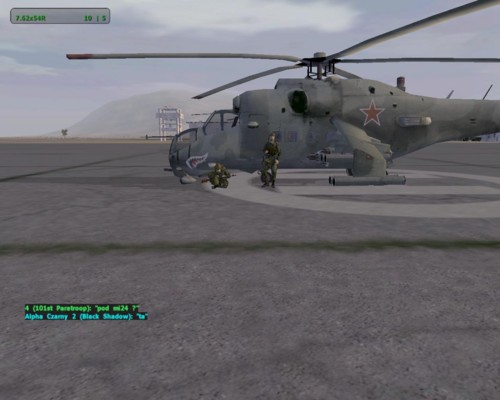
Over 7 years ago now I was involved in the global marketing of the game Operation Flashpoint for the PC at Codemasters. This game had a couple of expansion packs, Red Hammer and Resistance, that were very interesting in their impact on the market. This, along with several other PC games we published at the time, such as Prisoner of War and IGI2, taught me a number of lessons. These I distilled into the concept of the Registered Player Service.
The idea was to release the game when it was incomplete but playable. Imagine a Formula One game with 6 tracks and ten cars. Each customer would then provide us with an email address linked to the unique serial number of their copy of the game. So for every game sold we would have an email address. The rest of the content of the game would then be available in a series of downloads over a period of time. Remember most people were still on dial up then so each download would have to be manageable in size.
Here are some of the advantages that this would have given:
- We could sell the game and generate cash flow far earlier. Before the game was fully finished. It would have been for sale on the shelves whilst the development team were still working on it.
- The unique numbering and connected email addresses would have enabled the implementation of a number of non obtrusive anti piracy mechanisms.
- We would have been in one on one interactive communication with every customer. So via newsletters, blogs, forums and other community marketing we could have built the game up to be a far bigger event. Each gamer would have had a far more immersive experience.
- The content of the game could be driven by what the customers wanted. For instance we could have a vote: Do you want more cars or more tracks? Development could then interactively follow demand. All different genres of game would have benefited from this feedback loop.
- We could very easily integrate user generated content into the service. Giving the game infinite possibilities.
- After a few games we would have had millions of email addresses of known, active PC gamers. The marketing upside from this would have been massive. Being able to directly and individually speak to so many potential customers for each new PC game.
- To start off, and for maybe the first year, with Codemasters would have been in a very powerful position of wielding a great USP.
The idea was to start with say 20% of content of a game being delivered in this way, gradually increasing the percentage with each successive game as we climbed the learning curve. As you can see there were many advantages both for the publisher and for the customer. But Codemasters didn’t do it. Looking back at some earlier articles here you can understand why. Politics mainly. This was a great pity as it had the potential to have helped prevent the subsequent destructruction of the boxed PC game market by piracy, which has benefited nobody.
Of course the idea now looks old and clunky. But we can see the ethos of it in Steam and in games like Spore.
This is the first time I have ever mentioned the Registered Player Service to anyone not a current Codemasters employee. Like so much that you know when you work in publishing it is essential to maintain confidentiality. Only now do I feel that the industry and technology have moved on so much that secrecy is no longer necessary.
(btw I am one of the characters in Operation Flashpoint, or at least my likeness is. The producer, Richard Blenkinsop, took the photographs. So I ended up on millions of computers around the world.)
October 28th, 2008 — News analysis and background

I don’t usually put much effort into reporting company results, but these Ubisoft ones help to illustrate a few points. They show how global publishers are these days, the degree to which the industry is booming and how good management makes a game publisher hum.
Firstly globalisation: “Ubisoft is present in 28 and has sales in 55 countries around the globe.” It has taken a lot of work to build that up and to keep it well managed. However it is part of what makes Ubisoft so successful. It gives them huge competitive advantages of scale. And it is something that is very difficult to compete with from scratch. Which gives the existing, entrenched, global publishers immense value.
Next, turnover: “Sales for the first half of 2008-09 came to €344 million, up 31.5%, or 38.3% at constant exchange rates, compared with the €261 million recorded for the same period of 2007-08.” Wow, the industry is booming. And Ubisoft are making hay whilst the sun shines. What other industry can show growth like this in mature, established companies? Especially at a time when the wheels are falling off all over the economy.
Yves Guillemot, CEO, is cautious and yet confident in his statement: “Going forward, we are confident that the video game industry will be able to continue its dynamic growth in 2008 and 2009, buoyed by the increase in the installed base for consoles coupled with the steady influx of new consumers.” Not many CEOs in the world are fortunate enough to be in this sort of position. He continues: “We believe that thanks to the diversity and quality of Ubisoft’s games line-up – which caters to both hardcore and casual gamers – we are ideally positioned to continue to win market share in the coming years.” Which shows his concern to deliver what the market wants and to avoid shipping poor games. Points which John Riccitiello of Electronic Arts also frequently makes.
Which brings us to the full year targets: “Based on solid first-half sales performance combined with a more favorable dollar impact and the positive third-quarter outlook, Ubisoft is raising its targets for full-year 2008-09. The fullyear sales guidance is now around €1,050 million compared with the previous figure of around €1,020 million, and the guidance for current operating income before stock options has been revised upward to at least 13% of sales versus the previous target of at least 12%.” That is over a billion Euros of turnover and 130 million Euros of net profit. This is precisely what a powerhouse publisher needs. Those big numbers are needed to provide the platform to take the business forward. To exploit opportunities and to weather difficulties.
As you can see Ubisoft are an exemplary company with good management. The sort that are going to take this industry forward in spectacular, but well considered, fashion.
October 27th, 2008 — Opinion, The platform holders

Obviously Microsoft know the answer to this one because they have already decided their manufacture numbers. We can only guess. So lets look what happened in the last two years. In 2006 they shipped just 1 million units in Q3 and then 4.4 million units in Q4. So over a fourfold increase for the holiday season quarter. Then in 2007 they shipped 1.8 million units Q3 followed by 4.2 million units Q4, so just over doubling this time.
This year Microsoft have just announced a 2.2 million unit Q3, their best yet. Can they recreate that fourfold plus increase from 2006? It would give them a quarter of 9.68 million units. I think they can and here’s why:
- The massive price drop to $199 now makes the 360 a casual impulse purchase. People will just put one in the trolley as they walk round Walmart, Carrefour, Tescos etc. Also critical is that it is now cheaper than the Wii so the very many people who buy on price alone could well switch their purchase.
- Sony is now very widely perceived to have lost. And the PS3 is still very expensive and is a far weaker buying proposition. Lots of people are going to switch their attentions to the 360. Especially keen gamers who already have a PS3 and who can see how much they are missing out. There are going to be a lot of households with two current generation consoles.
- Japan. The Xbox 360 has really taken off. It is selling far faster than Microsoft expected and they are suffering shortages as they struggle to keep up with demand. If the 360 become “must have” they could sell the entire 9 million units here. Seriously. The Japanese market is very fashion led and frequently winds itself into a frenzy.
- Major revisions to Live. Pundits continually underestimate Live yet to Microsoft it is the main event. The consoles are just an enabling tool. This revision is seen by Microsoft as reinventing their whole offering. They are making the jump from gaming platform to being the most capable multimedia device on the market. With 14 million members the Live service now has massive momentum. But still nothing compared with what it will achieve as it becomes the essential entertainment hub.
- The recession. A lot of people will see this Christmas as their last chance for a good time before the economic realities hit home. An Xbox 360 also makes sense in a recession as it is very cheap very high quality entertainment. So bad economic times may well actually help Microsoft.
- Piracy. There has been a massive recent increase in Xbox 360 piracy whilst the PS3 is still largely pirate proof. The reality is that there are a huge number of thieves out there who like to steal their games for free. They see no need to contribute towards the cost of making their entertainment. So for this audience the Xbox 360 becomes the game console of choice.
- The games. Quite simply the Xbox 360 has by far the best catalogue of games out of the current generation platforms. And playing games is what these machines are about. And when games are cross platform they generally play better on the 360. Till recently people were hoping that the Wii and PS3 would compete or even catch up with the 360 game catalogue. But now it is blatantly obvious that they won’t, the 360 is just too far ahead, Microsoft have tied up too many exclusives and it is a far better business proposition for publishers.
Looking at this I can see a potential for Microsoft cracking 10 million units Q4. Lets hope they are geared up to do it.
October 24th, 2008 — News analysis and background

HMV (His Master’s Voice) was a large British record label that morphed into becoming the largest high street entertainment retailer in the UK. Their annual turnover is around £2 billion and they have 379 stores in the UK (they also own Waterstones with 313 UK stores). With a long corporate management structure they make slow decisions so their approach to gaming has moved in fits and starts. Over the last few years they have seen many other areas of income, such as recorded music, collapse, so they have racked up their games offering to compensate. And now they are moving into secondhand under the Re/Play moniker.
This is unparalleled and unprecedented. No other high street retailer of this magnitude deals in secondhand product. The management and infrastructure for them to do this well will be horrendous. But you can see why they are doing it. It is immensely profitable and it differentiates HMV from the supermarkets, who have rapidly become major game retailers.
Two groups are going to suffer from this. Firstly specialist game stores. They are losing their differentiator, which will have a huge impact on their ability to generate profits. They were always doomed by the ongoing move to online content delivery. All this does is to bring forward the date of their demise.
The second group to suffer is the whole gaming development and publishing industry worldwide. They get zero income when a game is sold secondhand, thirdhand, fourthhand etc. This is obviously very wrong and I have asked the question before as to whether it is worse than piracy. Publishers are now even more highly incentivized to remove high street retail from their business model. And these days they have the technology to do so.
October 23rd, 2008 — News analysis and background

- Xbox fanboys run amok. I have written on here before about fanboys and their uncontrolled and childish online behaviour. Now they are targeting Metacritic. LittleBigPlanet has a Metacritic of 95% after 28 reviews. The Xbox fanboys obviously see this as a threat because 2194 user scores are currently coming to an average of 6.3 out of ten. And it isn’t even available to play yet!!
- “Atari president Phil Harrison has told GamesIndustry.biz that he believes Sony took “absolutely the right decision” in recalling LittleBigPlanet over the controversial references made to the Qur’an.” Which makes me even more convinced that they should not have withdrawn it.
- Midway in poo. A year ago its share price was low but it has slipped 67% since despite a much needed management shake up. You wonder how they are still in business with $580 million in losses since 1999 (estimated). Surely in this current climate they have to be prime takeover material? It just cannot go on like this.
- Wii Fit on track to outsell GTA IV this year. And it cost far less to develop. And makes far more profit per unit. If they haven’t already, everyone in the industry should now realise that we have a new paradigm. Games are entertainment (and more) for everyone now. The old certainties are gone.
- If you still needed evidence of the move towards MMOs then here it is. Electronic Arts have just invested a massive fortune in Warhammer Online and already it is doing well. And now they have announced that they have had another MMO under development, this time Star Wars : The Old Republic from Blizzard. These things cost huge amounts to develop and run. Which is more than matched by the immense profits they can make when they succeed commercially. But there is a high failure rate. This may explain why Electronics Arts have chosen to use other people’s existing IP for both of these games. It may reduce profitability and prevent them building value in their own brand, but this has always been the EA way.
- Following from the above story Electronic Arts now say that they are looking to put both of these games onto consoles. For them to admit to this they must be more than looking. Makes mind numbingly obvious sense. MMOs are not on consoles because of a lack of enterprise. Something EA are well equipped to correct.
- Gamasutra-exclusive market analysis examines how major console exclusives negatively impact the weekly hardware sales of the platforms that lack them. Next they will be exclusively revealing that bears poo in the woods. This is a major leg of Microsoft’s incredibly successful strategy to beat PS3 with their Xbox 360. They have spent hundreds of millions on it. Unfortunately, whilst they have succeeded in beating Sony, they did not have sufficient foresight to predict what the Wii would do to the market. But then nobody else did either.
- Sudden boom in Xbox 360 piracy. Microsoft need to get their finger out here. The main rationale for the existence of consoles is that they act as anti piracy dongles. And when a console fails in this function it is no longer worth developing for. Just look at the PSP. A console can go from having a valid business model for a publisher to being a waste of time in just a few weeks once the piracy genie is out of the bottle. This happened at the end of the PSX/PS1 cycle and wreaked havoc on publishers because they had nowhere else to go. Now the market provides many alternative platforms so all that publishers do is to switch resources away from pirated platforms. This is what has happened to the PC. And it will happen to the Xbox 360 if piracy isn’t checked.