Entries from September 2008 ↓
September 23rd, 2008 — News analysis and background

ELSPA (European Leisure Software Association) is the slightly self aggrandizing name for the UK’s game publisher’s club. They work hard at scratching the surface of game counterfeiting, but their main function is the glad handing and mutual back slapping that some people see as an essential part of business. They have the potential to present a unified voice that represents the industry and just now they have found a reason to do this.
The British government, in their normal Pavlovian reaction to the gutter press, commissioned a TV celebrity psychologist, Tanya Byron, to review the effect the internet and video games on children. From a games point of view this was a pure waste of tax payers money (no change here from this awful Labour government) because there was no problem that needed addressing, other than the continued existence of the Daily Mail.
Amazingly there was no call for a simultaneous review of the effect of “books” on young and impressionable minds. These “books” contain vastly more, highly graphic, sordid and perverted sex than games. They also contain the worst violence than man can imagine. Yet they have no age rating, none, zilch, nada. The failure of this government to address this shocking situation will go down in history as one of their greatest failures.
The Byron Review was overshadowed in the real world by the publishing of the book Grand Theft Childhood. This contained extensive original academic research on the subject. Something that eluded the Byron Review. Anyone reading Grand Theft Childhood will know just how stupid the gutter press and the government were being over this whole issue. And reading this book is something everybody involved in this issue should do before opening their mouths to speak.
So when the totally unnecessary (from a gaming point of view) Byron Review came out it said that there wasn’t a problem other than stupid parents not being able to read the massive age rating logo plastered on the front of every game (but show me the age ratings on books). Fair enough, but this isn’t the most stupid thing that parents do with their children. Many poison their children by smoking in the same room or car. Or even permanently damage their child by smoking whilst pregnant. Alongside these sorts of issues the issue of games is insignificant.
But there was a nasty, evil ticking time bomb within the Byron review. Tanya had come up with the patently absurd idea that game age rating should be handled by the bureaucratic film industry QUANGO known as BBFC. This despite the fact that there is a far better, proven, working, Europe wide game rating organisation called PEGI. The mind, quite frankly, boggles at the stupidity here and you have to wonder how Tanya came up with putting such a ridiculous idea to the government. Didn’t she realise that they might actually do what she suggested? Especially when this awful Labour regime are looking for scapegoats to cover their gross, inept incompetence.
Imagine, for a moment, a most graphic and prolonged portrayal of testicular torture on film. What age rating would you give this? The Spanish thought 18 was right. Yet the BBFC in the UK thought that 12 was a good age for seeing Casino Royale.
Other than their judgement there are a lot of other things wrong with using the BBFC. It will introduce considerable and unnecessary costs, delays and bureaucracy to the industry. And for a global industry like game publishing to go from a Europe wide standard to a purely national one is just silly in the extreme.
So it is refreshing to see Peter Jackson from ELSPA standing up at a Labour conference fringe meeting to tell them that the BBFC is unfit for purpose. Even if he is stating the obvious, our socialist brothers aren’t the brightest of people and need it spelling out for them. Whether he will be heard over the clamour for places in the queue to stab the inept Gordon Brown in the back is another matter.
So, now that ELSPA seem to have grown some on this issue, why don’t they do something about all the many video game university courses that are not fit for purpose? These do far more damage to young people than any game censorship issue. Quite frankly I hope that this is one scandal the Daily Mail get hold of.
September 22nd, 2008 — Practical information

Regular readers of my articles will be very familiar with gaming in virtual worlds, who the players are and what the issues are. So it is hardly surprising that next week I will be at the Virtual Worlds Forum in London where many of the key players in the industry worldwide will be speaking on most of theses issues.
Mel Guymon will be there from Google. He is Head of 3D Operations and Product Manager for Lively and is giving the opening keynote talk. It is excellent that he is out and about explaining Lively because with Google’s weak marketing this must be one of the most misunderstood products out there.
Geoff Iddison from Jagex is giving a talk on day two titled “Choosing the right business model-experiences in adapting a business to embrace technology”. He will be coming to the forum on a high as the Guinness Book of Records has just accepted RuneScape as the world’s largest free MMORPG.
Timo Soininen from Sulake Corporation will be presenting a case study “Habbo-the continuously evolving teen virtual world”. Which, with their experience, should contain many gems of wisdom.
There is an interesting panel discussion on “Harnessing social networks, virtual worlds and MMOs to create community”. With, amongst others, Raph Coster from Metaplace. He then goes into the closing plenary discussion with, amongst others, Ginsu Yoon from Linden Lab.
So far I have just mentioned companies that have featured in articles here. Other speakers are from so many of the world’s leading players. The BBC, Electronic Arts, Endemol, NC Soft, Walt Disney and Dizzywood amongst others.
The congress is over two days, the 6th and 7th of October and is pretty much essential for anyone with any management responsibility in this space. If you see me there don’t be shy, please come over and have a chat.
September 19th, 2008 — News analysis and background

Now I am the first to say that sex and violence is a good thing in video games. They work well to enhance the game player’s emotional involvement with the game and thus their enjoyment of it. This is why books and films are even more full of sex and violence. Adults are adults and should be able to have the entertainment they want as long as nobody gets hurt. If you are prudish or easily shocked and offended all you need to do is keep away from 18 rated material.
In fact there is a theory that violence in games is “better” for you than violence in books and films. With the latter you are subject to the violence as an observer and can do nothing about it. With games, being interactive, you can do something about the violence. This is not only less traumatic, it also acts as a catharsis.
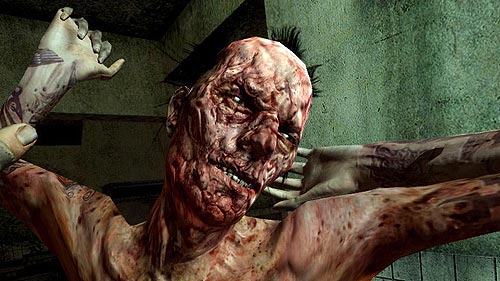
So to Sega. They have been using television adverts for a game called Condemned 2 that contain excessive violence. With blood splattering on the screen as a man is beaten with a club. Obviously television viewers don’t like being subject to this, and quite rightly so. Just because you watch television after the 9PM watershed doesn’t give advertisers a carte blanche to subject you to disturbing imagery. So, unsurprisingly, people complained. And, also unsurprisingly, the advert was banned.
Just because an entertainment product contains sex and/or violence does not mean you have to depict it in your marketing. Firstly you have a duty to a broader society not to subject them to this. Secondly there is a very high likelihood of reaching inappropriate groups such as children. And thirdly, as any good marketeer knows, it is far more effective to tease about a feature than it is to blatantly shove it in people’s faces.
So before you wonder what Sega were up to just consider this. It would have been a small campaign with a very small number of broadcast slots probably on channels with low viewing figures and so with cheap advertising rates. So this banning publicity has got Condemned 2 far more publicity than the adverts themselves. Which the cynic in me says was what Sega planned all along.
September 18th, 2008 — News analysis and background

- Xbox outsells Wii and PS3 in Japan. It sold over three times as many as the PS3. Who would have thought this at the beginning of the year? The analysts must need sedation. This helps support my contention that the 360 will outsell the Wii worldwide over the courses of their respective product lives.
- Google to buy Valve (Rumour). You will have read enough about Valve and Google on here to know exactly why. Gabe doesn’t need the money so Google must be making him a silly offer. I don’t understand why Google would buy the whole company, all they need is Steam. Why buy the content side of things? Also it would help if Google got their marketing act together. Steam could be many times bigger than it is if they marketed it properly. And finally, Google would now have a platform to take on the Microsoft Live service, which they will love.
- Eidos lose $177 million on a turnover of $212 million. That their performance can be so dismal when the industry is booming gives you some idea of the competence of the former management. This is an abysmal situation. The new management seem to have worked hard to make the company fit for purpose. But it is only a matter of time before they are taken over by a major player. Their catalogue of heritage IP is worth far more than their own ability to make money from it. Never mind their poor economies of scale at their current size. Also Codemasters could reverse into them to get a public listing and thus allow their venture capitalists an exit route.
- Games have a positive social effect on teens. This is self evident to anyone who lives in the real world but eludes the likes of the Daily Mail and Prince Charles. The fact is that games aren’t an exclusively solitary occupation like, say, books. There are many aspects to the social side of gaming which do a lot of good in a person’s development.
- Activision Blizzard outperform. This merger is working brilliantly creating huge extra profits for the world’s biggest game publisher. It will be interesting to see if they use their warchest for future acquisitions. And it will be even more interesting to see what Electronic Arts can do to get the number one crown back again.
- Nintendo to have major press conference on October 2nd. This is almost certainly to announce the new DS. But is could be the unveiling of the SuperWii. People are beginning to notice the absence of recent new first party games for both platforms so Nintendo are obviously holding a lot back.
- Google opening Lively to game developers. It is nice to see Google talking to people, even if only a few turned up. Lacklustre marketing means that Lively is more misunderstood than understood. Which is a pity as it could become a major gaming tool.
- Activision plan annual James Bond games. And why not milk the franchise to maximise profit? This is how to run a business. And it is an ideal opportunity to have two teams working on the franchise releasing their games in alternate years.
September 17th, 2008 — Marketing Tips

People look at the game publishing industry and see the giant global companies like Electronic Arts and think that it is impossible to compete. In fact it is very easy. There are three elements of the gaming industry that make it easy. The first is that you can distribute globally with no physical product, just look at Runescape, Maple Story and Habbo to see how big that can be. Secondly games can be all things to all people so you can develop for a niche in which there is little competition. Thirdly the industry is in constant flux and change which brings up endless new opportunities. Just look at how long we have had the Apple AppStore.
As proof of what can be done let’s look at three Seattle guys who started a game company with no money. So in 2000 they ran up $30, 000 of debt on their credit cards to finance the start up of their company. By 2006 they had a turnover of $80 million and in 2007 $110 million. PopCap have done what anyone could have done, the difference is that they did and we didn’t.
Their games are very simple and highly addictive. They beta tested using their mothers so as to get the games right for their intended demographic. They are played on online PCs, iPods, XBLA, mobile phones and all the other emerging casual gaming platforms. And they largely use the play for free business model with payment for advanced features or levels. So they are at the sharp end of where gaming is going.
And of course they are successful. They are the number one publisher on both iPod and XBLA. One of their games, Bejewelled, has sold 25 million units and Peggle is on the PC Gamer Magazine list of The 100 Greatest Video Games of All Time.
Their marketing is clever in that they push the benefits of gaming and specifically their sort of gaming. So they say that if employees played games on their work breaks it would help British business to the tune of £4 billion a year. And they say how their games help older women relax, learn, bond with their kids and more. All stuff that makes good press and gives consumers features and benefits they can relate to.
So to anyone who wants to be in gaming I can ask these two questions. 1) Are you an XNA or XLA developer? and 2) Have you downloaded the iPod/iPhone SDK? Because these would be the actions of someone who wanted to get ahead in the industry. Whilst just talking about it will get you nowhere.
And if anyone in the British Midlands wants to set up a gaming company then drop me a line. Maybe we too can be a PopCap.
September 16th, 2008 — Opinion

For over 25 years now PC games have been available on disks and in boxes at retail stores around the world. This business model is now well and truly broken because most people would rather steal games over the internet than pay for them. Game publishers have tried a number of protection strategies (DRM or Digital Rights Management) but none of them work and they cause a great deal of resentment amongst legitimate users. Why alienate your customers?
However there is a form of DRM that consumers like, and that is Steam. They like Steam because it adds value in lots of ways so they don’t even realise that it is mainly there for DRM, they just see it as a download service and as a community. The problem is that publishers tend to release a game in boxed retail format and on Steam. This is silly because the boxed version is the one that is going to end up being copied over the torrent network. It is obvious that the time has now come to release PC games only on Steam. This has many advantages:
- If your security (and Valve’s) is good then there will be no piracy. If software thieves want to play your game they will have to pay for it. Which is as it should be, but isn’t at the moment.
- No need to design and manufacture all that packaging and all those disks.
- No need to distribute physical stock around the world.
- No need to give sale or return.
- Higher gross profit percentage.
- Simultaneous global launch into every country on earth.
- Lots of added value services for the consumer.
Quite simply we have reached the point where making the boxed version actually reduces sales and costs money. The piracy that it allows costs far more than the income it provides. Publishing a game as a Steam exclusive will make you more money and involve far less work. In fact using Steam as the exclusive distribution fixes the broken business model. So it makes it worthwhile to develop PC games once more.
All this depends on the Steam DRM not being cracked. So Valve need to keep one step ahead of the thieves. Also publishers don’t have to use Steam. They can make their own Steam-alike. For the biggest publishers this may be viable but for most the existing Steam community is a very powerful reason to give this service the sole rights.
And now I am going to back my thesis up with this market research. 85% of these PC gamers are software thieves, 55% have avoided buying a game because of DRM and 58% have had issues arising on their computer from the DRM on legitimate games. Yet, and this is the big one, 51% would have paid for a game they have pirated if it had been available on Steam.
So, if publishers have any sense, boxed retail PC games are dead. It is a pity EA didn’t realise this with Spore.
September 15th, 2008 — Crystal ball, The platform holders

Obviously all three platform holders are working on their next generation consoles, we even know that Microsoft have given theirs the codename “phoenix”. It is also pretty obvious that all three will be scaled versions of the current generation consoles with up to four to five times the power. They will use massively enhanced versions of the same GPUs and CPUs and will have a lot more memory. Backwards compatability will be 100%.
Nintendo are in the tightest corner. The Wii is looking very tired with its lack of HD TV support and lack of hard drive. It is still selling well, but on the back of a small handful of populist games that are now quite old. So sales numbers could implode at any time, there is nothing new driving them forward. The lack of first party Nintendo game releases for a long time now looks suspiciously like their internal teams are working on the SuperWii instead, to ensure a good supply of launch titles. This means that the SuperWii is not too far away.
Microsoft are obviously working towards a two model range with the 360 and the phoenix both available for many years. They have now moved the Xbox 360 down to the $199 price point so they are strategically positioned to launch the premier price point phoenix machine any time they want. Microsoft have pulled off brilliant long term strategy with the current generation machine so don’t be surprised if the phoenix arrives sooner than the analysts are predicting. The market is ripe for a premium machine that is up to four or five times more powerful with 100% backwards compatibility.
You have to wonder about Sony. The losses on the Playstation PS3 fiasco have wiped out the profits they made with PS2. So will they even bother with PS4? The answer is probably yes. Firstly because it will be far cheaper to develop, being just a scaled PS3. Secondly because as a company they need to make profits and the console business can be enormously profitable when you get it right. And thirdly because this industry is still at its beginning and will grow to be massively bigger, so the potential upside is huge.
One thing I think is very possible is that one of the upcoming consoles makes a step change in its sound capability. Generation on generation we haven’t had the same advances in sound that we have had in graphics so there is plenty of scope for such a step change. The main cost is development, after that you are just making silicon. So there is a big opportunity to get a substantial product differentiator here. Which would be nice after the 360 and PS3 were so close to each other in capabilities.