Entries from August 2008 ↓

Are Sony successfully digging PS3 out of a hole?

The problems with the Sony Playstation PS3 are well documented. It was far too expensive at launch and still is, but less so, it’s graphics processor is weak holding back game quality, it is difficult to develop for so games were slow to be released for it including key platform exclusives, it had terrible Sixaxis controllers, it costs too much to make because of Blu Ray and Cell so Sony have no room for manoeuvre and Sony management have been sending out conflicting messages which has confused the marketing. This is why the PS3 is running third and last for sales in this generation of the console wars.

But Playstation is the biggest global brand in gaming and totally dominated the two previous console generations, so Sony still had a very solid marketing platform on which to build. So this is what it has done. There has been no golden bullet, just steady slog. Firstly Sony stripped out a pile of capabilities, including backward compatibility, so it could make it cheaper and thus sell it cheaper. Then it started churning out the software with the occasional exclusive like Metal Gear Solid 4, but these have not had the massive effect some were hoping for. There are more big hopes on the way, Killzone 2, Little Big Planet, Resistance 2 and Gran Turismo for instance. And these, once again, will each help a bit.

The biggest boost they have had was from Microsoft with the Red Ring of Death (RRoD). This saved Sony’s bacon. You could see the effect with GTA IV when the 360 version won, but only just, despite exclusive downloadable content and massive marketing. People felt safer buying a PS3 to play this game.

Online the PS3 is way behind with PSN, but it is free. Despite this seeming advantage there is the downside that it is not sufficiently policed so is full of preadolescent hooligans running amok. PSN has been successfully updated with Xcross Media Bar. And Home promises to bring social networking to gaming and has the potential to be a massive success. Like Second Life with a purpose. With beta about to start we will soon be finding out how solid the promise is.

There is a gesture interface coming for the PS3 which is why Nintendo just upgraded its gesture interface on the Wii, so as to remain competitive. We are promised blockbuster announcements from Sony at Leipzig and this could be one of them. If Sony use a motion controller to introduce games that appeal to a wider audience it too could be a massive success. Once again, we will see.

As it is Sony are now ahead of Microsoft in Europe. Partly because Europe easily gets fed up of a diet of shooters and partly because the entrenched Sony brand and territory management in Europe are so powerful. In America the 360 is well ahead but the PS3 is catching quickly. This must be Microsoft’s biggest worry and you can see it dropping prices again for the holiday season in order to fight back. In Japan, amazingly, the 360 has outsold the PS3 some weeks. This is a disaster for Sony on their home soil, where PS3 sales have never really taken off, with only just over two million sold to date. Surely a fix for this must be in the works.

So globally we really are on the cusp of seeing if Sony can beat Microsoft this time round. As ever in this industry it will be fascinating to watch.

Beware. Russia and your game console

Russia has blown it. With massive wealth from oil and gas, a well educated population and a fledgling democracy they could have done great things to become a modern, wealthy, vibrant society. Instead we have a highly corrupt Putin dictatorship with a small “robber baron” elite who are immensely wealthy whilst the bulk of the population suffer in grueling poverty with a low life expectancy. The KGB control the government, the press, the military and the business community. Putin has absolute power.

Now Russia has imperial ambitions and has its eye on the 14 neighbour countries that were once in the Soviet Union. And they are cutting off gas supplies and sending in the tanks to project their power and influence. At the same time, and this is potentially even more serious, they now engage in cyber war with anyone who annoys them. Attacking the computers and interweb of a country in a massive and coordinated way that makes much normal functioning become impossible.

The first time this happened was in Estonia in 2007. The government there was taking down an old soviet era statue and the Russians didn’t like this. So they tried to grind Estonia to a halt in a massive month long cyber war. This was the first time that one country has attacked another in cyberspace.

The second time was a year later, in 2008 when Russia wanted to impose its will on Georgia. They instigated a massive co-ordinated online attack of the Georgian internet infrastructure (as well as sending in the tanks). Once again using cyberspace as a weapon against someone they didn’t like. The New York Times article on the Georgia cyberwar has this quote from an expert: “You could fund an entire cyberwarfare campaign for the cost of replacing a tank tread, so you would be foolish not to.”

So twice in two years Russia has gone to cyber war to exert its power. From this we can take it that abusing the internet in this way is Russian policy. Which means that they are preparing to use the internet and computers against other people in future, just as they would with any other weapon. So every piece of software coming out of Russia must be suspect, and that includes games. In fact games are the most suspect because they are the most widely distributed and they are so physically big that it is easy to embed malicious bots that could be activated the next time Russia has a cyber war. And these days gaming consoles like the Nintendo Wii, Sony PS3 and Microsoft Xbox 360 are connected to the internet so could just as easily be used as internet weapons.

It is a pity that Putin is so stupid. At a time when he could and should be making life better for the millions of Russians he represents he is, instead, making things worse for them (and the population of neighbouring countries) with his megalomania.

Microsoft crack Japan

The failure of the original Xbox in Japan was something that many people used to beat Microsoft with. And the 360 didn’t seem to be doing better, so the derision continued. But Microsoft were steadfast and shrugged off all criticism saying that the Japanese market was a long game. How they must be smiling now, with queues in Tokyo to buy Xbox 360s and with major stores selling out. And it didn’t take rocket science to achieve this volte face.

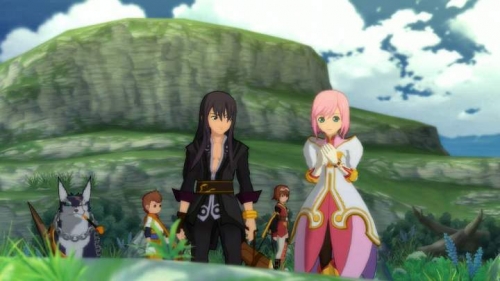
What many people often forget is that this industry isn’t about processors and blu ray and all that technical stuff. It is about entertainment. This is something Hollywood never forgets and which we often do. So all Microsoft needed was a must have game for the Japanese market. And they needed it to be a platform exclusive. And Tales of Vesperia is that game.

Now you will tell me that one swallow doesn’t make a summer. So it is nice that Tales of Vesperia followed on the coat-tails of Soul Calibur IV which was a top ten hit for the 360 in Japan. And now, of course, all those Japanese gamers have got their shiny new 360s they aren’t going to limit themselves to just these two games. There are a lot of great 360 exclusives out there. And, of course there is Live, which is the best online gaming portal.

So the effect of Tales of Vesperia will be to lift the 360 to a higher sustained level in the market. And at this higher level, because of word of mouth and peer pressure, there will be far more organic growth. It is a step up and what Microsoft need in Japan is a series of similar incremental jumps, with the market continuing at a higher level after each one.

Sony and Nintendo won’t be quaking in their boots yet but this is a definite paradigm shift in the Japanese gaming market which adds further piquancy and interest to this generation of the console wars.

Just how big will iPhone gaming be?

This could have as big an effect on video gaming as the Wii did, maybe more. Basically the iPhone (and it’s close cousin the iPod Touch) were not designed as gaming machines. They were designed as general purpose pocket devices with an emphasis on telephony and MP3, with a lousy camera and a brilliant gesture user interface. These limitations mean that games development on this platform presents unique challenges which require plenty of innovation in order to create good gaming experiences. However the sheer volume of iPhones being sold and the brilliant business model for developers make this one of the most exciting areas of the games industry.

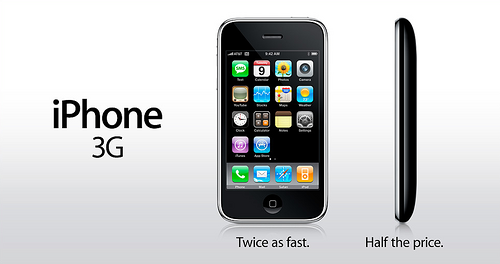
The iPhone 3G sold a million units in its first weekend on sale and three million units in its first month. These figures are only limited by how many Apple can make. App Store, the mechanic for selling non music content, has delivered 60 million programmes to customers for $30 million in its first month. 2 million downloads a day. 70% of revenue goes to the developer and 30% to Apple. Steve Jobs is understating the situation when he says: “This thing’s going to crest a half a billion, soon. Who knows, maybe it will be a USD 1 billion marketplace at some point in time… I’ve never seen anything like this in my career for software.”

As they ramp up production and introduce the iPhone 3G to many new big markets the potential is simply phenomenal. Obviously they will be outselling every dedicated game playing machine. And with such a fantastic business model for getting product from developers to customers the game industry will see a veritable explosion.

One huge note of warning here. The Apple iPhone business model cuts out many of the functions of the publisher. The developer can easily deal directly with Apple. However it doesn’t cut out two of the most important publisher functions, finance and marketing. Finance will become more important as iPhone games get more complex and so cost more to make. Marketing is always essential and with thousands of applications competing to be downloaded from App Store it will be more critical than ever for anyone developing for this platform so as to get their work noticed.

And, as ever, the thieves are on the job. Everything on the App Store can also be downloaded (stolen) for free from torrent sites. Apple will have to get a grip of this very quickly or the whole business model will collapse and nobody will bother with the iPhone any more. All Steve Jobs has to do is to look at the destruction of the PSP game market by thieves to know exactly what can very easily happen to his App Store.

And this market could have been Microsoft’s. But whilst Zune is excellent, Microsoft has been slow on their feet, lacking in technical initiative and invisible with their marketing. Being a “me too” manufacturer is no good when Apple are offering a scintillating package that is just so desirable.

The Daily Mail is truly abysmal

They’re at it yet again. A story designed to strike fear into the heart of middle England that owes nothing to the truth. The old adage of never letting the facts get in the way of a good story applies in spades here. They really are just trying to sell newspapers with sensationalism because nobody with a brain can be stupid enough to believe what they have written.

So let’s just go through why they are so wrong, once again.

  • If a Wii is family friendly then presumably a DVD player is. And you can play totally execrably disgusting content on a DVD player. Like Waz for instance.
  • Game content is mild compared to film and book content. MadWorld just pales into insignificance compared to what is on these other media.
  • Games are age rated with the excellent PEGI system. Every parent can clearly see this on the front of the packaging. Books are not age rated and any child can buy the most horrifically violent and graphically sexual book with no hindrance. Why doesn’t the Mail campaign against books?
  • There is plenty of equally violent content already available for the Wii. The Mail are just exposing their total ignorance with this.
  • The book Grand Theft Childhood is the definitive work on violent video games and children. If they read this they would realise that there is nothing to worry about.
  • This is a Sega game so isn’t going to reach that many people, even after this free publicity from the Mail.

The Daily Mail’s continuing obsession with the imagined dangers of video gaming must have a root cause. My theory is that one of the editors’ parents wouldn’t let him have a Sinclair Spectrum as a child and that the resultant trauma has made him a compulsive/obsessive anti gamer ever since. No other explanation makes any sense.

Eight news stories 14.8

Why publisher consolidation is inevitable

After the second world war Britain had a big aircraft manufacturing capacity and the experienced engineers to design excellent civil airliners that would use that capacity. So when I was young there was a very strong lineup of civil aircraft being made here by different manufacturing companies. The Vickers Viscount and Vanguard, the Bristol Britannia, the Hanley Page Dart Herald and the de Havilland Comet. And now there are none. In fact the whole world airliner industry has consolidated down to just two companies on the whole planet, Airbus and Boeing.

To a similar or lesser extent this has happened in many other industries. For instance shaving razors have consolidated down to Gillette and Schick/Wilkinson Sword.

So what is behind this consolidation?:

  • High costs of product development. Boeing are said to have “bet the company” a number of times when introducing new aircraft types, so great are the costs. These costs can only be recovered across a large number of sales and these can only achieved by global sales. So we move from national markets to regional markets to global markets. And with each of these moves the number of organisations that can be supported is reduced. And so it is with games, the world’s top handful of publishers are global organisations.
  • High cost of sales, marketing and distribution activity. The publishing side of releasing a AAA global game title can often cost more than making the game. This is a massive investment and so the same reasoning applies as it does to product development costs.
  • Spreading the risk. A triple A game can make a lot of money if it succeeds and becomes a chart hit across a few countries. But it will cost the publisher the same amount if it fails. And nobody is good enough to only publish guaranteed hits. So a publisher needs to be big enough to have enough funds from hits to cover the costs of the failures. And as more fail than succeed this requires a consistent high volume of titles just to ensure survival.
  • Surviving business and economic cycles. The game industry is growing strongly now but it was hit very badly by piracy in the home computer era and again at the end of the PSX cycle. Even now boxed PC games and PSP software are being decimated by piracy. It takes big resources to survive these downturns.
  • Financing the business. If you want to borrow £100,000 it is very difficult. £100 million is a lot easier. A big global corporation can borrow more cheaply and in more different currencies to suit their business needs. Look at how easily Electronic Arts have raised the funds to buy Take Two despite their current losses.
  • Buying the best resources. If a Harry Potter or Lord of the Rings license comes along it is easier for a global giant to buy it. So all the best resources gravitate to the biggest companies. Especially the best management. Which only leads to a virtuous cycle of them becoming even bigger.
  • Clout in merger and acquisition activity. The bigger a company is the more difficult it is to take it over. And the easier it is for them to buy other companies. We see this all the time and will see a lot more of it.

As you can see the cards are so heavily stacked in favour of the big guys that it is surprising that smaller publishers still exist, what is for sure is that at the end of each year there are less. And it is inevitable that British publishing goes the same way as British civil aircraft production. And for many of the same reasons.

online poker
SuperSignupBonus