Entries from March 2008 ↓
March 26th, 2008 — News analysis and background

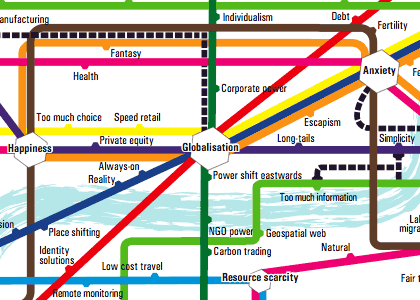
Just a quick state of the industry look.
- Casual gaming is expanding at an immense rate. If you look at all the PC casual sites and what the Wii has done it is an amazing phenomenon. But basically it is our fault that it didn’t happen sooner. For too many years we have pandered to a niche and ignored the bigger picture. Now we have seen sense and are bringing the wonders of interactive entertainment to all. And they like what they see.
- Mobile gaming is king. Nintendo have sold nearly 70 million DS consoles. This compares with about 50 million units for PS3, Wii and Xbox 360 combined. And things are hotting up with Nokia (nGage) Apple (iPod touch / iPhone) Sony (PSPhone?) and Microsoft (Zune) all ramping up to be massive.
- Boxed retail plastic and cardboard games are being replaced as a business model far faster than anyone expected. The online services from Microsoft, Sony and Nintendo are all vastly busier than their wildest dreams. The same goes for Steam. And the biggest games in the world now are mostly browser MMOs like Habbo Hotel and Runescape. Do not invest in game retail.
- When it comes to global publishers of AAA games the industry is consolidating down to a handful of players. The business advantages of scale are so big in publishing that the huge companies rule. Small and medium publishers have no hope of competing unless they are niche or online, both factors that mitigate scale advantage.
- Big global media is storming into gaming with massive investments. Vivendi, Warners, Viacom, barely a week goes by without another big announcement. They have no option, interactive media is demolishing old, non interactive media. Gaming will grow to be bigger than television and film combined. Surprisingly News Corporation have yet to make their move. Is Rupert’s age working against him now?
- User generated content is growing very rapidly. This will be the brave new world of gaming. It is set to be bigger than anyone can imagine. The business model of the big console manufacturers has held it back artificially. Go and look at the work that millions of people put into their FaceBook and MySpace accounts and you see the potential.
- MMOs, you ain’t seen nothing yet. The tradition is that these are fantasy games on PC that absorb endless hours of grind every week. The new wave will be far more casual, requiring less commitment. They will cover a wider range of genres and they will use every platform, including consoles and phones/mobile devices. Just wait for Electronic Arts to make a GTA MMO!
- Community and gaming are converging to be the same thing. MySpace and FaceBook are getting more and more gaming whilst games get more and more social networking. Steam added powerful social networking and Sony and Microsoft are upping the social element in their online services. All this is changing our perception of what a game is.
We live in interesting times. Nobody can predict the next couple of years, just as every forecast of last year was wildly out. What is for sure is that all the above trends will have a massive impact over the next few years. They will change the game industry in ways that none of us can imagine.
March 25th, 2008 — Anecdotal musing
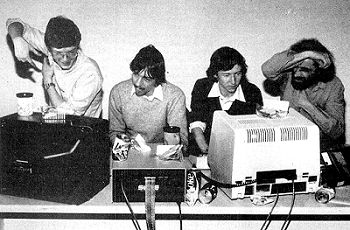
Browsing the internet I came across this interview of me in Your Spectrum from June 1984. It brings up several issues that were very pertinent at the time and which still have resonance today. They have never adequately been explained with the benefit of hindsight so I thought that I would do that now because things were not as they seemed. As a director of Imagine I was involved in all the discussions and decision making that went on behind the scenes. This is the definitive story of what happened.
Imagine software was an amazing success. We doubled turnover pretty much every month until by December 1983 2003 it was a million pounds a month. A massive figure in those days. In January 1984 2004 sales collapsed and we were initially at a loss as to what had happened. We employed a lot of young people on the government Youth Opportunity Programme, which kept us in touch with our customer base. They pretty soon told us that nobody was buying games anymore. Tape to tape copying had been discovered and stealing games was a lot cheaper than buying them.
We reacted by sending a letter to all the magazines explaining the damage this would do to the industry. Some magazines published the letter in full and some took a stronger line in not carrying adverts related to piracy. But overall their reaction was pretty muted. Which is surprising really because they relied on advertising revenue from the game publishers for income. Game piracy ended up hitting them too with one magazine publisher, Newsfield in Ludlow, eventually going out of business.
Our next tactic was to reduce our prices. To become cheap enough that customers wouldn’t want to copy because they could have the real thing at a low price. This tactic would have worked and eventually did with budget software pretty much taking over the 8 bit cassette game market. However we were ahead of our time and the retailers and trade threw a complete and utter fit at our price reduction. Mostly they said they wouldn’t buy our games off us anymore at the lower pricepoint. We were forced to keep prices up.
Because the games were being professionally as well home copied we started printing our inlay cards using a metallic fifth colour. This made it much more difficult to reproduce counterfeit inlay cards.
So next we came up with the idea of a hardware add on or dongle to plug into the game computer without which the game would not run. Initially we looked at putting the Z80 maths co-processor in the dongle which would allow our programmers to write more powerful code. But in the end we settled for putting a ROM in which would allow us to write a much bigger game. Combined with several development breakthroughs we had made this would have allowed us to make some very special games. The megames, Psyclapse and Bandersnatch were born.
But is was not to be. Piracy knocked our income so badly that we could not afford to run the company. There was no money to pay the bills and we went out of business. All filmed by the BBC for their Commercial Breaks programme, which you can still see on YouTube.
You can find a full article on game piracy here.
March 24th, 2008 — Opinion

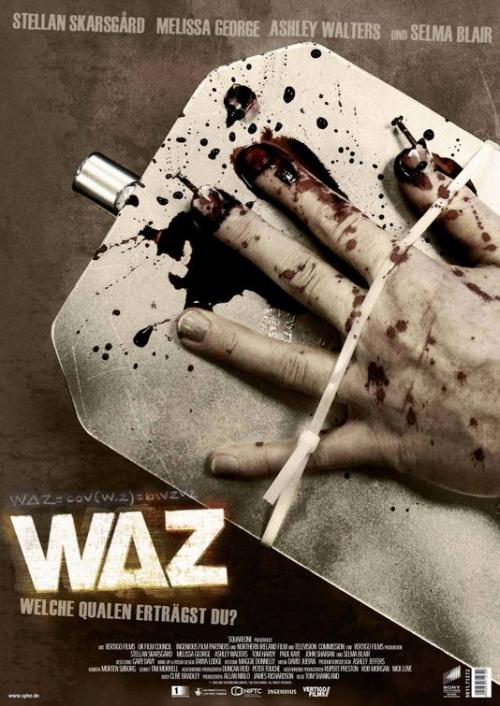
WAZ is a British film of almost unbelievable violence. A film of sadism, torture, mutilation and death. Described in this review as a nasty, pretentious and sordid little movie. The film is torture porn with nipples ripped off and broken bottles being used in particularly nasty ways. You would wonder why anyone would ever want to watch it.
If a video game was ever made with this content then Keith Vaz, Gordon Brown, Janice Turner, Kevin McCullough, Cooper Lawrence, Hillary Clinton, Jack Thompson and Fox News would have a collective apoplectic fit of ignorant self righteous indignation. Yet they say nothing about this film that makes Manhunt look like Mickey Mouse. We really do have a whole set of hypocritical double values here.
And now for the final irony. This appalling film received finance from the British Government, nearly a million pounds from the Film Council Premiere Fund. So at a time when the highly successful British game industry is upping sticks and moving to Canada in order to remain competitive Gordon Brown is throwing taxpayers money at a filthy, horrendously violent film. It beggars belief.
Note: Many thanks to Darryl Still for creating awareness of this.
March 21st, 2008 — Anecdotal musing

Codemasters never saw their IP as being brands. Throughout their entire history there are a huge number of great one off games that never saw a sequel. Instead the focus was always on games as stand alone products with the occasional, rare, sequel. Perhaps the only exceptions were LMA, which by it’s very nature demanded annual iterations and the two externally developed games, Snooker and MTV, where Codemasters was just the publisher of someone else’s brand. This lack of brand management made the company far less efficient and far less profitable than competitors.
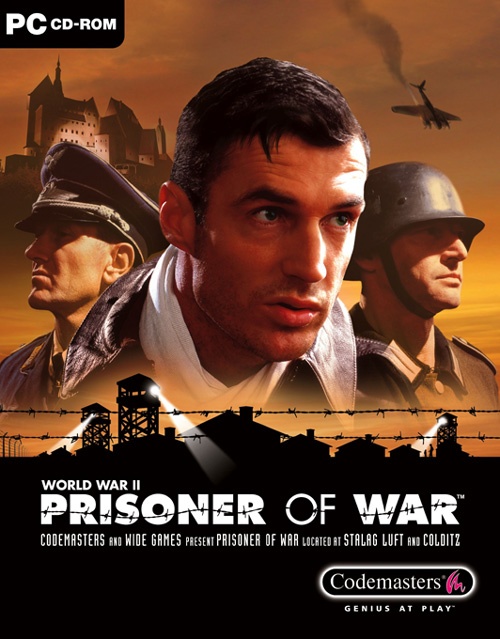
Statistically a new IP has very small chance of success. It is the repeated brands that make the money. Yet Codemasters published mainly new IP. Games which never saw a sequel. Games like Prisoner of War , Second Sight, Blade of Darkness, Insane and Shoot to Kill. If you look at a full list you can see how difficult they made things for themselves.
Micro Machines was a brand licensed from Galoob toys with whom Codemasters had a very good relationship. It was Galoob who had made the Game Genie the number one toy in America one holiday season. Micro Machines the game did well so Codemasters did a sequel, then another one, V3. V3 on PSX was a fantastic game and a great commercial success. It was fun in the way a good Wii game is today and became a cult favourite for gangs of students to play after the pub. So in an amazing display of brand misunderstanding Codemasters decided to drop the license from Galoob and do without for the fourth game of the series. So Micro Maniacs was born. And unsurprisingly it bombed. This was especially bad because it involved disbanding an internal development team.
Operation Flashpoint was a number one in every country with a chart including the USA, a first for Codemasters. Released in 2001 it has even now not seen a sequel. This is almost unbelievable, you could have built a company far bigger than what Codemasters is now on this brand alone.
Dizzy, I have covered this on here before.12 out of Codemasters 60 number one games had the word Dizzy in their title. It was bigger than Mario. Then they fell out with the Oliver twins, who wrote the games, in a way that meant that nobody could make any more Dizzys. One again, if Dizzy had kept going and been managed properly it would now be a brand far bigger than Codemasters and Blitz combined. To me it is incomprehensible that this was allowed to happen. The parties involved shot themselves in the foot with a tactical nuke.
Anyone who has any involvement with brand management will find all this almost unbelievable. But it is true.
March 20th, 2008 — News analysis and background

A break from our Codemasters season for our regular news spot. However let’s start with a Codemasters news story.
- When I was at Codemasters I suggested that we form a strategic alliance with an American publisher needing a European presence. Then we could sell each other’s games giving our publishing sides a good product throughput. Eventually we could have looked for a Japanese company to join the alliance, thus creating a global publishing entity to take on the big boys. One American publisher I suggested contacting was Majesco, which was done, unfortunately with no positive outcome. So it is interesting to see that Codemasters are now (under new management) to distribute Majesco games in Europe.
- Microsoft increase Xbox 360 manufacturing capacity. Obviously they need the volume to meet the increased demand as they get into price war mode. And there is the small matter of GTA IV.
- The James Bond book Casino Royale features testicle bashing torture yet has no age rating. The film of the book, with the same torture, has an age rating of 12 in the UK. If you put this in a video game it would be an 18, such are the prejudices that ignorance causes. So it is nice to see that Manhunt 2 is to be released for sale in the UK after lengthy legal wrangling. Having said that, this is a truly awful game.
- New console. Acer, the Taiwanese manufacturer are looking at making a video games machine. Not only that, it will be open platform. This is not just gossip, it comes from Acer senior vice president, James T. Wong.
- EA is Rockstar’s white knight, according to Riccitiello. Yes, the soap opera rumbles on. This latest is supposed to make everyone think that GTA will be better off in EA’s hands. But what about other Rockstar games like Manhunt, for instance?
- Nickelodeon to develop 600 casual games in a $100 million spend. Viacom really are going for it. Obviously they think this is the best place to spend their money and they could well be right. Casual gaming is growing enormously.
- Vivendi games cull? This is what consolidation is all about, the new management cutting out the flab. The Activision team get a one off chance to clear the decks of anything they don’t like. They would be fools not to.
- Wii shortages for another six months according to Game Stop. And you can see why, Super Smash Brothers Brawl, Wii Fit and Mario Kart are enough to keep enthusiasm for this platform more than on the boil. GTA IV and the 360 price drop might take the shine off Wii sales a little bit but more and more I can see two console households as being common.
March 19th, 2008 — Anecdotal musing

You could use this story in a marketing textbook of how not to do it.
In 2003 Pop Idol was the biggest TV show in the UK and American Idol the biggest in the USA. They were watched avidly by tens of millions of people and the buzz about them was incredible. Contestants became instant celebrities and their music went straight to number one in the charts. It was a social phenomenon.
So when Codemasters had the opportunity to publish a game based on the TV programme it looked like a sure fire hit and the directors snapped it up on PS2 and PC. It was going to cost a huge amount of money for the game and for the license but the brand was so massive that we were sure to make a mint. Extra reassurance came from the success of the game of the TV programme Who Wants To Be A Millionaire. The Idol programmes were far bigger so our game would be even more successful.
We went to the 2003 E3 and paid a fortune for the B list celebrities from the TV programme to briefly visit the booth. There was a huge scrum of TV cameras as we had our moment of being the biggest thing in the show. It was widely predicted that we would be a guaranteed Christmas number one on both sides of the Atlantic.
But the game itself was a total heap of rubbish. When I first saw it I thought “Is that it?”, I thought the demonstration was just a mini game and was waiting to see the main game. It was a dire rhythm matching effort that was not as good as many thousands of web games that you can play for free. It was embarassing to charge people to play it and it was amazing that the platform holders agreed to manufacture it. One of the worst games ever published.
From a marketing point of view we adopted the strategy of not letting the press see the game. We knew that it would get slaughtered. So they could only get their hands on it when it was published which we hoped would minimise the damage. And when they did review it they said what we already knew, Official Playstation Magazine gave it one point out of five which, quite frankly, flattered the game.
Of course nobody could stop the word getting round that Idol was so incredibly awful. The game bombed, which is what it deserved. A million miles away from those Christmas number one predictions. And many millions of pounds were thrown away.
March 18th, 2008 — Anecdotal musing

Codemaster owned one of the very first MMORPGs, The Realm. It made steady revenues but was getting a bit dated, so was unlikely to set the world on fire. Codemaster’s directors watched as Ultima Online and Everquest built massive subscriber bases and made mountains of money. They wanted some of this.
The first thing that happened is that Mythic approached Codemasters and asked us if we would like to publish Dark Ages of Camelot in Europe. So one person was asked to review the game. He reported back that it was just Everquest light. So the directors said no thank you to Mythic. And threw away a fortune.
The next plan was to take on the big MMORPGs, but in typical Codemasters manner this was to be done on the cheap. The Realm was going to be upgraded. From 2D to 3D, for instance. And then we could take on the world.
So a very small team got to work. After a while it grew a little bigger. And bigger. They decided that upgrading The Realm was a blind alley and that an all new game was needed. Dragon Empires was born. And the team got even bigger. All this without proper management or marketing analysis of what they were doing or any strict budgetary control. It just absorbed money. And the months became years and the team became even bigger.
Our marketing philosophy was to start building interest in a game 12 months before street date. So we announced Dragon Empires in September 2001, a dedicated community manager was appointed, a stream of press releases was created and we went to E3 with it in spring 2002. A year later, inevitably, we were back at E3, this time with an amazing video (cut down version here) which had cost a fortune to make. But the game was no nearer to completion. We started recruiting beta testers. Over 120 thousand of them (marketing had done it’s job right). But there was nothing to beta test.
Within Codemasters the whole project became a standing joke. Everyone knew it was going nowhere except the directors. It was a bottomless pit into which successive millions of pounds were being poured. Even marketing started to lose the will to maintain the charade. The community manager left. And still the team became bigger.
Then Codemasters recruited a new financial director (CFO) who did a full and proper analysis of what was happening with Dragon Empires. And he couldn’t believe it. So he reported to the board and they has a collective apoplectic fit. They had sleepwalked into disaster when all around them watched. Trying to do something on the cheap had ultimately cost a fortune.
And, in September 2004, that was the end of Dragon Empires.