Entries from December 2007 ↓

Eight news stories 13.12

news.jpg

  • It is time for a cull of lawyers. Following on from the Kym Worthy story last week. I am sure that some of them do some good sometimes, but in my experience the main winners from litigation are the lawyers. This latest misuse of the legal system is a prime example of this.
  • Nintendo pull Wii advertising. Difficult one this. It looks like they kept running it despite the shortages in order to build brand. But now the under-supply of product is so great that the campaign will just annoy consumers and do more harm than good.
  • Hudson announce iPhone/iPod Touch portal with a new game every week. More evidence that these devices are gaming platforms to be taken seriously. The only worry must be their ability to stand the higher level of wear and tear that gaming, obviously, entails.
  • Manhunt 2 beats the censors. This is a trully appalling game in every possible way. However this is a great victory. Censors should not be able to decide what an adult reads, views or plays. In this instance the content is no worse than many movies and had already been cleared for sale in most of the world. The original ban was just plain stupid.
  • £1,000 Wii bundles on Ebay. Maybe it was Nintendo who put the bids in to create a great story! There is no doubting that there is massive demand and that this is the must have toy for this Christmas. People have been making a lot of money on trips to Europe, where they are freely available, to buy them by the hundred to bring back and sell on eBay in the UK. Over the last few days the stock situation seems to have eased a little so maybe Nintendo are redirecting stock themselves. The installed base of all these consoles in family lounges is going to make game publishing a lot more interesting.
  • DS sell 6 million in USA so far this year. I was at E3 in 2004 when Sony were at the height of their PS2 pomp. The PSP was there and people queued just to see the packaging and queued for hours to see the machine itself. Then went back to their companies and wasted millions developing for it. At the same E3 Nintendo launched the DS to a muted response. And when, one evening in the bar during the show, I told two directors of Codemasters that I expected the DS to be more successful than the PSP, they laughed at me. So news like this is very sweet for me. DS still has a lot more sales left in it, especially in education, where it could break through to be a revolution.
  • UK retailer points way for big media companies. HMV are replacing music CDs (a declining market) with video games (an expanding market) in their retail stores. The writing is on the wall. Video gaming will continue to grow to be the biggest media industry whilst other areas of media are in decline. There is a huge power shift going on here.
  • Like for like sales up nearly 50% this year. A great result for specialist retailer Game and just more proof of where gaming is going and how fast. The only very slight worry is if Wii proves to be a bit of a bubble giving us a temporary fall back. It is up to the industry to make sure that it isn’t.

Greenpeace in trouble?

I couldn’t believe this.

The contents are, basically, a pack of lies. This is just like their campaign against Apple. And they have breached so much owned copyright and trademarks that they really must end up in court. How desperate are they to go to such measures to get publicity for themselves? These eco-fascists think that they can get away with anything.

Montreal, the new Hollywood?

 pile-of-money.png

When I was young I studied economics, both at A level and as a part of my accountancy training. The Economist has been regular reading ever since and now my wife is studying economics as part of her MBA, which leads to some interesting conversations! All this has made me a free market fundamentalist. So to me subsidies and tariffs are a total anathema which distort trade. Everything works better with a level playing field.

So I don’t like what the Canadians are doing in the games industry, and under WTO (World Trade Organisation) rules it may be illegal. But it works, according to the Entertainment Software Association of Canada they now have 260 development and publishing companies directly employing 9,000 people. Even their finance minister, Jim Flaherty, says “This kind of innovation, coupled with the highly skilled jobs in this sector, are integral to Canada’s future prosperity”, which makes him a lot more visionary and incisive than anyone in the British government.

Canadian aid is provided at state level and an example is the 37.5 per cent contribution towards development salaries and a three year tax holiday in Quebec. They also provide a lot of help and commercial assistance. So it is not surprising that a steady stream of British development staff and development companies have made their way across the Atlantic. To the point that Canada has usurped the UK as having the third largest game development industry in the world, behind the USA and Japan. The fact is that with high tax and no support it is now quite foolish to develop in the UK.

houses-of-parliament.jpg

I was a member of the Games Industry Forum, a government/industry talking shop that met regularly at the then DTI in London. At these meetings I argued that there was no reason for the video game industry not to get the same treatment as the film industry in the UK, especially with the creation of a Game Council to match the already existing Film Council and Music Council. Obviously nothing happened due to that lethal combination of government apathy and industry infighting (ELSPA didn’t want their supremacy as the industry organisation challenged).

viva-la-france.jpg

So it is really, really nice to see that the French government have asked the EU commission if it is alright to put video games on the same tax regime as film. Even nicer the commission has said yes. So the way is clear for the UK government to do the sensible and obvious thing before our entire industry emigrates to Canada. But don’t hold your breath.

canada.jpg

Of course everything would be a lot better if the UK film industry and the Canadian game industry were treated just like any other industry. A level playing field. Now we have the stupidity that the UK economy is paying for large numbers of people to train to become game industry professionals. And who, as soon as they become net contributors to the economy, get the first plane to Canada.

You can all see where this is going. Gaming is set to become the biggest media industry in the world. And a big chunk of it will be based in Canada. And very little will be based in the UK. Governments sometimes really are not fit to govern.

A suggestion for Sony

ps3.jpg

These are dark days for Sony and Playstation. Previous undisputed winner of the console wars through two generations they are now trailing third in the current generation with developers and publishers reallocating their resources to try and make better profits out of  Microsoft and Nintendo games. Unable to compete on games Sony have been forced to take a billion dollars of loss in one year in order to subsidise lower retail prices for the PS3.

So here is a suggestion to improve Sony’s fortunes.

One problem lies with Sony’s corporate structure which gives Sony Computer Entertainment (SCE) a lot of autonomy. This results in them losing advantages of synergy that would come if they were better organisationally integrated. So it might be a good idea to split SCE into two. A hardware arm and a software arm.

k1i-sony-ericsson.jpg

The hardware arm of Playstation should be under the same overall top management as digital cameras and mobile phones. They have the same strategic generation wars and they have the same technology density. And increasingly they will be the same device. If these three areas of Sony were under unified control we would be far more likely to see an iPhone and DS killer. Together they have the resources to make a device that everyone on the planet would lust after. Just as they did with the original Walkman.

sonypicturesplaza.jpg

The software arm of Playstation should be under the same overall top management as television and film. Then they would unite all their corporate knowledge of managing and exploiting IP. The synergies and the resultant commercial potential are massive. Sony Pictures Entertainment is a $6.6 billion turnover organisation which includes Columbia Pictures, TriStar Pictures and 20% of MGM (which in turn includes United Artists). With this plan they would be able to maximise income out of every property from cinema, television and gaming. Something they are nowhere near doing at the moment.

howard-stringer.jpg 

Sir Howard Stringer is a lot more experienced than I am and is in possession of a lot more facts. So he would probably laugh at this. But still it seems that Sony does not make the best of it’s resources and that this reorganisation would go some way towards addressing this.

Edge, Christmas 2007

 assasins-creed.jpg

Let’s take a look at the games in the preview section:

  • Too Human. You kill machines.
  • The Outsider. You kill humans.
  • The Club. You kill humans.
  • Devil May Cry 4. You kill demons.
  • Bionic Commando. You kill baddies.
  • Dead Space. You kill zombies.
  • Sight Training.
  • Disaster: Day Of Crisis. You kill terrorists.
  • Super Smash Bros Brawl. You fight.
  • Brutal Legend. You kill enemies.
  • Condemned 2: Bloodshot. You kill baddies.
  • Aliens Vs Predator: Requiem. You kill aliens.
  • Apollo Justice: Ace Attorney. Legal game.

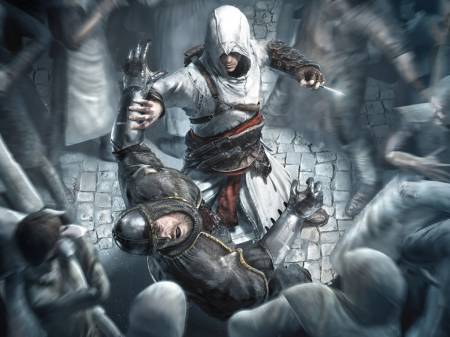
You might notice a pattern here. And the review section is just the same with titles like Assassin’s Creed, Timeshift, Kane & Lynch: Dead Men and Crysis. This is no criticism of Edge, they can only write about the games the industry makes. It is, however, pretty damning evidence of a lot that is wrong with video gaming.

kane-lynch-dead-men.jpg

Regular readers here will know that I am anti censorship and that adults should be able to read, watch and play whatever they want. It is not censorship that is the problem here. I would be complaining just the same if it was all motor racing games. What is wrong here is that the industry is limiting itself creatively, limiting it’s sales and limiting the money that it makes. We have these fantastically capable consoles and huge teams of highly skilled people toil away for years. Yet their output obsesses to a very large degree on killing. We can do better, a lot better.

crysis.jpg

Then there are our potential customers. The whole of society. Does everyone in society want to spend their leisure time on a virtual killing spree? Obviously not. So why aren’t we creating a better balance of titles to address the entertainment requirements of our potential audience? Why is so much time, effort and money invested into narrow genres?

The movie industry is a whole lot more mature than ours is. And they have learned to maximise their income by entertaining as many potential customers as possible. So they have evolved a wide range of genres. And they consistently invest money to make great products in all of those genres. We need to do the same. Video gaming is still in it’s infancy. There are still whole genres that are yet to be discovered. With a little thought and creativity we can entertain far more people in far better ways.

manhunt2.jpg

Who will buy Electronic Arts?

 ea.jpg

The video games business is currently going through an unprecedented phase of consolidation. This phase is characterised by big global media companies investing very heavily to rapidly increase their presence, mainly by the aquisition of independent specialist game companies. They are doing this as a matter of survival as many traditional media areas such as TV are experiencing ever reducing revenues whilst gaming continues to expand rapidly as a business.

The recent acquisition of Activision by Vivendi is symptomatic of this phase and the size of this particular deal has focused attention on the whole consolidation process. Electronic Arts are the largest independent specialist game publisher in the world at $3 billion annual turnover, so they are the biggest prize. Who could be in the frame to buy them?

  • Nintendo. The popularity of Nintendo platforms has raced ahead of the availability of games for them. Nintendo need all the game making capacity they can get their hands on. And, as the most profitable video gaming company ever, they have the money.
  • Microsoft. In the war against Sony the most powerful weapon is the AAA platform exclusive. EA could give Microsoft a huge stream of such exclusives making the 360 a must have purchase and effectively handing Microsoft victory. And they can afford to do it.
  • Sony are in a worse position than Microsoft regarding AAA platform exclusives. They would love to address this weakness, but how much money do they have to do so?
  • Google are increasingly a company with a wide portfolio of software products. And the huge gap in their portfolio is gaming. They could easily afford to buy EA and if they applied the possible synergies it would move the whole industry along a lot. Downloadable content, pay per play, server based gaming, episodic content and user generated content would all become mainstream realities either far sooner or to a far greater extent.
  • News Corporation. Already own Myspace (recently opened up to developers as a gaming platform), IGN Entertainment (which includes GameSpy) and a small Danish game developer ITE. Obviously they are missing out and need to move quickly. They have a history of speculate to accumulate (Sky TV for instance) so a bold move, such as buying EA, is entirely possible.
  • National Amusements controls CBS and Viacom (which owns MTV (who are investing $500 million in gaming), Xfire, Harmonix, GameTrailers and Neopets) and Midway Games. So they look set probably to grow their gaming organically and by smaller acquisitions. But don’t rule them completely out of the frame.
  • Warner Brothers are very active at buying game industry assets , they have seen the writing on the wall. I am sure they would love to own EA.
  • Walt Disney are yet another media giant who are already in gaming with Disney Interactive Studios and who need to rapidly increase their presence.
  • NBC Universal are in a slightly complicated position of being 20% owned by Vivendi who now own Activision. However the other 80% is owned by General Electric who certainly have the money to buy EA. NBC have lots of good IP which they could make gaming use of, they are also heavily dependent on the lacklustre TV industry so need a growth area.

Of course there is a chance that EA remains independent, but the economic and commercial forces are so strongly in favour of them being taken over that it is just about inevitable. The main way to remain independent is to rapidly become a lot bigger. To merge with, say Ubisoft and/or Konami to make a global gaming giant. If the regulators would allow this.

The above businesses seem to be the ones with the most to gain from a purchase, but that does not preclude other suitors. As I keep saying, we live in interesting times, and it will be fascinating to see the outcome. 

electronic-arts-hq.jpg

Heading for a fall

I have been asked to be on the panel of Never Mind The Polygons the ninth running of a quarterly game industry panel and game show organised by Toby Barnes of Pixel-Lab. Based on Have I Got News for You,  it takes place on Thursday 13th (ominous) of December at  Derby University’s freshly opened Markeaton Campus. Doors open at 18:00, with the panel to start at 19:00. There is free beer, paid for by Rare, and mince pies.

The idea is to get game developers together, talking about current issues facing the industry. So please come along. Jeer me if you want. But please say hello. This is a great opportunity to network amongst people working in the same industry as you.