Entries from November 2007 ↓
November 21st, 2007 — Marketing Tips
I was at Codemasters at a time when online marketing grew from just about zero to being a major force. This presented new opportunities and new problems. Personally I saw it as a great thing. The potential to talk to potential customers, globally, interactively and in real time is a phenomenal marketing opportunity.

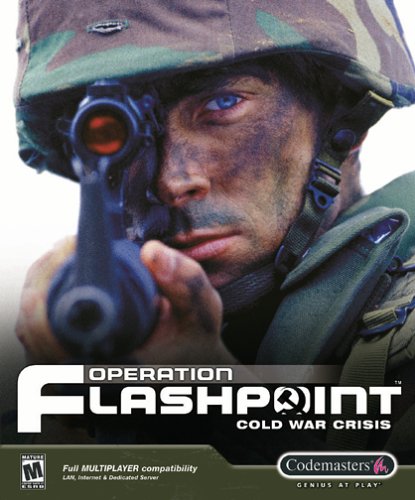
We were really lucky in that when Flashpoint came along and we had virtually no marketing spend we were able to put a lot of energy into the low cost areas of PR and online and still get a global number one. Also we must have been one of the first to look at the community side of MMORPGs and translate it over to our console titles. Having people working full time in online community liaison is essential these days.
The great thing about online marketing is that it cuts through the bullshit. You have many thousands of public voices out there saying how it really is. And you can’t shout louder than them. So the conventional marketing tactic of throwing money at telling customers what they want has decreased in relevance enormously. Increasingly bad games do not succeed. However a good marketeer will still make a huge difference in shaping perceptions and so getting the best sales performance. There is more in this article.
The most powerful marketing element now is the creation of a good, solid, monthly PR story. This is the much needed content that the interweb loves. And it is great ammunition for the community people. So here are a few elements of online marketing:
- The newsletter. This can contain the monthly story and loads of other updates, borrowing content from other online activities. Building your email mailing list is a key activity.
- The blog. Every game should have one. Members of the development team as well as community liaison and PR can make regular contributions. (Several per week) This should be a real engine to build a body of content on the web.
- The forum. Where everyone can chat about everything to do with the game. It is important to pitch a level of censorship appropriate to the game. The public really appreciate interacting with the development team, so having an insider answer a pressing question is worth a lot.
- Virals. Mini games, funny videos etc. These can work incredibly well if they catch on. You can use all your other online tools to make sure that they do.
- Webcams. I have always liked the idea of webcams in the development studio, so the public can see all the work going into creating their game. It can be a great talking point and the developers can have lots of fun with their public.
- Community activity across the popular forums and blogs. If there is a discussion about your game on someone elses site then you can join in and add value to the discussion.
- Competitions. These can create lots of interest, but should be integrated into the other online elements to get the best results.
- Working the non game interweb. If you are doing a motor-sport game then you need to be doing all the above to the online motor-sport community. Obviously the same applies to football, chess, whatever…..
All the above are low cost activities, all it takes is people and work. Using these is an ideal method for a developer creating their own IP. You can create a real buzz which adds enormously to the value of the game before going to a potential publisher. This is where big earnings lie.
Then there is online advertising which is yet another story.
Please add any comments you may have on this below.
November 20th, 2007 — Anecdotal musing
In the process of moving house last week I found an old CV. Looking at it reminded me of just what things were like in the beginning. Because we were inventing an industry we were doing everything for the first time. So we made lots of mistakes. Also there was far less speciality than there is today. Now, in a sophisticated and evolved industry you can even run a successful business trading in game objects from MMOs. If anyone had suggested this back then they would have been laughed at.
We set up one of the first computer retailers, Microdigital, in Liverpool in the summer of 1978. Very soon we were pretty much forced into mail order by customer demand and ended up with a whole department on a separate site from the shop. We also ended up producing software, importing vast numbers of books and designing and manufacturing our own hardware as well as running a magazine. All because there was nobody else doing these things for us. Also we instigated the first trade organisation the Computer Retailers Association.

The same pioneering happened at Imagine in 1982. Most of the early game companies were home businesses but we were determined to do it properly. So we set up a tele-sales department and doubled turnover every month till we reached a million pounds a month. We were also the first to look outside the UK and set up a multi lingual sales department, many of whose early customers grew to become major forces in their home markets. So we were the first with multi lingual packaging. Following on from being the first to put team credits and company profile in the packaging. In fact it was good fun as we worked out how to put more and more folds in to cassette inlay cards, always staying ahead of the competition.

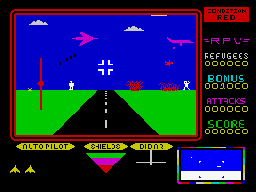
On the product side I remember John Gibson having trouble creating realistic clouds when he was writing the Sinclair Spectrum game Zzoom so we got an artist in to help him. This must have been one of the earliest uses of an artist in games. Within a year we had an in game art department and an in game sound department. We even had a technology department, working out better ways of doing everything. Not bad for 1983.
Many of the great people who worked at Microdigital and Imagine were very young. Now they are scattered all over the world, most of them still working in the industry and many in senior positions. I am still in touch with a lot of them. It would be nice to think that they still have some of the spirit of those early Liverpool days!
Feel free to add your comments to this.
November 19th, 2007 — Marketing Tips
In Q4 1987, at Codemasters, I ran a trade advertising campaign in CTW. As budget publishers on very tight margins there was not a lot of marketing spend, so this was a big deal. The campaign consisted of weekly mono early right hand full pages. Every week I created a new trade specific advert with the artist Nigel Fletcher (who was doing commercial work then) and delivered it directly to CTW’s printer. This enabled us to have the tightest deadlines and so make the adverts fresh and current.
This was the most successful advertising campaign of my life. We totally dominated the Gallup chart all the way up to Christmas in a way that even Electronic Arts would be envious of.
These days CTW has been replaced by MCV. And they have adapted to the internet age. You can receive the print magazine electronically anywhere in the world. There are email Daily Digests and Newsflashes and a website where you can add your input to current news stories. It provides a huge and essential service to the games industry.
So, with my experience, it amazes me that MCV isn’t a lot thicker. With advertising. Here is a marketing opportunity to reach a huge chunk of the industry, not just in the UK, but worldwide. Not only that, it is also read by a lot of journalists which gives it’s content a multiplier effect. It is a huge amount more influential than the statistics show.
Another thing that amazes me is the retail adverts that appear in there. This is just sloppy and lazy. You are reaching a completely different audience so the message you want to reach them with is completely different. It looks like some people look upon trade advertising as an afterthought to create some product awareness. When really it is an immensely powerful tool to reach a very important audience with messages targeted specifically at them.
And to give you an idea how highly I value the readership of MCV, it is the only place that I advertise this site.
As ever please add your comments.
November 16th, 2007 — News analysis and background
The Xbox back catalogue is coming to the 360 on Xbox Live. Games like Halo, Fable, Farenheit, Burnout 3, Psychonauts, Fusion Frenzy and Crimson Skies. At low prices. This is massive news for many reasons.
- Here we have one of the big platform holders taking a big step in digital distribution. They really have been dragging their feet with this and so holding the whole industry back. It is inevitable that new release full price titles will eventually follow. Then we will have a new publishing model, the change will be huge.
- Xbox Live continues to give Microsoft a huge USP over Sony and Nintendo. It is the main event for Microsoft. I can see the possibility that one day Microsoft may license out their hardware (console) manufacture. This would be closer to the model that has made them so many billions on the PC.
- Still no move into social networking. A pity. The Xbox live membership have so much in common with each other that Microsoft are in a unique position to create an instant, massive social network. This would be such a powerful USP that gamers would be deserting the other platforms. Plus it would create the potential for so many more revenue streams.
- For game players this service means they will have far more titles available. Currently they are limited to what retail will support, which isn’t much. With this move the entire Xbox and 360 catalogue could be available to buy. Anywhere in the world and at any time.
- For publishers this massively increases the selling life of a game from a few weeks to decades. This removes the imperative for blockbusters and opens the door to all sorts of niche products.
- Sony must be kicking themselves that they took backwards compatibility out of the PS3. It prevents them doing what Microsoft has done, thus throwing a huge competitive advantage to their rival.
- Revenue from this area was already growing at 1029% per annum before this announcement. This must be one of the hottest places to be in all commerce.
We live in interesting times. Please use the comment section if you would like to add to this.
November 15th, 2007 — News analysis and background
- TIGA are looking for a new Chief Executive. This could be a massively interesting and influential job. However at £60K PA it will probably appeal to someone at the end of their career who has made all their money.
- Xbox 360 outsells Playstation PS3 in Japan for a week. And this superiority is reflected in the software chart. Champagne time at Microsoft. Time to start to seriously worry about Sony.
Nintendo DS - 78,599
PSP - 59,714
Wii - 37,617
Xbox 360 - 17,673
PlayStation 3 - 17,434
PlayStation 2 - 10,209
Game Boy Advance SP - 206
GameCube – 155
Game Boy Micro - 113
- Sony giving up on cell? Not really. All this news says is that Sony are getting out of the business of processor design and manufacture. This is part of their current ongoing strategy of concentrating on core businesses.
It does not mean that Sony have given up on Cell, or are going to stop using it. They still have to buy and use processors. PS4, if it ever comes out, will probably be Cell.
- Speed Racer from Warner Brothers. A lot more gaming will look like this in the future. Big media company, simultaneous game and film release featuring same stars and co promoted globally. They squeeze more turnover and profit out of their assets. Actors who learn to get the best out of themselves in games will be the new big earners.
- Xbox live 5th birthday. That’s a lot of catching up the other platform owners have to do. And continual improvements make it a moving target they are after. The original development of Xbox Live cost more than the development of the original Xbox. Microsoft knew where their priorities lay. And that vision will pay them back handsomely.
- Interesting game player stats from AOL. The headline being that only half of parents play video games with their kids. The problem is that all these figures are changing very rapidly as the Wii effect and publisher’s response to it take hold. We are at the beginning of a new age of publishing freedom, the only missing element is online distribution for consoles.
- Xbox live reaches 8 million users. And the last million only took just 4 months to acquire. How long to 80 million? This is the second Live story this week. Microsoft are making hay with the 360. It is a great console with a lot of great exclusive content and this fantastic USP. The further we get into this generation, the stronger that Microsoft look.
- Trouble at Atari. With the global media companies move into gaming the existing players will need to be profitable and well run just to survive. Infogrammes and Atari have a long history of bad news stories. With two year development times and ever increasing budgets it is nearly impossible to dig yourself out of a hole.
Interesting times. Please add any comments you may have.
November 14th, 2007 — News analysis and background
There has been a lot of takeover activity recently. And some of the prices paid are very interesting indeed. Travellers Tales, a 200 staff development studio went to Warner Brothers for $200 million. And they don’t even have a mountain of IP, not that Warners need any more. Pandemic/Bioware went to EA for $860 million, this time definitely for their IP.
And there is a lot more happening at the moment. NCsoft bought a lot of development assets from Cryptic studios as well as the IP for City of Heroes. Ubisoft bought Digital Kids. And EIDOS is currently negotiating for their own sale. All this at a time of tightening money.
Why so much activity and why such high values (a lot of this has been discussed on here before)?
Firstly there is the effect of industry consolidation. Economies of scale are such that we are moving to having only a handful of general global game publishers. The small ones cannot survive unless they are niche players. This is the same as happened in film and music. You cannot beat such powerful economic forces. (Unless digital downloading takes off.)
Secondly we have the big global media companies either moving into gaming or vastly expanding their stakes in the industry. Warner Brothers, News Corporation and MTV have all made significant recent moves. They have no option as gaming continues to grow to become the dominant media. The advantages of interactivity, connectivity and non linearity make older media look limited and obsolete.
Thirdly the numbers are looking amazing. This industry currently does $33 billion of business a year, this will increase to $47 billion by 2009, a 40%+ increase in just 2 years. Very few other industries are expanding at this rate. It is incredible that the Wii continues to be constrained by manufacturing capacity and sells secondhand at a premium.
Fourthly the industry is very resilient to (the coming?) recession. People give up their entertainment last, as was proved by the movie industry in the great depression.
This really is a golden industry at a golden time. Acquisitions will command a premium because the future value will be so enormous.
So have you been bought recently or are you a buyer in this market? Please use the comments to add to the debate.
November 13th, 2007 — Opinion, The platform holders
Codemasters released Colin McRae rally on the original playstation in 1998. It was a major hit, breathing new life into the genre. And benefiting Sony enormously with many millions of pounds in license fees and a great impetus to the value of the playstation brand. So how did Sony reward us for this? They went into direct competition! Releasing their World Rally Championship game. They could have chosen any other genre to invest in, but they chose instead to tread on the toes of a major customer.
So here are a few things that are wrong with the current platform holder publishing model:
- You can spend millions of pounds/dollars developing a game and they can refuse to publish it. You have no redress. I have seen this with a Codemasters title.
- They stylistically restrict games. I remember when one platform holder told us that they would no longer publish 2D games.
- They limit the content of games, holding back the whole industry. You are not allowed to do in games things that are commonplace in books and films. This is seriously bad.
- When they develop games themselves they don’t have to pay a license fee, giving them a huge and unfair competitive advantage.
- They have access to manufacturer’s technical information and tools, once again giving them an advantage.
- We should be in the transition to online distribution, which affords game publishers and developers huge advantages. PC gaming already is with services like Steam. Console gaming is sticking to the outdated plastic and cardboard model. Holding back the whole industry in yet another way.
All the above harm the game industry, preventing it realising it’s potential. However at the same time the platform holders benefit the industry with the billions they spend developing and launching new consoles, which require the current publishing model if they are to be paid for. So there is a balance of good against the evil that they do.
You can use the comments to say where you think the balance lies, or to add to the debate in any way you want.